Gorkha Durbar's Kalika Temple
The Kalika Temple within Gorkha Durbar holds a surprising restriction for most visitors.
Full story unlocks in the tour
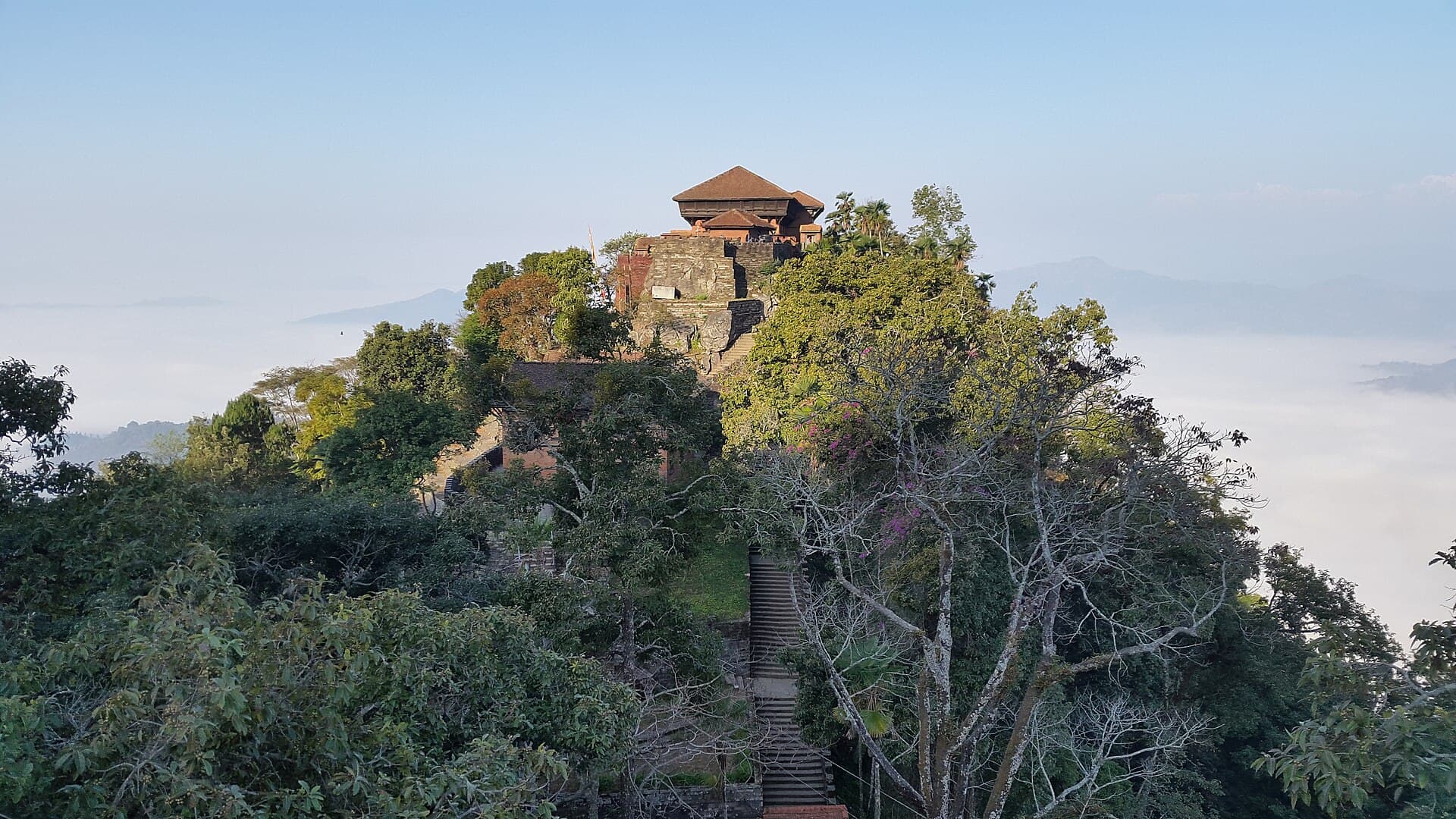 Anuj Devkota / CC BY-SA 4.0, via Wikimedia Commons
“Where Nepal's story began, etched in stone and spirit.”
Not the postcards. The stories even locals don't know — whispered in your ear, right where they happened.
The Kalika Temple within Gorkha Durbar holds a surprising restriction for most visitors.
The Manakamana Temple, a revered pilgrimage site, has a unique requirement for its head priest.
The name 'Gorkha' itself, now synonymous with fierce warriors, has several intriguing origin stories beyond the obvious.
Discover every secret of Gorkha
Every address, every reveal in full — in your ear, right where it happened.
You pick your stops. You walk. The voice reveals what the others miss.
No tours available yet. Check back soon — we're preparing them.
Gorkha, a historic town in central Nepal, holds a foundational place in the country's identity. It is the ancestral home of the Shah dynasty, from which King Prithvi Narayan Shah launched the unification of Nepal in the 18th century. This hill principality is also the origin of the renowned Gurkha soldiers, celebrated worldwide for their bravery and loyalty.
Beyond its historical significance, Gorkha offers a blend of cultural heritage and natural beauty. The town is situated amidst verdant forests and terraced fields, with sweeping views of the Himalayan peaks. It serves as a quieter alternative to more bustling tourist hubs, providing an immersive experience into traditional Nepali life.
The history of Gorkha is inextricably linked to the formation of modern Nepal. The Kingdom of Gorkha was established in 1559 CE by Dravya Shah, the youngest son of the king of Lamjung. He conquered the region from local Magar kings, laying the groundwork for what would become a powerful state. The name 'Gorkha' itself is believed to be inspired by the yogi saint Gorakhnath, who is said to have blessed Dravya Shah's rise to power.
It was King Prithvi Narayan Shah, a descendant of Dravya Shah, who truly propelled Gorkha into the annals of national history. Born in Gorkha in 1723, he ascended the throne in 1743. At a time when Nepal was fragmented into numerous small kingdoms, Prithvi Narayan Shah envisioned a unified nation. He embarked on a strategic campaign of military expansion, annexing neighboring territories and employing a multi-dimensional approach that included strengthening his army, controlling trade routes, and utilizing diplomacy. His most significant achievement was the conquest of the Kathmandu Valley in 1768–1769, which marked the end of Malla rule and the birth of modern Nepal. He then relocated the capital to Kathmandu. Prithvi Narayan Shah's efforts earned him the title "Father of the Nation."
The term "Gurkha" or "Gorkhali" historically referred to people from the Gorkha Kingdom and became synonymous with "Nepali." During the Anglo-Nepalese War of 1814–1816, the Gorkhali soldiers' impressive valor and fighting skills deeply impressed the British, who began recruiting them into their army, calling them Gurkhas. These soldiers gained a worldwide reputation for their bravery, with their motto "Better to die than be a coward" becoming a symbol of their unwavering spirit. Gurkha military units continue to serve in the Nepalese, Indian, and British armies, as well as in the Gurkha Contingent of the Singapore Police Force and the Gurkha Reserve Unit of the Royal Brunei Armed Forces. The Gorkha Museum in Gorkha Bazaar showcases royal artifacts, military history, and cultural displays from this significant era.
The main attraction in Gorkha is the Gorkha Durbar, a fortified palace and temple complex set on a steep hill ridge above the town. This historic site was the royal residence of King Prithvi Narayan Shah and offers expansive views of the Himalayas, including Mount Manaslu, Annapurna, and Ganesh Himal, on clear days. Within the Durbar complex, you'll find the Kalika Mandir and the Gorakhnath Cave shrine. While the Kalika Temple is restricted to the public, its intricate Newari-style wooden carvings are visible from the outside. The Gorakhnath Cave is a sacred site associated with the yogi saint Gorakhnath.
At the foot of the hill, in the town center, is the Gorkha Museum, housed in the graceful 1835 Lower Palace (Tallo Durbar) building. The museum features traditional Newar architecture with detailed wood carvings and an extensive exhibition on the Shah dynasty, the unification of Nepal, antique weapons, musical instruments, coins, and everyday items from the 18th and 19th centuries.
Another significant site is the Manakamana Temple, dedicated to the wish-fulfilling Goddess Bhagwati. While not directly in Gorkha town, it's a popular pilgrimage destination accessible by a scenic cable car ride from Kurintar, offering views of the Manaslu, Himalchuli, and Annapurna mountains. For those interested in trekking, Gorkha serves as a starting point for exploring the surrounding hills and provides access to the Manaslu Circuit Trek.
The most favorable times to visit Gorkha are during spring (March to May) and autumn (September to November). During these seasons, the weather is mild with comfortable temperatures ranging from 15°C to 25°C, and the skies are generally clear, offering excellent visibility for mountain views and outdoor activities like trekking. Spring brings blooming rhododendrons and verdant greenery, while autumn provides crisp air and clear vistas. Early winter (December to February) also offers dry, stable weather with good mountain visibility and fewer tourists, though nights can be cool.
Gorkha is approximately 140 km from Kathmandu and 115 km from Pokhara. Regular buses and microbuses depart from Kathmandu's Gongabu Bus Park (New Bus Park) and Pokhara's Prithvi Chowk Bus Park, with journeys taking around 4-5 hours and 3-4 hours respectively. Private vehicles and taxis can also be hired for a more direct trip. If flying, the nearest major airport is Tribhuvan International Airport (KTM) in Kathmandu, with Bharatpur Airport (BHR) being another option.
Getting around Gorkha Bazaar and the palace complex is best done on foot. Local taxis and jeeps are available for trips to nearby attractions or more remote areas. While there is no entrance fee for Gorkha Durbar itself, the Gorkha Museum has a small admission charge (NPR 150 for foreigners, NPR 100 for SAARC nationals, NPR 50 for Nepali citizens). It's advisable to carry local currency (Nepalese Rupees) and small notes. Good walking shoes are essential due to the hilly terrain, and layering clothing is recommended due to changeable weather.