Eastern Beach Mineral Spring
Beneath the familiar expanse of Eastern Beach, a natural feature with a curious past awaits discovery.
Full story unlocks in the tour
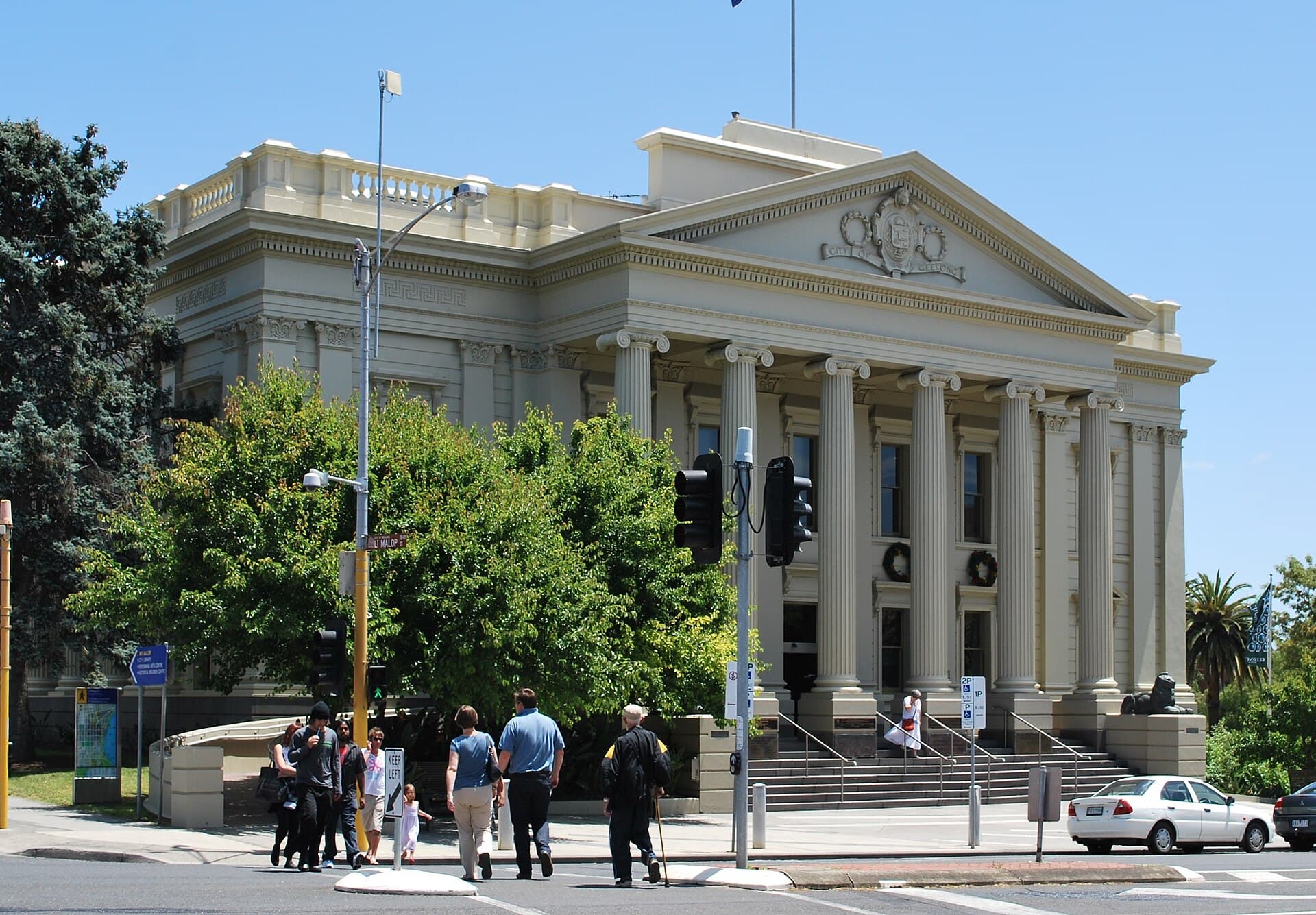 Mattinbgn / CC BY-SA 3.0, via Wikimedia Commons
“Where the bay meets the past, and every post recounts a story.”
Not the postcards. The stories even locals don't know — whispered in your ear, right where they happened.
Beneath the familiar expanse of Eastern Beach, a natural feature with a curious past awaits discovery.
The Geelong Botanic Gardens holds a small secret, speaking to the early struggles of its first curator.
Among the painted figures of the Geelong Baywalk Bollards, a subtle, recurring detail alludes to a significant historical event.
Discover every secret of Geelong
Every address, every reveal in full — in your ear, right where it happened.
You pick your stops. You walk. The voice reveals what the others miss.
No tours available yet. Check back soon — we're preparing them.
Geelong, Victoria's second-largest city, rests gracefully upon the shores of Corio Bay, approximately 75 kilometers southwest of Melbourne. Once an industrial center, it has transformed into a thriving regional hub, recognized for its relaxed atmosphere, deep history, and an expanding focus on healthcare, education, and modern manufacturing. Often considered the 'Gateway City' due to its pivotal location connecting western Victorian regional centers to Melbourne, Geelong offers a distinctive blend of coastal allure and urban character.
The city's waterfront serves as a central point, featuring the popular Eastern Beach and the enduring Cunningham Pier. Visitors can wander along the promenade, admire public artworks, and explore various cafes and restaurants. Beyond the bay, Geelong nurtures a flourishing arts scene, with street murals and nationally celebrated art collections, earning it recognition as Australia's first UNESCO City of Design in 2017.
The land now known as Geelong is the traditional Country of the Wadawurrung (Wathaurong) Indigenous Australian tribe, who called the region 'Djilang,' believed to mean 'land,' 'cliffs,' or 'tongue of land or peninsula.' The first recorded non-Indigenous visit occurred in February 1802 by Lieutenant John Murray. European settlement commenced in 1836, and the town was officially named Geelong in 1837 by Governor Richard Burke, then surveyed in 1838.
In its early years, Geelong's economy relied heavily on the wool trade. The Western District surrounding Geelong produced some of the world's finest wool, and the city became a vital port for its export. Large wool stores lined the waterfront, and the first wool auction in Geelong took place in 1857. The 1850s Victorian gold rush brought a brief surge, with Geelong serving as the primary port for the goldfields of central Victoria, and its population expanding to 23,000 by the mid-1850s. However, Melbourne launched a campaign labeling Geelong 'the Sleepy Hollow,' a moniker that endured for nearly a century.
Geelong diversified into manufacturing in the 1860s, becoming one of Australia's largest manufacturing centers with wool mills, ropeworks, and paper mills. The city was proclaimed a city in 1910, with industrial growth continuing until the 1960s, solidifying its role as a significant manufacturing hub. Key industries included Ford's manufacturing facilities, which opened a large plant in 1926. The mid-1990s witnessed a decline in the manufacturing sector, but Geelong has since experienced a revival driven by growth in service industries and a focus on tourism and technology. The Waterfront Geelong redevelopment, initiated in 1994, played a significant role in enhancing the use and appreciation of Corio Bay.
Begin your exploration along the Geelong Waterfront, a lively area beside Corio Bay. Here, you will encounter the Geelong Baywalk Bollards, a collection of over 100 painted wooden sculptures crafted from salvaged pier timber by artist Jan Mitchell. These colorful figures portray characters from Geelong's past, from Indigenous residents to early settlers and local identities. Continue to Eastern Beach Reserve, an Art Deco complex from the 1930s with a large shark-proof sea bath, a children's pool, and a diving tower. It is a favored location for swimming, picnics, and enjoying the bay's expanse.
Delve into the city's past at the National Wool Museum, housed within a historic bluestone wool store from 1872. The museum recounts the narrative of Australia's wool industry, which was central to Geelong's economy for nearly 200 years. For a peaceful retreat, visit the Geelong Botanic Gardens, established in 1850 and Australia's fourth oldest botanic garden. The gardens display a diverse collection of Australian and international plants, venerable trees, and distinctive architectural elements. The Old Geelong Gaol offers a different historical perspective, with self-guided tours and even ghost tours for those seeking a chilling experience.
The ideal time to visit Geelong is during the warmer months, from November to March, when abundant sunshine encourages enjoyment of the city's outdoor attractions and beaches. However, this period can also draw larger crowds due to its proximity to the Great Ocean Road. For milder weather and fewer visitors, consider a trip during spring (September to November) or autumn (March to May). The average temperature in summer (January) hovers around 21°C, while winters (July) are cooler, with an average of 10°C.
Geelong is readily accessible from Melbourne by train, with regular V/Line services from Southern Cross Station taking approximately one hour. If driving, the Princes Freeway (M1) connects Melbourne to Geelong in just over an hour. Avalon Airport (AVV) is 22km from Geelong, and Melbourne Airport (MEL) is 85km away; both offer car hire and shuttle services.
Within Geelong, a public transport network of trains and buses is available; a Myki card is required for travel. Cycling also presents a viable option, with many bike lanes throughout the city. Geelong offers a lower cost of living compared to some other major Australian cities. For dining, you will discover a range of options from contemporary laneway eateries to beachfront cafes. The city also provides various shopping opportunities, including the Geelong Vintage Market for distinctive finds.