Chaudière Falls
The powerful Chaudière Falls, a landmark between Gatineau and Ottawa, once held a secret that allowed early lumber barons to thrive.
Full story unlocks in the tour
 Wladyslaw / CC BY 3.0, via Wikimedia Commons
“Where Quebec's culture meets the wild Canadian landscape.”
Not the postcards. The stories even locals don't know — whispered in your ear, right where they happened.
The powerful Chaudière Falls, a landmark between Gatineau and Ottawa, once held a secret that allowed early lumber barons to thrive.
The name 'Gatineau' carries a legendary, almost mythical origin, tied to a figure who sought a different life.
A single spark in Gatineau had devastating consequences that reached far beyond its own borders.
Discover every secret of Gatineau
Every address, every reveal in full — in your ear, right where it happened.
You pick your stops. You walk. The voice reveals what the others miss.
No tours available yet. Check back soon — we're preparing them.
Gatineau, Quebec, rests on the northern bank of the Ottawa River, directly across from Canada's capital, Ottawa, Ontario. This singular position places it within Canada's National Capital Region, offering a blend of urban energy and the quiet beauty of the natural world. As Quebec's fourth-largest city, Gatineau stands as a significant cultural and economic center in the Outaouais administrative region.
The city's character is shaped by its varied landscape, featuring rolling hills, deep forests, and numerous green spaces, including the expansive Gatineau Park. The Ottawa and Gatineau Rivers flow through the city, providing a scenic backdrop and opportunities for many activities. Gatineau's identity is forged by its profound past, a strong French-speaking majority, and a growing bilingual population.
Beyond its natural allure, Gatineau cultivates a dynamic cultural scene, with institutions like the Canadian Museum of History and a flourishing local food and arts community. Its nearness to Ottawa allows for a singular cross-cultural experience, where visitors can easily explore the landmarks of both cities while enjoying Gatineau's distinct Quebecois character.
Gatineau's story extends back thousands of years, rooted in the unceded territory of the Algonquin Anishinaabe people, who have inhabited the entire Ottawa watershed. The Chaudière Falls, a revered site for the Algonquin, served as an important meeting and trading place.
European settlement in the region began in the early 19th century. Philemon Wright, a farmer from Massachusetts, arrived in 1800 and established the area's first permanent European settlement on the north shore of the Ottawa River, initially known as Wright's Town. This agricultural community, later incorporated as Hull in 1875, quickly shifted its focus to the growing timber industry, utilizing the vast forest stands and the Ottawa River for transportation. The Gatineau River also played a crucial role in the timber trade, serving as a vital route for log rafts.
Industrial development in the mid-19th century drew a significant influx of French-Canadian workers to Hull, profoundly changing its demographic composition. However, this industrial growth also brought challenges, as evidenced by the Great Fire of 1900, which devastated much of Hull and parts of Ottawa.
The modern city of Gatineau was formed on January 1, 2002, through the amalgamation of five municipalities: Aylmer, Buckingham, Hull, the former city of Gatineau, and Masson-Angers. Although Hull was the oldest and most central of these merged cities, the name Gatineau was chosen for the new entity, partly because the pre-merger city of Gatineau had a larger population. This amalgamation created a city with distinct sectors, each retaining its unique character, from the lively Vieux-Hull to the more coastal Aylmer.
Today, Gatineau continues to evolve, with its economy diversifying beyond its historical reliance on timber and paper to include a significant federal government presence and a growing high-tech sector. The city's commitment to preserving its heritage is evident in efforts to conserve and promote its diverse cultural landscape, which includes architecture, history, traditions, and Indigenous languages and practices.
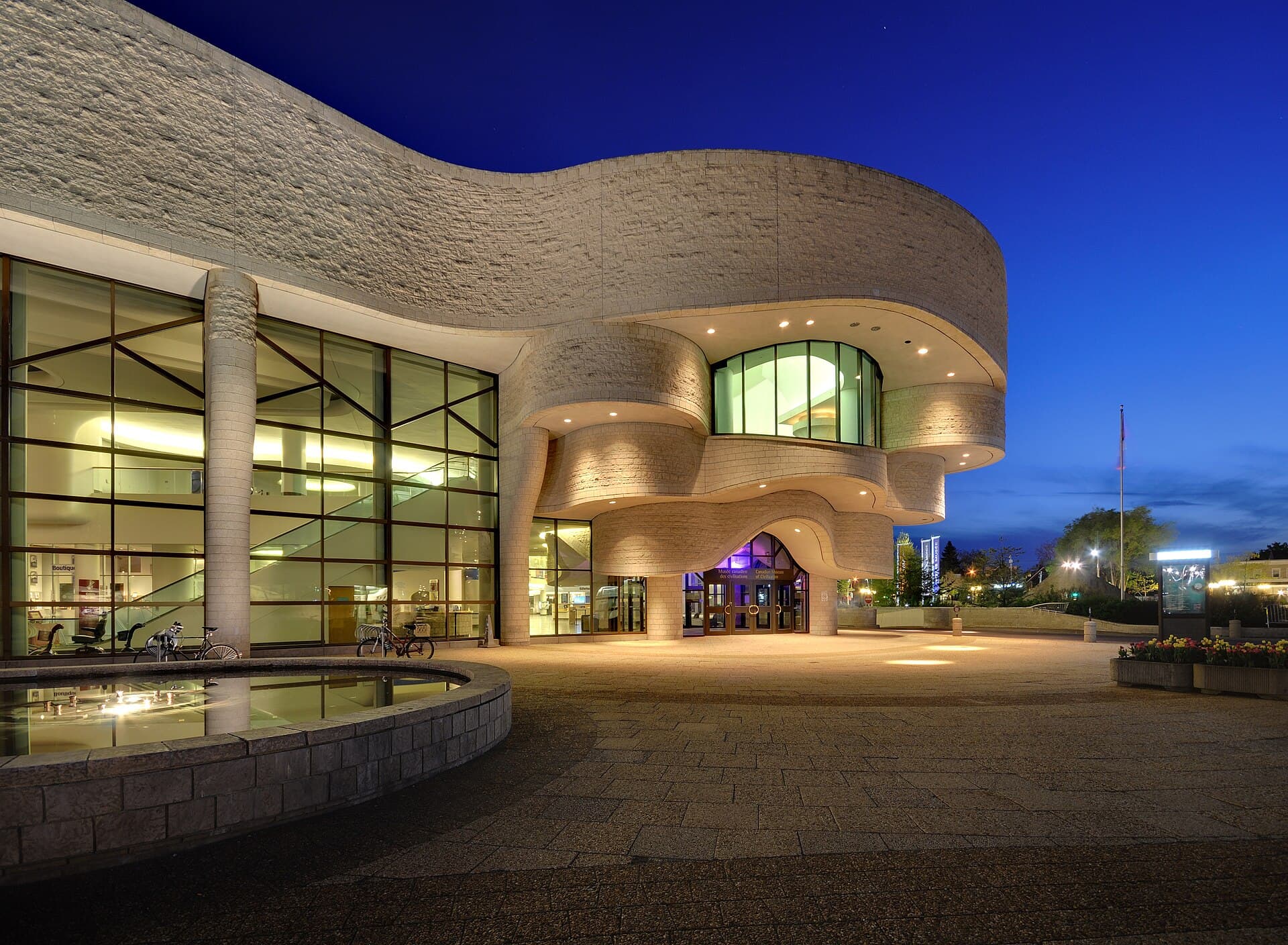
Gatineau presents a diverse array of attractions, blending cultural explorations with outdoor adventures. The Canadian Museum of History is a significant destination, recognized for its architectural design by Indigenous architect Douglas Cardinal and its extensive collection chronicling Canadian and Indigenous stories. Its Grand Hall displays the world's largest indoor collection of totem poles.
For those who love the natural world, Gatineau Park is a vast conservation area spanning 361 square kilometers, offering extensive trails for hiking, cycling, snowshoeing, and cross-country skiing, depending on the season. Within the park, you can explore the Mackenzie King Estate, the former country retreat of Canada's tenth Prime Minister, featuring gardens, ruins, and historic cottages. The Chaudière Falls, a powerful natural waterfall on the Ottawa River, holds significant historical and spiritual importance for Indigenous peoples and offers sweeping views.
For a different kind of entertainment, the Casino du Lac-Leamy provides gaming, dining, and live performances. Visitors can also wander along the Culture Trail in downtown Gatineau (Vieux-Hull), discovering public art, street art, and heritage sites. From the Gatineau waterfront path, you can enjoy postcard-perfect views of Parliament Hill across the Ottawa River.
Gatineau experiences all four distinct seasons, each offering unique attractions. For warm-weather activities like hiking, cycling, and enjoying the city's patios, the best time to visit is from late June to early September, when temperatures average around 25-26°C (77-79°F). Fall, from September through October, brings comfortable temperatures (13-21°C or 55-70°F) and beautiful autumn foliage in Gatineau Park, with fewer crowds at museums. Winter (December to February) transforms the city into a snowy landscape, ideal for cross-country skiing and other winter sports, though temperatures can drop significantly, averaging -14°C (7°F) in January. Spring (March to May) offers milder weather for outdoor activities before the summer humidity sets in.
Gatineau is easily reached, located directly across the Ottawa River from Ottawa, Ontario. The two cities are connected by several bridges, including the Alexandra Bridge. Public transportation within Gatineau is provided by the Société de transport de l'Outaouais (STO), which also offers connections to Ottawa. While French is the predominant language, a significant portion of the population is bilingual, speaking both French and English. The drinking age in Quebec is 18.
Accommodation options range from small, distinctive hotels in Vieux-Hull to larger establishments. When dining, consider exploring the local food scene, which includes award-winning microbreweries and creative restaurants. For budget-friendly and authentic culinary experiences, local 'depanneurs' (corner stores) offer excellent cheese and baguettes, and food trucks along Promenade du Lac-des-Fées are known for their poutine. Remember to carry cash for some smaller vendors, especially in Gatineau Park.