Gaspé Bay
Before Jacques Cartier planted his cross in 1534, claiming the land for France, there's a quieter, older history that might surprise you.
Full story unlocks in the tour
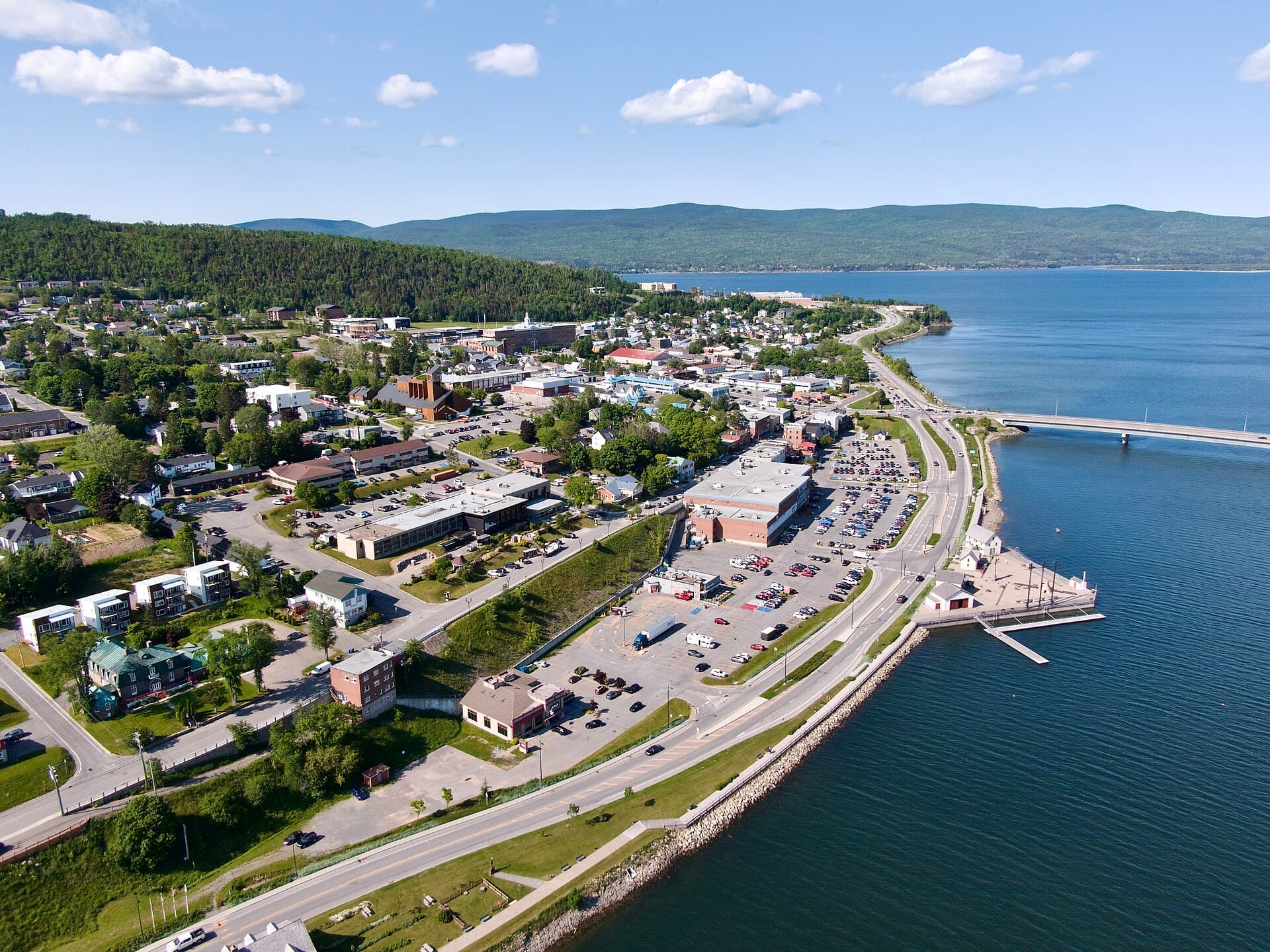 Hayden Soloviev / CC BY 4.0, via Wikimedia Commons
“Where the Appalachian peaks meet the Gulf of St. Lawrence, stories run as deep as the sea.”
Not the postcards. The stories even locals don't know — whispered in your ear, right where they happened.
Before Jacques Cartier planted his cross in 1534, claiming the land for France, there's a quieter, older history that might surprise you.
During World War II, the tranquil waters of the St. Lawrence River became a battleground, with an unseen enemy lurking beneath the surface.
The region's celebrated salmon rivers hold tales of more than just impressive catches; they also attracted royalty and the ultra-wealthy.
Discover every secret of Gaspé
Every address, every reveal in full — in your ear, right where it happened.
You pick your stops. You walk. The voice reveals what the others miss.
No tours available yet. Check back soon — we're preparing them.
Gaspé, a city at the easternmost point of the Gaspé Peninsula in Quebec, Canada, is a place where dramatic landscapes unfold, blending rugged sea cliffs with dense forests. Often called the "Cradle of French America," it holds a significant position in Canadian history as the site where Jacques Cartier claimed New France for King Francis I of France in 1534.
Beyond its historical markers, Gaspé offers a striking natural environment. The peninsula itself is an extension of the Appalachian Mountains, with elevations reaching over 1,000 meters in the Chic-Choc Mountains. The region is characterized by its untamed beauty, featuring secluded beaches, picturesque lighthouses, and inviting fishing villages. It's a destination that encourages exploration, whether through its national parks, along its scenic coastal routes, or by immersing oneself in its unique blend of French-Canadian culture and maritime heritage.
Gaspé's documented history begins in 1534 when French explorer Jacques Cartier sought shelter in Gaspé Bay and erected a cross, claiming the land for France. This act is widely considered the symbolic founding of French Canada. However, the land was already inhabited by the Mi'kmaq people, who had lived there for centuries and were likely the first Indigenous people to have regular contact with Europeans, possibly as early as the eleventh century with Viking settlements. The Mi'kmaq name for the region, "Gespeg," means "Land's End" or "end of the world," a fitting description for this peninsula extending into the Gulf of St. Lawrence.
For a century and a half after Cartier's arrival, Gaspé Bay served as a crucial point of arrival and departure for transatlantic crossings from France, primarily for cod fishermen. These early French fishermen were later joined by French-Canadians. The region, however, was also a site of conflict between the French and English. In 1690, Sir William Phips's troops burned the village, and in 1758, British forces under General James Wolfe destroyed fishing structures and took command of many French settlements. After the British conquest in 1763, Gaspé officially became part of the Province of Quebec. The American Revolution brought an influx of English-speaking Loyalists to Gaspé in 1784. Throughout the 18th and 19th centuries, immigrants from the Channel Islands, Scotland, and Ireland also settled in the region, drawn by fishing and other opportunities. The 1840s, for instance, saw waves of Irish immigrants arrive due to potato crop failures in Ireland.
By the mid-19th century, Gaspé was incorporated as a village municipality in 1855. From 1861 to 1866, its port operated as a duty-free zone, attracting numerous European ships and leading to several countries establishing consulates. While fishing remained central to the economy for centuries, with vast quantities of cod shipped to Europe, South America, and the US, other industries like lumbering and, more recently, tourism, copper, and oil production have grown in importance. The arrival of the railway in 1911 further connected Gaspé, though its ambition to become a major international shipping hub eventually gave way to the prominence of Montreal and Halifax harbors.
Gaspé offers a range of attractions that blend its historical significance with its natural beauty. A prominent landmark is the Jacques Cartier Monument and Museum, featuring a tall white cross overlooking Gaspé Bay, symbolizing Cartier's 1534 landing. The adjacent Musée de la Gaspésie provides insights into the region's history, culture, and Indigenous presence. Visitors can also walk an interpretive trail to the historic cross site, learning about Cartier's interactions with the Mi'kmaq people.
For nature enthusiasts, Forillon National Park is an essential visit, where the Appalachian Mountains meet the Gulf of St. Lawrence. The park offers hiking trails along sea cliffs, through forests, and to remote beaches, with opportunities for wildlife spotting, including whales, seals, seabirds, moose, and black bears. The Phare de Pointe-à-la-Renommée, a historic lighthouse built in 1856, offers coastal views and a glimpse into the region's maritime legacy. While not directly in Gaspé, the iconic Percé Rock and Bonaventure Island are vital stops on any Gaspésie itinerary. Percé Rock is a massive natural arch, and Bonaventure Island hosts North America's largest colony of Northern Gannets, with over 100,000 birds nesting there.
The best time to visit Gaspé and the wider Gaspé Peninsula is during the warmer months, from late May to mid-October. This period offers ideal conditions for water activities, enjoying fresh seafood, and favorable driving conditions along scenic routes. Summer, particularly July and August, is peak season for wildlife viewing, including whale watching and bird watching. However, for fewer crowds and potentially lower prices, the shoulder months of June and September are recommended. Fall brings lively foliage, typically from late September to mid-October. While winters are cold and snowy, they offer opportunities for snowmobiling in areas like the Chic-Choc Mountains.
Gaspé is accessible primarily by car, with Route 132 forming a scenic loop around the peninsula. Flying into Quebec City or Montreal and renting a car is a common approach. Accommodation, especially during peak summer months (mid-July to mid-August), should be booked well in advance, as options can be limited and fill up quickly. Many coastal seafood restaurants also operate seasonally, typically from early June to mid-October. While French is the primary language, many locals also speak English. Canada uses the metric system for speed limits (km/h) and fuel sales (liters). Visitors should be aware that using a cell phone while driving is prohibited unless it's a hands-free device. For those traveling in winter, all vehicles registered in Quebec must be equipped with four winter tires from December 1 to March 15. Pets are often welcome in parks, accommodations, and on some patios, but usually require a leash.