Fremantle Arts Centre
This imposing Gothic structure, now a nexus for contemporary art and music, began its existence with a far more solemn purpose.
Full story unlocks in the tour
 Chewy m at English Wikipedia / CC BY 2.5, via Wikimedia Commons
“Where the sea's memory meets a bohemian spirit.”
Not the postcards. The stories even locals don't know — whispered in your ear, right where they happened.
This imposing Gothic structure, now a nexus for contemporary art and music, began its existence with a far more solemn purpose.
Beneath the formidable walls of this UNESCO World Heritage site lies a network crafted by the very individuals it once confined.
A seemingly unassuming religious edifice conceals a clandestine speakeasy, transporting patrons to a bygone era.
Discover every secret of Fremantle
Every address, every reveal in full — in your ear, right where it happened.
You pick your stops. You walk. The voice reveals what the others miss.
No tours available yet. Check back soon — we're preparing them.
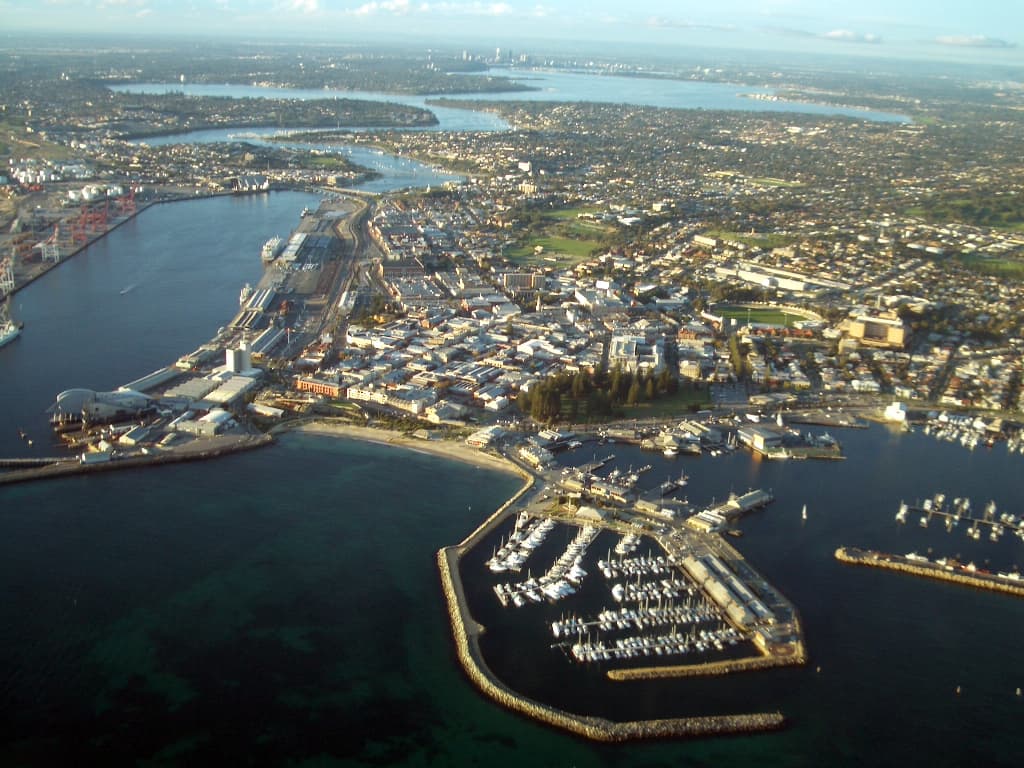
Fremantle, affectionately known as 'Freo' by its residents, is a port city in Western Australia where the Swan River converges with the Indian Ocean. It is a place that seamlessly weaves a profound maritime past with a lively, bohemian present. Here, meticulously preserved Victorian and Edwardian streetscapes offer a captivating stage for a flourishing arts and culinary landscape.
A brief journey from Perth, Fremantle cultivates a distinct atmosphere, inviting visitors to wander through its historic avenues, explore bustling marketplaces, and absorb the relaxed coastal ambiance. The city's strategic position has long established it as a gateway to Western Australia, shaping its diverse culture and enduring character.
From its architecture, built by convict hands, to its animated waterfront, Fremantle unfolds a compelling narrative at every turn. It is a city that encourages discovery, whether you seek historical revelations, contemporary artistic expressions, or simply a satisfying meal by the sea.
Fremantle's narrative commences long before European arrival, as the ancestral territory of the indigenous Noongar people, who knew it as Walyalup. Dutch explorers navigated the area in the 1600s, with Willem de Vlamingh charting it in 1697 and observing its potential for settlement.
The modern city's origins trace back to 1829 when Captain Charles Fremantle asserted British claim over the west coast of New Holland. Later that year, the Swan River colonists established the first European settlement here, initially as a free colony.
However, the nascent settlement encountered difficulties, and by 1850, Fremantle became Australia's primary destination for convicts. This period left an indelible imprint, with convict labor constructing many of the city's significant buildings and infrastructure, including the formidable Fremantle Prison. This prison, erected between 1852 and 1859 from local limestone, operated until 1991 and is now recognized as a UNESCO World Heritage site.
In 1883, Fremantle was chartered as a municipality, and the subsequent decade witnessed its harbor deepened for commercial shipping. This transformation, coupled with the Western Australian gold rushes, propelled Fremantle into a bustling trade center. The port's significance deepened during World War II, when it functioned as the largest Allied submarine base in the Southern Hemisphere.
Post-war immigration, particularly from Europe, further molded Fremantle's unique cultural identity. The city underwent substantial revitalization after hosting the 1987 America's Cup sailing competition, solidifying its reputation as a dynamic cultural and tourist destination.
Fremantle presents a variety of attractions, blending its historical foundations with contemporary culture. The Fremantle Prison, a UNESCO World Heritage site, offers a compelling look into Australia's convict past with various tours, including an underground tunnel exploration. The Fremantle Markets, in operation since 1897, form an animated center with over 150 stalls selling everything from fresh produce to artisan items, complemented by street performers.
The Fishing Boat Harbour is a lively district where you can observe fishing vessels and savor fresh seafood at waterfront establishments. For those drawn to maritime themes, the WA Maritime Museum at Victoria Quay illustrates Western Australia's connection to the sea, while the WA Shipwrecks Museum delves into the region's nautical calamities, exhibiting artifacts from the VOC ship Batavia.
The Fremantle Arts Centre, situated in a convict-built Gothic edifice that once served as an asylum, now hosts contemporary exhibitions, performances, and workshops. Be sure to visit the Round House, Western Australia's oldest public building, offering views of Bathers Beach and a walk through its historic passage. For a distinctive photo opportunity, seek out the Rainbow Sea Containers, a permanent art installation overlooking the Swan River.
Fremantle experiences a Mediterranean climate, characterized by warm, arid summers and mild, damp winters. The transitional seasons—spring (September to November) and autumn (March to May)—provide agreeable temperatures and pleasant conditions for exploration, with fewer visitors. Summers (December to March) are warm, with average daily temperatures reaching up to 24.6°C (76.3°F) in February, ideal for beach pursuits, though midday warmth can be intense. Winters (June to August) are mild, with average temperatures around 14–15°C (57–59°F), and while there is more rainfall, many attractions are indoors.
Fremantle is readily accessible and easy to navigate on foot, with many attractions concentrated within its historic core. Public transportation options link Fremantle with Perth and surrounding areas. The city is celebrated for its pedestrian-friendly avenues, making it enjoyable to explore on foot or by bicycle. Accommodations span from boutique hotels in heritage buildings to economical backpacker choices. Dining is a particular pleasure, with numerous cafes, restaurants, and bars, especially along the 'Cappuccino Strip' and at the Fishing Boat Harbour. Fremantle also offers a lively retail experience, featuring independent boutiques, artisan crafts, and distinctive gifts.