The silted Roman harbour (Parc Aurélien area)
This quiet park was once Rome's second-busiest naval base. Something very deliberate — and very expensive — kept it functional for six centuries.
Full story unlocks in the tour
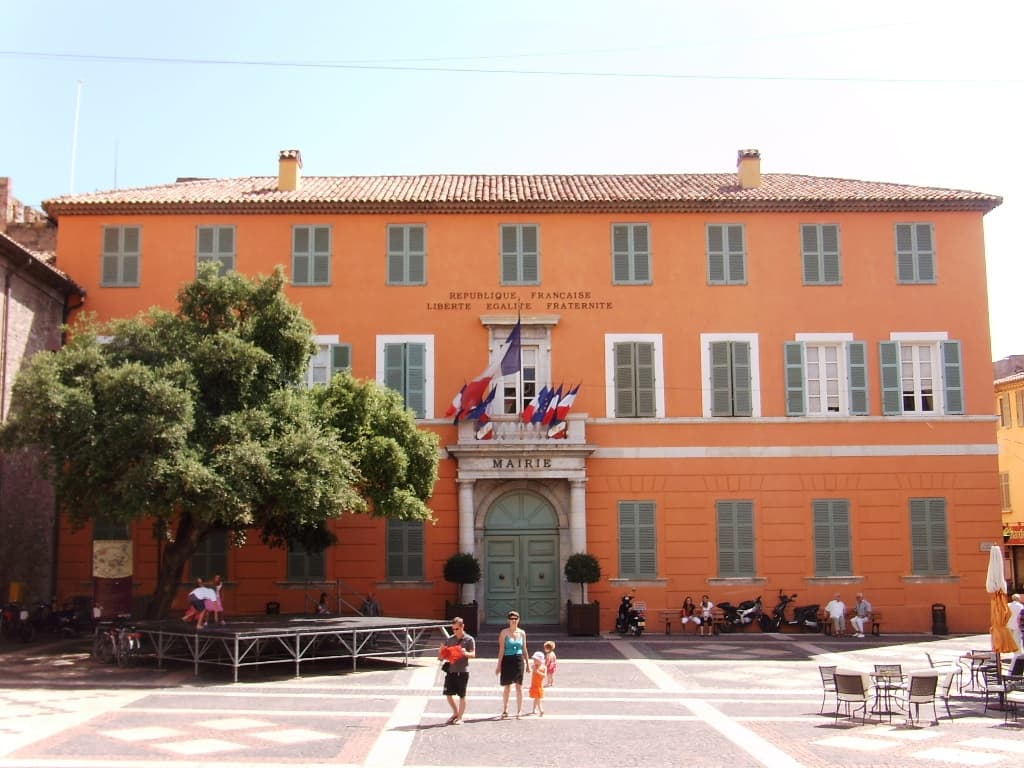 Cyrilb1881 / CC BY-SA 3.0, via Wikimedia Commons
“Two thousand years of empire, compressed into one walkable city”
Not the postcards. The stories even locals don't know — whispered in your ear, right where they happened.
This quiet park was once Rome's second-busiest naval base. Something very deliberate — and very expensive — kept it functional for six centuries.
This small octagonal room spent seven centuries buried under a medieval tower. What it hides about the very first Christians in Provence is not what most visitors expect.
Built for 12,000 spectators, it held fewer than half that by the 20th century — and then Queen and Iron Maiden played here anyway.
Discover every secret of Fréjus
Every address, every reveal in full — in your ear, right where it happened.
You pick your stops. You walk. The voice reveals what the others miss.
No tours available yet. Check back soon — we're preparing them.
Fréjus sits at the foot of the Esterel massif where the last red porphyry cliffs give way to the coastal plain, roughly equidistant between Nice and Marseille. Most people drive past on the A8 heading somewhere louder. That is their loss. Within a half-hour walk of the train station stand a 1st-century amphitheatre, a 5th-century baptistery, a colonial Sudanese-style mosque, a memorial to 20,000 soldiers of France's Indochina war, and the broken concrete arc of a dam that reshaped French law. The beach is a kilometre from the Roman ruins. The city operates at a pace that makes all of it legible.
Julius Caesar established Forum Julii around 49 BC as a strategic counter to Massalia (Marseille). Between 29 and 27 BC, Augustus transformed it into a veterans' colony for soldiers of the 8th Legion and made it one of Rome's three principal naval bases in the western Mediterranean — ranking, for a time, as the second-busiest port in the Empire after Ostia. Part of Antony and Cleopatra's fleet, captured at Actium in 31 BC, was moored here.
The city that resulted covered 35 hectares, was encircled by 3.7 km of walls, and was served by a 42-km aqueduct descending 481 metres from springs above Mons. Under Tiberius, the monumental programme produced the amphitheatre, the baths, the theatre, and the lighthouse — more Roman infrastructure than any French city outside Arles. Two significant Romans were born here: the general Gnaeus Julius Agricola, future conqueror of Britain (40 AD), and, by one tradition, the elegiac poet Cornelius Gallus.
From the 5th century, the harbour silted progressively as Argens and Reyran river deposits accumulated. Roman engineers ran systematic dredging for six centuries, but by the 7th century the basin had disconnected from the sea and become a freshwater lake. Muslim raids between the 8th and 10th centuries depopulated the city almost entirely. Recovery was slow and medieval, centred on the cathedral complex — baptistery, cloister, two Romanesque naves — that still forms the historic core.
On 9 October 1799, Napoleon landed here, returning from Egypt, and within weeks executed the coup of 18 Brumaire. In the 20th century, Fréjus served as a major colonial troop garrison: Senegalese tirailleurs, Indochinese riflemen, and Moroccan soldiers all passed through its camps. The camps gave the city its Missiri mosque (1930), its Indochina pagoda (1917), and eventually its role as the site for France's national Indochina necropolis (1993). On 2 December 1959, the Malpasset dam collapsed upstream, sending 423 people to their deaths in twenty minutes.
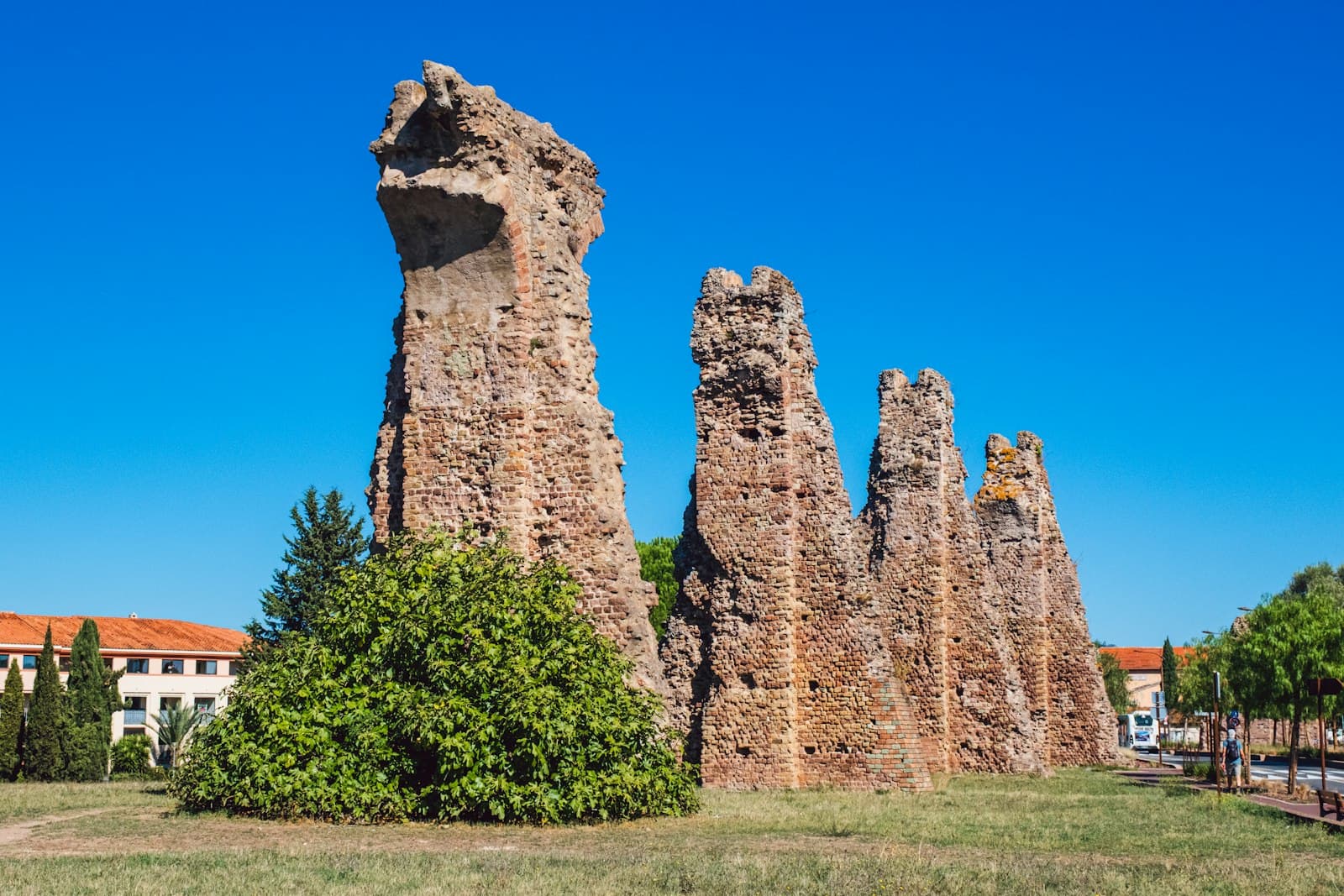
### The Roman quarter The amphitheatre (1st century, Rue Henri Vadon) still hosts summer concerts inside its elliptical walls. Entry is €3; a morning visit before heat sets in rewards with good light on the stonework. Ten minutes' walk brings you to the Porte des Gaules and remains of the Roman theatre. The Lanterne d'Auguste — a stub of Roman masonry beside the modern port — marks where the Augustan harbour entrance once stood.
### The cathedral complex (Place Formigé) The medieval cloister, baptistery, and cathedral of Saint-Léonce form a single ensemble classified since 1862. The baptistery (5th century) is entered from the cloister: its octagonal plan with salvaged Roman columns and a central immersion basin makes it one of the earliest complete Christian buildings surviving in France. The cloister itself has painted wooden ceilings from the 14th century. Combined ticket with the archaeological museum costs €6.
### The Roman aqueduct Arches of the Aqueduc de Mons are visible in several locations north of the city — the Reyran valley section is accessible on foot and shows the characteristic green Esterel sandstone construction.
### The Missiri mosque (Route de Bagnols-en-Forêt) Exterior viewing only: the ochre cubic form with corner towers is arresting in any light, and the context of a French army barracks makes the building's backstory all the more charged.
### Mémorial des Guerres en Indochine (RN7 northeast exit) Free entry. The 110-metre circular walk past 17,000 burial niches is austere and affecting. Allow 45 minutes.
### Malpasset dam ruins (Reyran valley) A 6-km trail from the city reaches the fractured concrete. The scale of what shattered in 1959 is hard to process standing next to it.
May and June offer the best balance: warm enough for both the beach and long walks through the Roman quarter, without July and August crowds that can triple the city's population. The light on Esterel stone in late afternoon is worth timing your arrival for.
September and October are quieter still and often warm enough for swimming. The festival Les Nuits de Fréjus typically runs through summer in the amphitheatre; check the annual programme if that matters to you.
Winter is mild (the Var averages 300 days of sun) and the Roman monuments are almost entirely to yourself, though the archaeological museum keeps reduced hours (closed Monday, limited afternoon hours October to March).
By train: The Fréjus station is in the city centre. TGV from Paris Gare de Lyon to Saint-Raphaël-Valescure (3 km away, frequent shuttle buses) takes approximately 4h30. From Nice: ~50 minutes by TER. From Marseille: ~1h30.
By car: Motorway A8, exit 38. Nice is 65 km (~50 minutes), Marseille 130 km (~1h30). Several public car parks near the historic centre; first 30 minutes free in most.
Getting around: The historic centre, cathedral complex, amphitheatre, and both museums are all within a 15-minute walk of each other. A bicycle is the fastest way to reach the Malpasset trail and the Indochina memorial.
Ticket note: The Groupe Episcopal (baptistery + cloister) and the archaeological museum share a combined ticket at €6. The amphitheatre is €3 separately. The Mémorial des Guerres en Indochine is free.
Tourist office: 249 rue Jean Jaurès — open year-round and can supply walking maps of the Roman circuit.