Hercílio Luz Bridge
This landmark bridge, a symbol of Florianópolis, conceals a detail in its very construction that connects it to a distant tragedy.
Full story unlocks in the tour
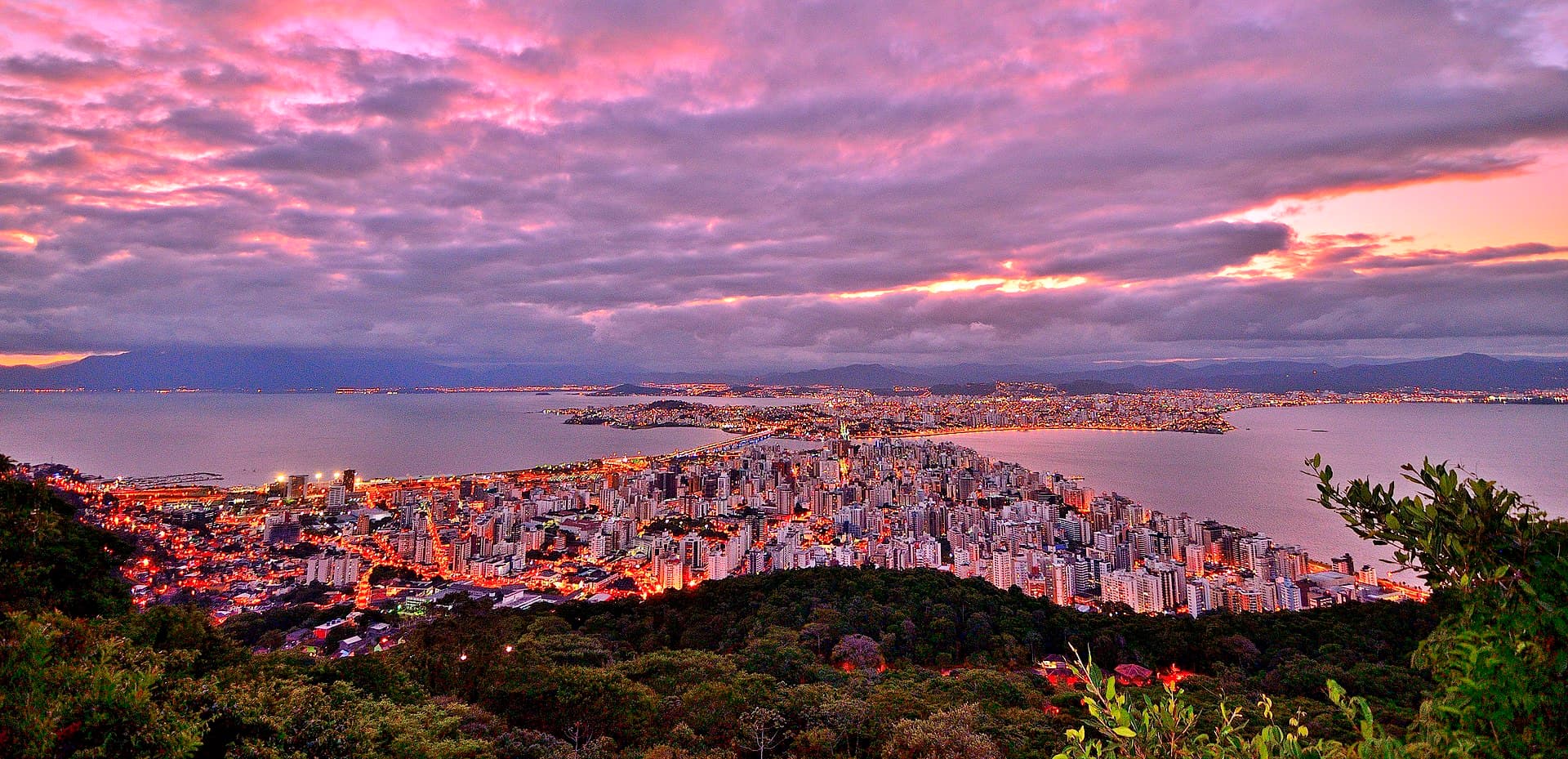 oscar fava / CC BY 3.0, via Wikimedia Commons
“Where island enchantment meets urban dynamism, Florianópolis invites with sun-kissed shores and a lively pulse.”
Not the postcards. The stories even locals don't know — whispered in your ear, right where they happened.
This landmark bridge, a symbol of Florianópolis, conceals a detail in its very construction that connects it to a distant tragedy.
Beyond fresh seafood and local crafts, this historic market holds stories of a time when its connection to the sea was far more direct.
The sand dunes separating Lagoa da Conceição from the ocean are more than just a scenic view; they are the origin of an unexpected sport.
Discover every secret of Florianópolis
Every address, every reveal in full — in your ear, right where it happened.
You pick your stops. You walk. The voice reveals what the others miss.
No tours available yet. Check back soon — we're preparing them.
Florianópolis, affectionately known as 'Floripa,' is the capital of Santa Catarina state in southern Brazil, a city uniquely divided between the mainland and Santa Catarina Island. This distinction creates an unusual urban configuration, blending energetic city life with the gentle rhythm of island existence. Known for its remarkable natural beauty, Floripa features a varied landscape of mangroves, lagoons, dunes, hills, and over 40 beaches, each offering a distinct experience. It is a destination that has drawn international attention, once named by The New York Times as the 'party destination of the year' and listed by Newsweek among the 'ten most dynamic cities of the world.'
The city's allure extends beyond its picturesque scenery to a lively culture shaped by its Portuguese, Azorean, German, and Italian heritage. This fusion is apparent in its architecture, cuisine, and local traditions, offering visitors a rich array of experiences. Whether seeking adventure on the waves, quiet on a secluded beach, or a taste of local life in its historic center, Florianópolis presents a captivating blend of natural splendor and cultural depth.
The history of Florianópolis reaches back to approximately 1000 BC with the arrival of the first inhabitants, known as the 'Sambaqui people,' who left behind characteristic shell mounds. Around 500 AD, Tupi-Guarani indigenous tribes, who called the island Meiembipe, meaning 'mountain along the channel,' settled the area. European contact began in 1542 when a Spanish expedition landed on the island, naming it Santa Catarina Island.
Permanent Portuguese settlement began in 1675 with Francisco Dias Velho, who founded Nossa Senhora do Desterro on the western side of the island, a strategic location for a port and fortifications. This settlement achieved political emancipation in 1726 and was elevated to city status in 1823. A significant wave of Azorean settlers arrived in the mid-18th century, profoundly shaping the region's economic and cultural life for centuries.
In 1889, Santa Catarina became a state of Brazil, and Desterro was designated its capital. The city underwent a significant name change in 1894, following the Federalist Revolution. After the suppression of the revolution, the city was renamed Florianópolis in honor of Marshal Floriano Peixoto, Brazil's second president.
A pivotal moment in the city's development was the construction of the Hercílio Luz Bridge, commissioned by then-governor Hercílio Luz to connect Santa Catarina Island to the mainland. Construction began in 1922 and the bridge, an engineering marvel of its time and the longest suspension bridge in Brazil, was inaugurated on May 13, 1926. This connection was crucial, as the city of 40,000 inhabitants previously relied on ferries for transport between the island and the mainland. The bridge, weighing approximately 5,000 tons with a central span of 339 meters, became an enduring symbol of Florianópolis. After decades of service, it was closed to traffic in 1991 for restoration and reopened in 2019, once again serving pedestrians, cyclists, and light vehicles.
Florianópolis has continued to evolve, with its economy now largely based on information technology, tourism, and services. Despite its growth and modernization, the city has worked to preserve its historical and cultural sites, including colonial architecture and fortresses. The city's unique blend of tradition and progress, coupled with its natural attractions, has led to its recognition as a desirable place to live and visit.
Florianópolis presents a diverse array of sights, catering to various interests. The city is celebrated for its many beaches, with over 40 distinct options. Popular choices include Praia Mole, a favorite among the younger crowd and surfers, and Joaquina Beach, known for its considerable sand dunes perfect for sandboarding. For those interested in water sports beyond surfing, Lagoa da Conceição provides opportunities for windsurfing, kitesurfing, kayaking, and stand-up paddleboarding in its calm, shallow waters.
Beyond the coastline, the historic center of Florianópolis, located on the island side, features winding streets and colonial houses. Here, the Mercado Público, a historic public market dating back to 1851, serves as a central hub for local commerce, food, and culture. Visitors can explore its stalls for fish, local produce, and handicrafts, and enjoy typical dishes like cockle and shrimp pastries at its traditional bars. The Hercílio Luz Bridge, a striking suspension bridge connecting the island to the mainland, is an architectural landmark offering impressive views, especially at sunset. Other notable attractions include the Florianópolis Cathedral, dating to 1750, and the Cruz e Sousa Palace, which houses a museum dedicated to Santa Catarina's history and art. For nature enthusiasts, hiking trails like the Lagoinha do Leste hike offer sweeping views of the coastline.
The best time to visit Florianópolis largely depends on your desired experience. For warm weather activities and lively beaches, the Brazilian summer, from December to March, is ideal, with daily temperatures typically ranging from 25-30°C (77-86°F). This is peak season, so anticipate larger crowds and higher prices. The shoulder seasons, particularly autumn (April to May), offer warm days, cooler evenings, and fewer crowds, providing a good balance between weather and tranquility. Spring (September to November) also has pleasant temperatures, blooming nature, and fewer visitors. Winter (June to August) brings cooler temperatures and quieter beaches, making it suitable for those more interested in scenery, local culture, and food than swimming. Whale watching season runs from July to November.
Navigating Florianópolis requires some planning due to the island's size. Renting a car offers the most flexibility to explore its numerous beaches and remote areas, though traffic can be heavy, especially during peak season. Alternatively, ride-sharing apps like Uber and 99 are available and generally more reliable than local buses for getting around the island. The public bus system, while affordable, can be slow and less frequent, with routes often running behind schedule. The city's main airport is Hercílio Luz International Airport (FLN), located about 12 km from the city center, with taxis and local buses available for transport.
While Florianópolis is considered safe, especially compared to other Brazilian cities, minor crime can occur around popular tourist sites. It is always advisable to keep valuables secure and be aware of your surroundings. Portuguese is the official language, and the Brazilian Real is the local currency. Many vendors prefer cash, though major credit cards are widely accepted.