Place des Écritures
Figeac's most celebrated scholar deciphered a code that unlocked an entire civilization. His lasting influence is honored in a public space, yet not with a conventional statue.
Full story unlocks in the tour
 Benjamin Smith / CC BY-SA 4.0, via Wikimedia Commons
“Where ancient lanes echo with the stories of forgotten scripts and lively commerce.”
Not the postcards. The stories even locals don't know — whispered in your ear, right where they happened.
Figeac's most celebrated scholar deciphered a code that unlocked an entire civilization. His lasting influence is honored in a public space, yet not with a conventional statue.
This grand medieval merchant's dwelling, now home to the Tourist Office, was once thought to serve a different, more official purpose.
The museum dedicated to the history of writing presents a façade that is a work of art in itself, revealing a deliberate message.
Discover every secret of Figeac
Every address, every reveal in full — in your ear, right where it happened.
You pick your stops. You walk. The voice reveals what the others miss.
No tours available yet. Check back soon — we're preparing them.
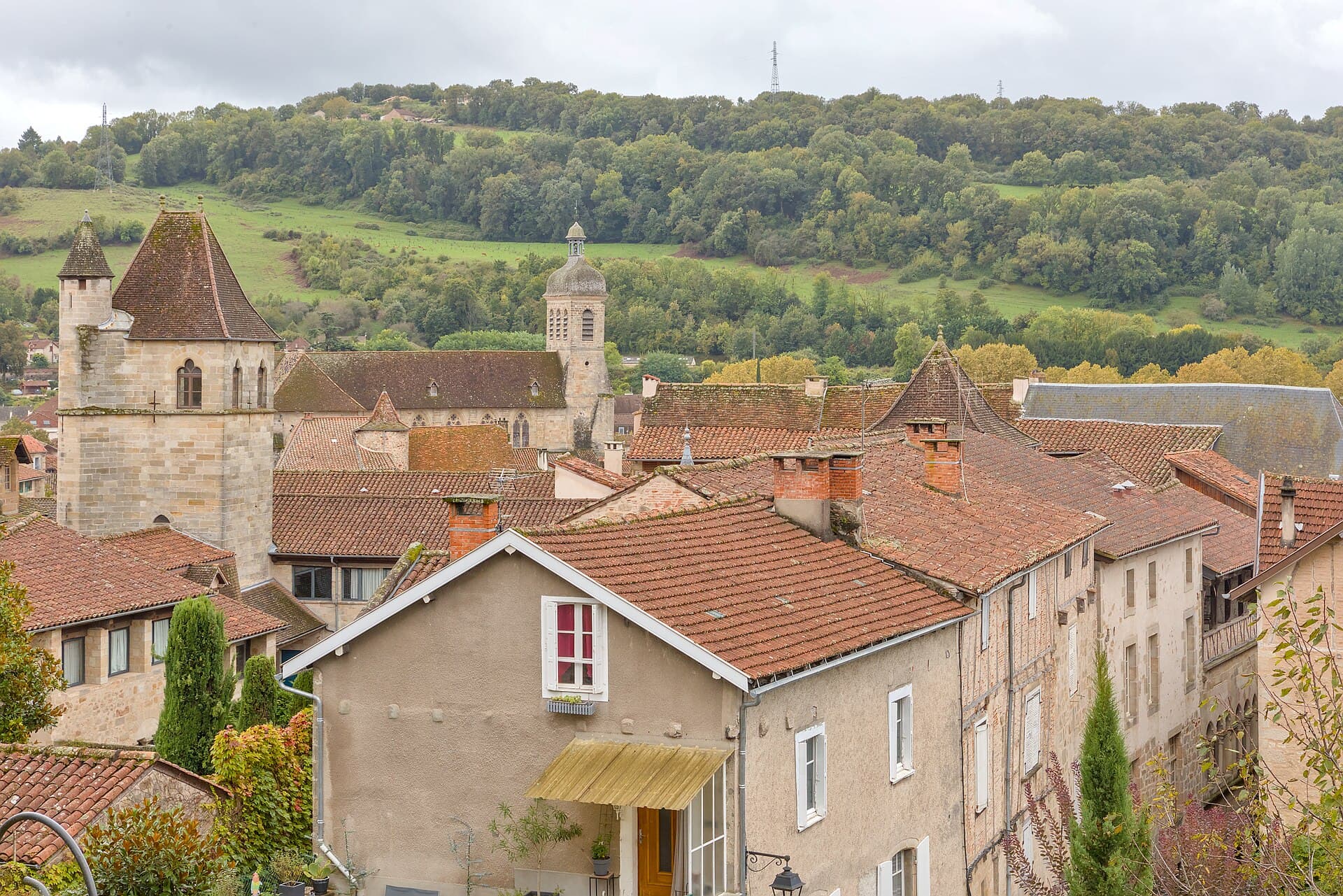
Figeac, a medieval town in the Lot department of southwestern France, invites a journey through centuries of human endeavor and culture. This 'City of Art and History' is celebrated for its remarkably preserved historic core, distinguished by winding pathways, sandstone structures, and timbered facades dating from the 12th to 14th centuries.
Beyond its architectural allure, Figeac holds a significant position in the world of linguistics as the birthplace of Jean-François Champollion, the scholar who unraveled Egyptian hieroglyphs. The town embraces its past while maintaining a spirited atmosphere, complete with active markets and cultural gatherings. It also serves as an important stop on the Camino de Santiago pilgrimage route, the Via Podiensis (GR®65), extending a welcome to pilgrims as it has since the 12th century.
## From Benedictine Abbey to a Thriving Trade Center Figeac's origins trace back to 838 AD, when Benedictine monks established an abbey on the site of the present-day Church of Saint-Sauveur. This religious foundation served as the initial core for the town's growth. Farmers and artisans settled around the monastery, and Figeac began to expand.
By the 12th century, Figeac had transformed into a flourishing trade center in medieval Quercy. Its strategic location facilitated the export of local products, leading to increased prosperity for its inhabitants. The town's affluence peaked in the 13th and early 14th centuries, making it one of the most prosperous cities in southern France. During this period, wealthy merchants and bourgeois constructed grand mansions, many of which still stand, displaying Gothic art and intricate carvings. The town also saw the establishment of communal institutions, indicating a degree of administrative independence.
## Conflicts, Rebirth, and Modernization The Hundred Years' War brought an end to Figeac's initial period of prosperity, but its medieval architecture largely endured. In the 15th and 16th centuries, the influence of the Renaissance led to the construction of more opulent mansions with sculpted facades. The town experienced a new wave of wealth in the 17th century, with nobility erecting classical-style mansions and churches receiving elaborate Baroque decorations.
The 19th century brought modernization to Figeac, including the arrival of railroads and industrialization, though some medieval heritage was lost during this time. However, by the late 20th century, the importance of Figeac's historic architecture was recognized, leading to protection and restoration efforts.
## A Legacy of Language Figeac's most celebrated historical figure is Jean-François Champollion, born in the town in 1790. His groundbreaking work in deciphering the Rosetta Stone in 1822 unlocked the mysteries of Egyptian hieroglyphs, earning him recognition as the founder of modern Egyptology. His childhood home now houses the Musée Champollion – Les Écritures du Monde, a unique museum dedicated to the history of writing systems from across the globe.
Begin your exploration in Figeac's historic heart, a network of medieval passages lined with sandstone structures and timbered facades. Obtain a map from the Tourist Office, situated in the 13th-century Hôtel de la Monnaie, to guide you through 30 points of interest.
A central feature is the Musée Champollion – Les Écritures du Monde, located in the birthplace of Jean-François Champollion. This museum explores the 5,000-year history of writing systems worldwide, with a particular focus on Egyptian hieroglyphs. Adjacent to the museum is the Place des Écritures, a public space featuring a large-scale replica of the Rosetta Stone, an artwork by American artist Joseph Kosuth.
Ascend to the Église Notre-Dame-du-Puy, positioned on a hill, for sweeping views of Figeac. This church, with Romanesque origins, features carved capitals and a 17th-century walnut altarpiece. The Church of Saint-Sauveur, founded in the 9th century, is the oldest and most significant church in Figeac, exhibiting Romanesque and Gothic architecture. Do not overlook the Commanderie des Templiers, an outpost established by the Knights Templar in 1187. For a change of pace, wander along the banks of the Célé River.
The most pleasant times to visit Figeac are during spring (April–June) and autumn (September–October). During these months, the weather is mild, and the surrounding countryside is particularly picturesque with wildflowers in spring and golden vineyards in autumn. The town is active but not overly crowded. Summer (July–August) also offers long sunny days, bustling markets, and cultural events, though it can be warm and more crowded due to travelers on the Camino de Santiago. Average daytime temperatures range from 19°C to 27°C during these peak seasons.
Figeac is accessible by train, with connections to cities like Brive-la-Gaillarde, Toulouse, Aurillac, and Rodez. The train journey from Paris takes approximately 6 hours with a change at Brive-la-Gaillarde. Local bus services, known as 'Le Bus,' operate 12 routes within Figeac and the wider Grand-Figeac area, with a complimentary bus service available for travel within Figeac itself. Regional liO buses also connect Figeac to other towns like Cahors, Rocamadour, and Saint-Cirq-Lapopie.
If driving, Figeac can be reached via the D840 from Rodez or the A20 from Toulouse. Toulouse-Blagnac Airport (TLS) is approximately 180 km away, and Rodez-Aveyron Airport (RDZ) is about 57 minutes away. The Figeac Saturday market is a highlight, offering local produce and crafts in Place Carnot, Place Vival, and Place Champollion. Many vendors prefer cash, so it is advisable to have Euros on hand.