Palais Bénédictine
The opulent Palais Bénédictine, home to the famous herbal liqueur, holds a secret within its elaborate architecture that goes beyond its monastic origins.
Full story unlocks in the tour
 Jean-Pol GRANDMONT / CC BY-SA 3.0, via Wikimedia Commons
“Where towering cliffs meet ancient legends and a potent elixir.”
Not the postcards. The stories even locals don't know — whispered in your ear, right where they happened.
The opulent Palais Bénédictine, home to the famous herbal liqueur, holds a secret within its elaborate architecture that goes beyond its monastic origins.
This impressive abbey church, larger than Notre-Dame de Paris, is said to have a miraculous origin story involving a very unusual delivery.
The modest ruins of the Ducal Palace belie its former significance as a Viking stronghold, where a famous conqueror celebrated a pivotal victory.
Discover every secret of Fécamp
Every address, every reveal in full — in your ear, right where it happened.
You pick your stops. You walk. The voice reveals what the others miss.
No tours available yet. Check back soon — we're preparing them.
Fécamp, a Norman port town on the Alabaster Coast, offers a compelling blend of maritime heritage, dramatic coastal landscapes, and a distinctive cultural legacy. The town's identity is deeply intertwined with the sea, from its active fishing fleet to the towering white cliffs that frame its pebble beach. Beyond the immediate charm of the harbor, Fécamp guards stories of monastic power, ducal grandeur, and the accidental creation of a world-renowned liqueur.
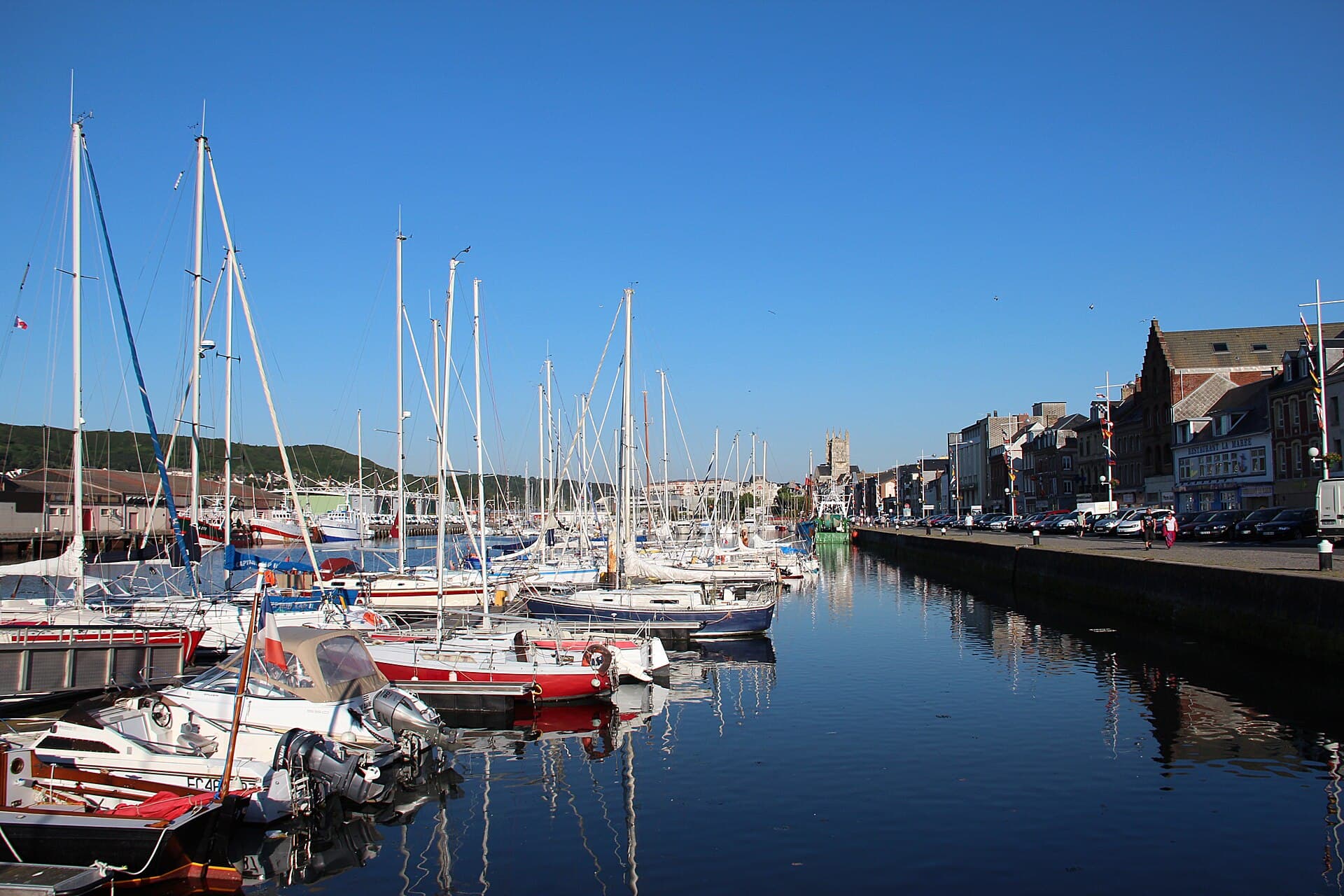
Walk along the seafront, where fishing boats bob gently, and the air carries the scent of salt and the cries of gulls. Explore the town's architectural layers, from the imposing Abbey Church of Sainte-Trinité to the whimsical Palais Bénédictine. The town invites a slower pace, encouraging visitors to absorb its unique atmosphere and uncover the narratives etched into its stone and landscape.
## From Ancient Shores to Ducal Power Fécamp's origins stretch back to antiquity, with evidence of Roman presence. Its strategic coastal position made it an attractive settlement. The name 'Fécamp' itself is thought to derive from Latin, possibly 'Fisci Campus' or 'Campus Fiscannus,' referring to a fiscal or public domain.
## The Rise of the Abbey The town's prominence truly began with the establishment of its powerful abbey. Legend attributes the founding of the Abbey Church of Sainte-Trinité to a miraculous event in the 1st century, involving vials of Christ's blood washing ashore. Regardless of its mythical beginnings, the abbey grew to become one of the most significant monastic centers in Normandy during the Middle Ages. Its influence extended far beyond spiritual matters, playing a crucial role in the region's political and economic life. The impressive scale of the current abbey church, rebuilt over centuries, testifies to its enduring importance.
## A Ducal Residence Fécamp also served as a primary residence for the Dukes of Normandy. The remains of the Ducal Palace, though modest today, recall a period when powerful figures like William the Conqueror walked its grounds. It was here, in 1067, that William celebrated his victory at the Battle of Hastings, cementing Fécamp's place in the annals of European history. The town's connection to the Dukes highlights its strategic and symbolic value within the Duchy of Normandy.
## Maritime Life and Modernity Throughout the centuries, Fécamp remained a vital fishing port. Its fleet engaged in cod fishing off Newfoundland, a dangerous but lucrative enterprise that shaped the town's character and economy. This maritime legacy is still visible today, from the working harbor to the museums that chronicle its seafaring past. In the 19th century, Fécamp gained another unique claim to fame with the 'rediscovery' and commercialization of Bénédictine liqueur, adding a distinctive cultural layer to its already rich identity.
Begin your exploration at the Abbey Church of Sainte-Trinité, an architectural marvel whose soaring Gothic and Romanesque elements command attention. Its sheer scale surpasses many cathedrals, offering a profound sense of history and spiritual grandeur. Afterward, journey to the Palais Bénédictine, a fanciful palace dedicated to the herbal liqueur. This elaborate structure houses a museum detailing the liqueur's history and production, alongside Alexandre Le Grand's eclectic art collection. The architecture itself is a delightful fusion of styles.
Descend to the Port de Fécamp, a working harbor where fishing boats unload their daily catch. The maritime atmosphere is palpable. Adjacent to the port, the Musée des Pêcheries (Fisheries Museum) offers a comprehensive look at Fécamp's deep connection to the sea, particularly its cod fishing heritage. For dramatic views, ascend to the Cap Fagnet, where the white cliffs meet the English Channel, providing sweeping vistas of the coastline and town below.
The months of May, June, and September offer agreeable weather for exploring Fécamp, with fewer crowds than the peak summer season. July and August provide the warmest temperatures, ideal for enjoying the beach and coastal walks, though the town will be more bustling. The shoulder seasons allow for a more contemplative experience of the town's architecture and maritime character.
Fécamp is accessible by train from Rouen, which connects to major French cities. If driving, the A29 and A13 motorways provide convenient routes. Parking is available in various lots around the town and near the port. Accommodation options range from hotels to guesthouses and holiday rentals, many offering views of the sea or the town center. Local buses serve the town, and walking is an excellent way to discover its attractions. Remember to wear comfortable shoes, especially if you plan to explore the cliffs or the extensive Abbey Church.