Chapel of the Apparitions
The iconic statue of Our Lady of Fátima holds a secret within its crown that connects directly to a global event.
Full story unlocks in the tour
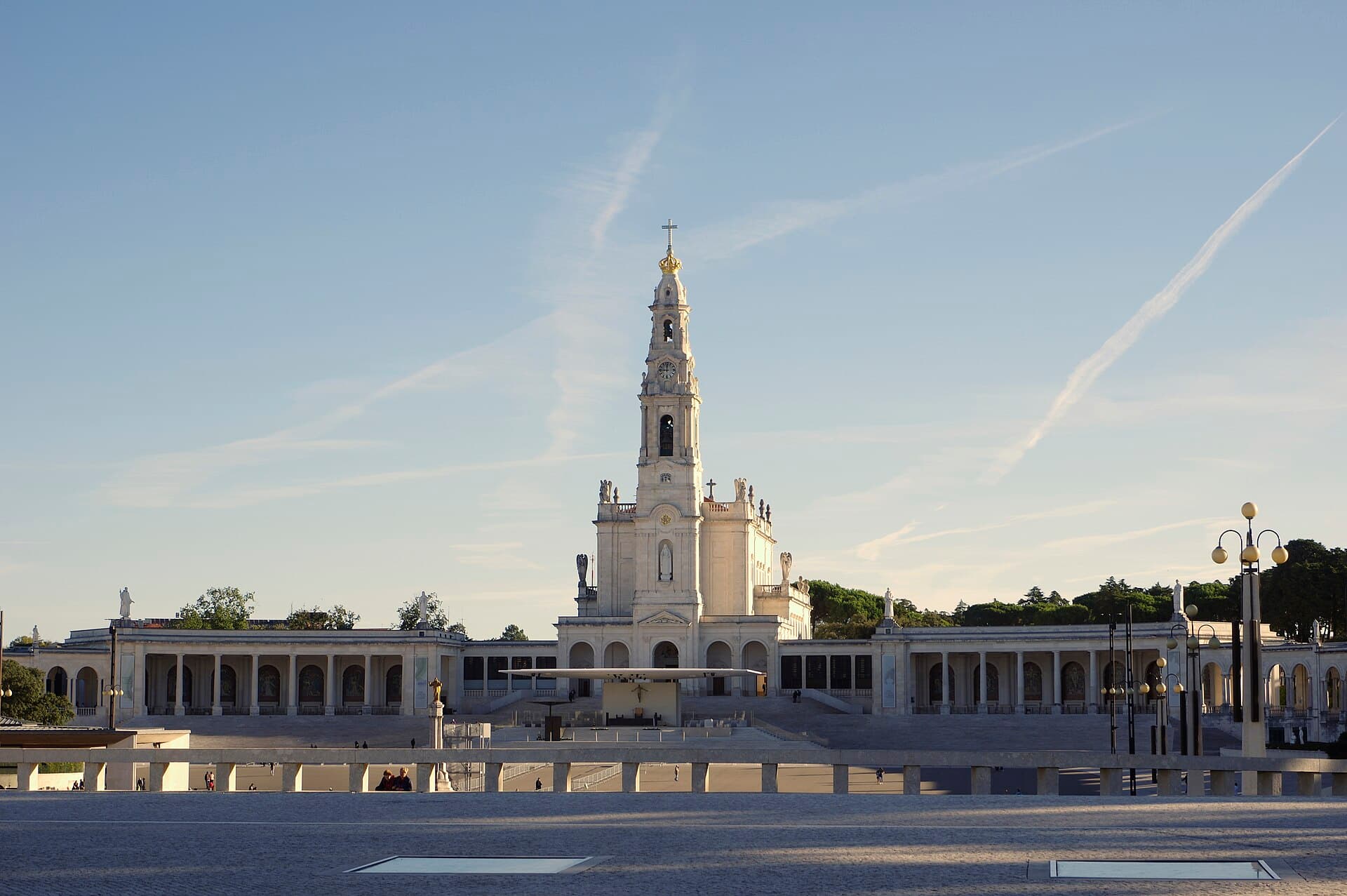 Berthold Werner / CC BY-SA 4.0, via Wikimedia Commons
“Where faith found its voice in a quiet Portuguese field.”
Not the postcards. The stories even locals don't know — whispered in your ear, right where they happened.
The iconic statue of Our Lady of Fátima holds a secret within its crown that connects directly to a global event.
This modern basilica, one of the largest Catholic churches globally, holds a piece of history from the very foundation of Christianity.
The humble homes of the shepherd children in Aljustrel offer a glimpse into their lives, but one particular well in Lúcia's backyard holds a lesser-known premonition.
Discover every secret of Fátima
Every address, every reveal in full — in your ear, right where it happened.
You pick your stops. You walk. The voice reveals what the others miss.
No tours available yet. Check back soon — we're preparing them.
Fátima, a city in central Portugal, draws millions of pilgrims and curious travelers each year. Its profound spiritual significance stems from a series of Marian apparitions reported in 1917 by three young shepherd children: Lúcia dos Santos and her cousins, Francisco and Jacinta Marto. These events transformed a quiet agricultural village into one of the most important Catholic pilgrimage sites in the world.
The heart of Fátima is the Sanctuary of Our Lady of Fátima, an expansive complex that includes two grand basilicas and the Chapel of the Apparitions. The sheer scale of the sanctuary, particularly during major pilgrimage dates, creates an atmosphere of intense devotion. Beyond the religious sites, Fátima offers a glimpse into early 20th-century rural Portuguese life through the preserved homes of the shepherd children in the nearby village of Aljustrel.
The story of Fátima begins in the spring of 1916, when the Angel of Peace appeared three times to Lúcia, Francisco, and Jacinta in Valinhos, preparing them for the visions to come. The Angel asked them to pray and make sacrifices.
On May 13, 1917, while tending sheep in Cova da Iria, the children reported seeing a radiant woman, 'a lady brighter than the sun,' who identified herself as Our Lady of the Rosary. This marked the first of six apparitions, occurring monthly until October 1917. During these encounters, the Virgin Mary conveyed messages of peace, repentance, and prayer, and revealed three 'secrets' to the children.
The final apparition, on October 13, 1917, was accompanied by a phenomenon witnessed by an estimated 30,000 to 70,000 people, including secular journalists and government officials. Despite a heavy rainstorm, the sun reportedly emerged, grew blindingly bright, appeared to 'dance' in the sky, and then plunge towards the earth before returning to its normal position. This event, known as the 'Miracle of the Sun,' was seen as a divine confirmation of the children's visions.
The Catholic Church initially regarded the apparitions with suspicion but, after a canonical investigation, declared them 'worthy of belief' on October 13, 1930. A small chapel was built at the site of the apparitions in 1919, which was later partially destroyed by anti-clerical forces in 1922 but quickly rebuilt. The construction of the neo-Baroque Basilica of Our Lady of the Rosary began in 1928 and was consecrated in 1953. Over the decades, the Sanctuary expanded significantly, with the modern Basilica of the Most Holy Trinity completed in 2007 to accommodate the increasing number of pilgrims.
Fátima's global renown further increased during the papacy of Pope John Paul II, a devoted follower of Our Lady of Fátima, who visited the Shrine multiple times. In 2017, Pope Francis canonized Francisco and Jacinta Marto, making them the youngest non-martyr saints in Church history. Lúcia dos Santos lived as a Carmelite nun until her death in 2005 at the age of 97, and her cause for canonization is underway.
The Sanctuary of Our Lady of Fátima is the central point of any visit. It encompasses a vast esplanade, twice the size of St. Peter's Square in Rome, where pilgrims gather.
At the heart of the Sanctuary is the Chapel of the Apparitions (Capelinha das Aparições), a modest structure built on the exact spot where the Virgin Mary appeared. It houses the venerated statue of Our Lady of Fátima.
At one end of the esplanade stands the Basilica of Our Lady of the Rosary (Basílica de Nossa Senhora do Rosário), a neo-Baroque church with a 65-meter bell tower. It contains the tombs of the three shepherd children: Lúcia, Francisco, and Jacinta.
Opposite, the contemporary Basilica of the Most Holy Trinity (Basílica da Santíssima Trindade), completed in 2007, is one of the largest Catholic churches in the world, capable of seating over 8,000 people. Its modern, circular design and impressive scale are notable.
Beyond the main Sanctuary, a short distance away in the village of Aljustrel, you can visit the preserved homes of the three shepherd children. These humble dwellings offer a tangible connection to their lives in early 20th-century rural Portugal.
The Via Sacra (Way of the Cross) leads from the Sanctuary to Valinhos, where the fourth apparition occurred, offering a peaceful path for reflection.
For those interested in geology, the Gruta da Moeda (Coin Caves), discovered in the 1970s, feature limestone formations with evocative names.
The Fátima Wax Museum presents key events from the city's past through lifelike figures, while the Olive Oil Museum provides insight into regional agricultural traditions.
The ideal time to visit Fátima depends on your preferences. For mild weather and outdoor activities, spring (April-May) or fall (September-October) are recommended. However, the most significant pilgrimage dates are May 13 and October 13, marking the anniversaries of the apparitions. These periods see a surge in pilgrims and religious ceremonies, including the Candlelight Procession on the evening of the 12th. If you prefer a quieter experience with fewer crowds, consider visiting between November and April. Weekdays are generally less crowded than weekends.
Fátima is approximately 120 kilometers north of Lisbon and 180 kilometers from Porto. The most convenient way to reach Fátima is by bus, with regular services from Lisbon (around 1 hour 30 minutes) and Porto. If driving, Fátima is located just off the A1 motorway.
When visiting the chapels and basilicas within the Sanctuary, it is important to dress respectfully, with shoulders and knees covered. The main esplanade is wheelchair accessible, and the basilicas have accessible entrances. Luggage storage facilities are available near the information desk on the esplanade. A half-day is sufficient to see the key sites at a comfortable pace, while a full day allows for attending Mass, walking the Way of the Cross, and visiting museums.