Falun Mine
Beneath the earth of Falun, a love story unfolded over 42 years, preserved in a most unusual way.
Full story unlocks in the tour
 Calle Eklund/V-wolf / CC BY-SA 3.0, via Wikimedia Commons
“Where ancient copper shaped a nation, and echoes of a thousand years still resonate.”
Not the postcards. The stories even locals don't know — whispered in your ear, right where they happened.
Beneath the earth of Falun, a love story unfolded over 42 years, preserved in a most unusual way.
The mine's most dramatic transformation happened on a day when no one was working, saving countless lives.
Before descending into the depths of the Falun Mine, miners had a unique ritual to appease an unseen guardian.
Discover every secret of Falun
Every address, every reveal in full — in your ear, right where it happened.
You pick your stops. You walk. The voice reveals what the others miss.
No tours available yet. Check back soon — we're preparing them.
Falun, the capital of Dalarna County in Sweden, is a city profoundly shaped by its industrial past, particularly the Falun Copper Mine. This UNESCO World Heritage Site, which operated for a millennium until 1992, was once one of the world's largest copper mines, supplying up to two-thirds of Europe's copper needs in its heyday. The city itself grew around this vital resource, evolving from a small mining settlement into a significant economic and political center in the 17th century.
Today, Falun offers a compelling blend of historical exploration and natural splendor. The Faluån river flows through the city, dividing it into two distinct sides, with the mine on one. Beyond the mine, visitors can explore charming wooden districts, experience the cultural richness of Dalarna, and enjoy the scenic landscapes that surround the city, including Lake Runn. Falun's influence extends even to the iconic Falu Red paint, a byproduct of the copper mining process that colors many traditional Swedish buildings.
The history of Falun is inextricably linked to its copper mine, with operations potentially beginning as early as 1000 AD, and certainly by the mid-13th century. Initially, local farmers engaged in small-scale ore gathering and smelting for household use. However, by the late 13th century, a more organized and professional mining operation emerged, with nobles and foreign merchants from Lübeck taking over. The Stora Kopparberg mining company, believed to be the world's oldest still-existing enterprise, was granted its charter in 1347.
The 17th century marked Falun's golden era, with the mine reaching its peak production and supplying a significant portion of Europe's copper. This immense wealth funded many of Sweden's wars during its Great Power era, with the Privy Council referring to the mine as the nation's treasury. Falun was chartered as a town in 1641, and by then, with approximately 6,000 inhabitants, it was already one of Sweden's largest cities, second only to Stockholm.
Despite its prosperity, the mine faced challenges. In 1687, a massive cave-in, known as 'Stora Stöten,' created a vast open pit, though fortunately, no lives were lost as it occurred during a holiday. Copper production gradually declined in the 18th century, leading the mining company to diversify into iron and timber, and notably, the production of Falu Red paint. The 19th century saw a brief gold rush in 1881 after gold was discovered in the mine. However, by the late 20th century, the mine was no longer economically viable, and commercial mining ceased on December 8, 1992. In 2001, the Falun Mine and its surrounding mining landscape were designated a UNESCO World Heritage Site, recognizing its profound impact on mining technology and global history.
A visit to Falun is incomplete without exploring the Falun Mine (Falu Gruva), a UNESCO World Heritage Site. You can take guided tours deep underground into 17th-century sections of the mine, experiencing the conditions miners faced. Above ground, a two-kilometer path runs along the edge of the dramatic Great Pit (Stora Stöten), offering interpretive signposts about the site's history.
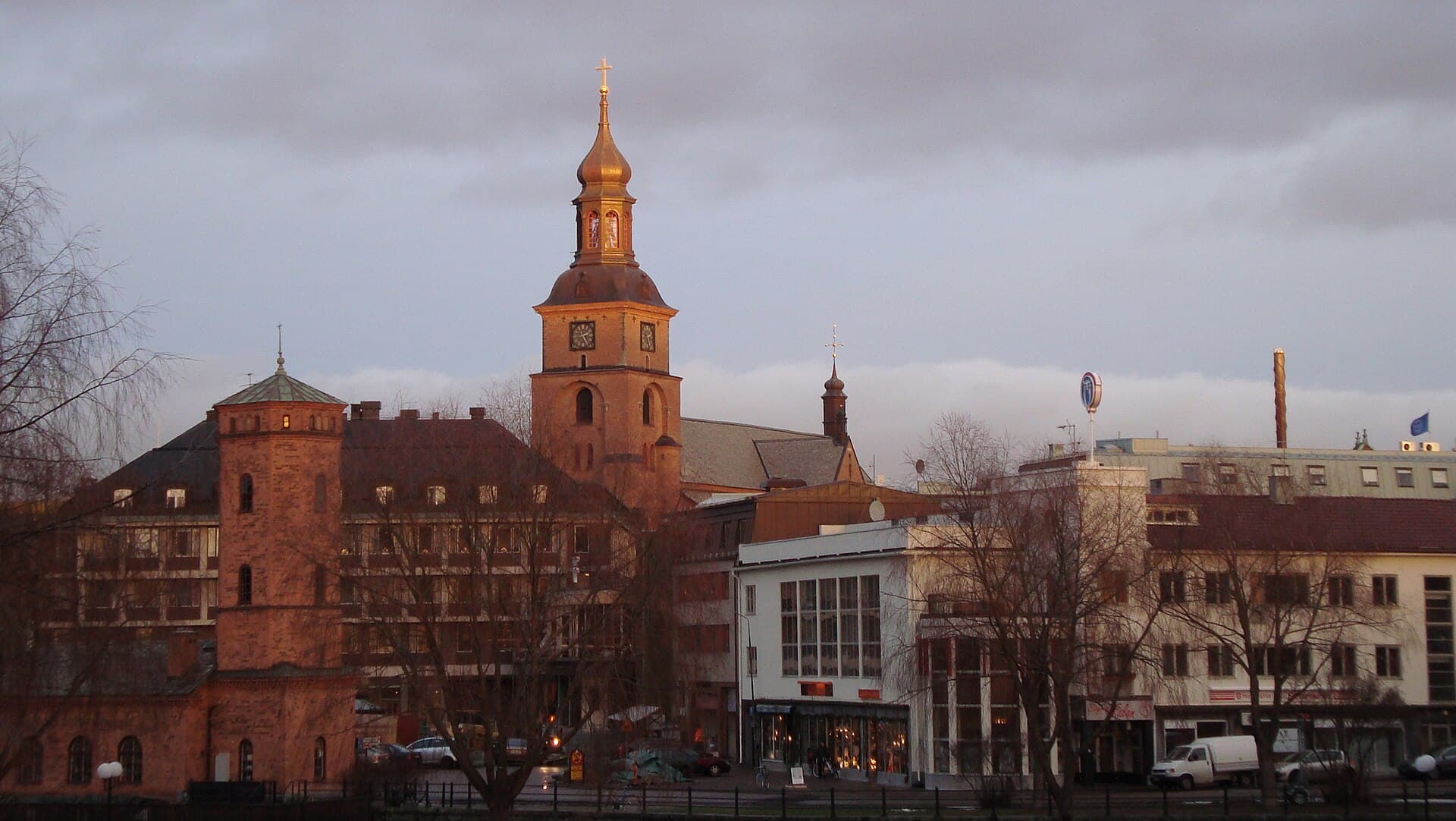
In the city center, Kristine Church (Kristine Kyrka), a copper-roofed structure from the mid-17th century, showcases Baroque and Renaissance interior styles. For a deeper dive into regional culture, the Dalarna Museum presents varied collections of Swedish folk art, music, and costumes. Just a 20-minute trip from Falun, in the village of Sundborn, is Carl Larsson-gården, the former home of renowned Swedish artists Carl and Karin Larsson, whose interiors significantly influenced Scandinavian design.
For outdoor enthusiasts, the Lugnet sports and leisure area features ski jumps built for the Ski World Cup, offering views of Falun and Lake Runn. Lake Runn itself is a popular spot for watersports in summer and ice skating on plowed tracks in winter.
The best time to visit Falun for mild weather and outdoor activities is during the summer, from June to August, when temperatures are comfortable, averaging around 20-22°C (68-72°F). While these months can have some rainy days, they offer a good balance of sunshine and moderate conditions for exploring. Spring, particularly May, brings milder weather and blooming landscapes, making it ideal for cultural sightseeing. Autumn, especially September, offers mild temperatures and opportunities to enjoy the deep forests and local culinary heritage. Winters are cold and snowy, with temperatures often below freezing, but offer magical ice skating on Lake Runn and winter sports opportunities.
Falun is approximately 223 kilometers northwest of Stockholm. If arriving by plane, Stockholm's Arlanda Airport (ARN) is the closest major international airport, with direct trains available to Falun; the journey takes about 3 hours. The city center is walkable, and many attractions, including the Falun Mine, are within walking distance of the central tourist area.
When visiting the Falun Mine, remember that the underground temperature remains a constant 5°C (41°F) year-round, so bring warm layers regardless of the season. It's advisable to book mine tours in advance, especially during peak season, to avoid queues. The mine is open all year, and children must be over 3 years old to go underground.
Falun offers a range of accommodations, from cozy hostels to hotels. The local currency is the Swedish Krona (SEK). The country code for Sweden is 46, and the area code for Falun is 23.