Faaborg Bell Tower
The Bell Tower stands as Faaborg's enduring landmark, yet it was not always a solitary structure.
Full story unlocks in the tour
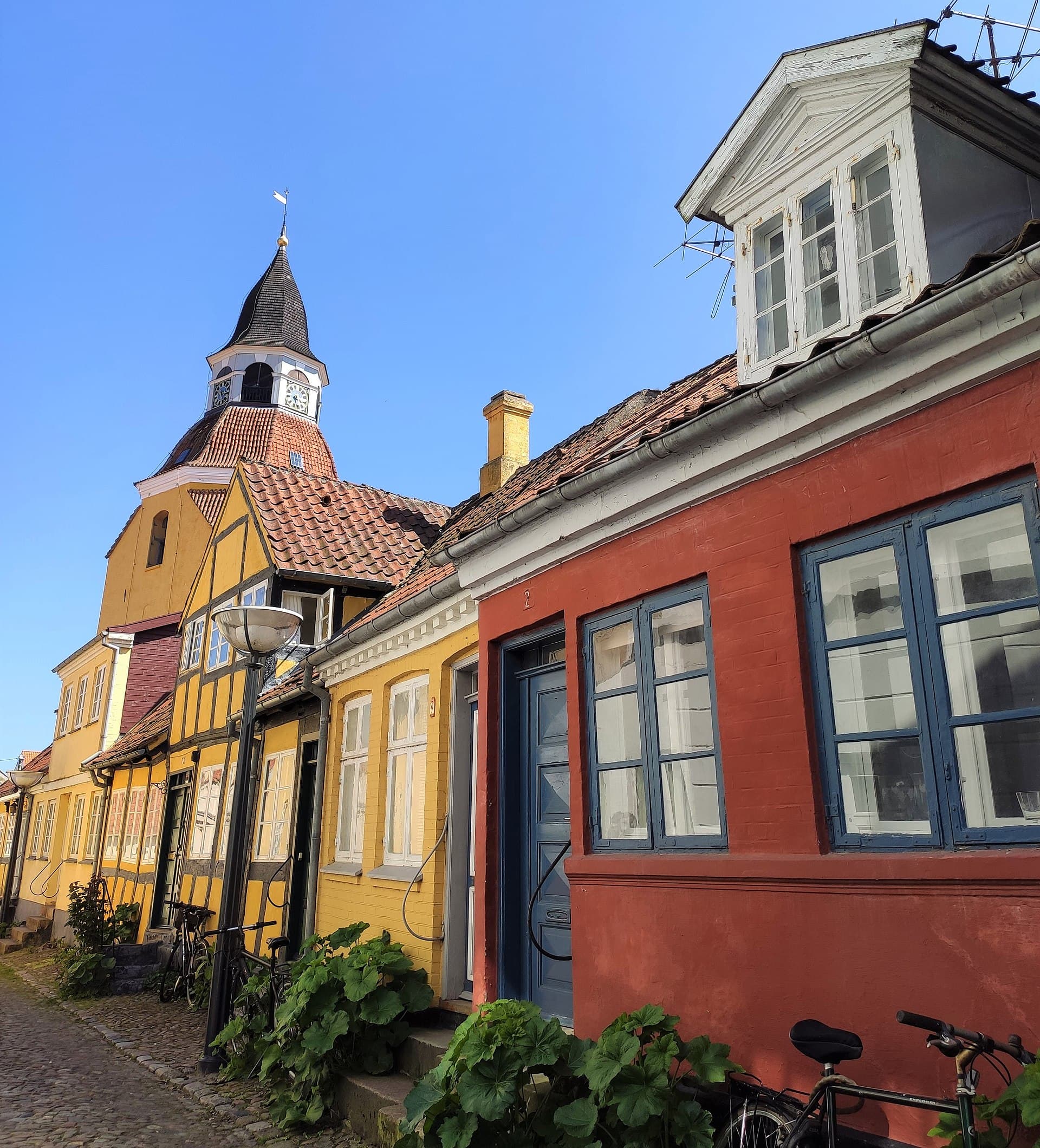 Linus Folke Jensen / CC0, via Wikimedia Commons
“Where ancient stones meet the sea, and history breathes through sun-drenched facades.”
Not the postcards. The stories even locals don't know — whispered in your ear, right where they happened.
The Bell Tower stands as Faaborg's enduring landmark, yet it was not always a solitary structure.
Faaborg once contained multiple medieval city gates, but only one remains to this day.
The Faaborg Museum houses a significant art collection, but its very existence is connected to a local industry.
Discover every secret of Fåborg
Every address, every reveal in full — in your ear, right where it happened.
You pick your stops. You walk. The voice reveals what the others miss.
No tours available yet. Check back soon — we're preparing them.
Fåborg, or Faaborg, is an old port town on the island of Funen in Denmark, positioned on Faaborg Fjord. It is a place where the passage of time is evident in the narrow, stone-paved streets and meticulously maintained old houses. The town is a cherished destination, particularly during the summer months, drawing visitors with its active harbor and inviting atmosphere.
Encircled by the South Funen Archipelago and the Svanninge Hills, Fåborg offers a fusion of coastal and inland experiences. The area is recognized as a UNESCO Global Geopark, celebrated for its geology and natural splendor. Whether you are exploring the historic town center, venturing out to the nearby islands, or hiking in the 'Funen Alps,' Fåborg provides a calm escape with a rich cultural fabric.
## Early Beginnings and Royal Gifts Fåborg's origins trace back to the Middle Ages, with its first mention as 'Foburgh' in a document from June 25, 1229. This deed, discovered in the French National Archives, records King Valdemar II's gift of Fåborg and southern Funen to his Portuguese daughter-in-law, Eleanor of Portugal, as a morning present. The name 'Foburgh' is thought to mean 'Fox Castle,' suggesting a fortification existed before this documented date. This 1229 date is considered Fåborg's inception, and the town marked its 775th anniversary in 2004.
## Medieval Growth and Trade As a medieval port and market town, Fåborg utilized its fjord location for regional trade. By the pre-industrial era, it became a crucial trading nexus connecting Danish islands with destinations in the western Baltic. The town primarily exported local agricultural products like grain and livestock, while importing timber and salt. By the 1890s, Fåborg's ships journeyed as far as the Mediterranean, and in the latter half of the 19th century, trade expanded to include the United Kingdom, China, and Australia.
## Architectural Heritage and Urban Development Fåborg's urban landscape reflects its long history, with stone-paved streets and buildings dating from the 1700s to the present day. Many houses, particularly along thoroughfares like Holkegade, Torvet, Vestergade, Grønnegade, and Bøjestræde, have been preserved and hold historical significance. The town's medieval fortifications once included four gates, but only Vesterport (West Gate), constructed around 1400, remains today. The iconic Bell Tower, a landmark of Fåborg, is a remnant of the demolished Saint Nicholas Church, with its oldest sections dating to the 15th century. The town experienced significant population growth in the late 19th century, from 1,000 to 4,000 inhabitants, leading to the establishment of several light industries.
Begin your exploration at the Faaborg Bell Tower, the town's most recognizable structure. This tower, dating back to the 15th century, offers sweeping views of the red rooftops, the Svanninge Hills, and the South Funen Archipelago. Listen for the glockenspiel melodies played daily.
Walk through the historic town center, where stone-paved streets like Holkegade and Vestergade display meticulously preserved houses. The Vesterport (West Gate), constructed around 1400, is the last remaining medieval city gate.
Art enthusiasts will find the Faaborg Museum compelling; it houses a significant collection of works by the Funen Painters, including Jens Birkholm, Peter Hansen, Johannes Larsen, and Anna and Fritz Syberg. The museum building itself is an architecturally notable structure from 1915.
For a glimpse into local cultural history, explore Den Gamle Gård on Holkegade, with exhibits depicting life in the 18th and 19th centuries. The Øhavsmuseet (Archipelago Museum) offers insights into the cultural heritage of the South Funen Archipelago.
Beyond the town, the Svanninge Bakker, often called the 'Funen Alps,' provide opportunities for hiking with expansive views of Helnæs Bay and the archipelago. You can also take a ferry from Fåborg Harbour to explore nearby islands like Lyø, Avernakø, and Bjørnø.
The ideal time to visit Fåborg for warm-weather activities is from late June to late August. During these summer months, daylight hours are long, and temperatures are comfortable, typically between 15°C and 20°C (59°F and 68°F), perfect for outdoor pursuits like hiking and island excursions. This is also when the harbor is most active. Spring, particularly May, offers pleasant weather with fewer crowds and blooming landscapes. Autumn, especially September and early October, provides good weather and smaller crowds as temperatures cool. Winter is a quieter time, with cold, windy, and mostly cloudy conditions, though it can offer a cozy atmosphere.
Fåborg is located 42 kilometers (26 miles) southwest of Odense. If traveling by air, Odense Airport (HCA Airport) is the closest, though it mainly serves charter tourists. Denmark's second busiest airport, Billund Airport, offers more flights from Europe; from there, public transportation involves a bus to Vejle, a train to Odense, and then a bus (route 141) to Fåborg. Once in Fåborg, the town is easily explored on foot, with many attractions within walking distance.
The local currency is the Danish Krone (DKK). Danish and English are commonly spoken. The Fåborg Tourist Office, located on Torvet 19, provides personal recommendations, ferry schedules, and information on local attractions. They are open on weekdays, with extended hours in July and August. Consider staying at one of Fåborg's bed and breakfasts for a local experience, or Hotel Faaborg Fjord for a spa retreat.