One chapter of Thus Spoke Zarathustra was written on this precise climb — Nietzsche even named the spot. Which chapter, and what did he say about it?
Jean Pierre Lozi / CC BY-SA 3.0, via Wikimedia CommonsÈze
“427 metres above the sea — where a goddess gave her name to a village and a philosopher found his words”
Èze, as no one tells it.
Not the postcards. The stories even locals don't know — whispered in your ear, right where they happened.
The village motto is in Latin, and it mentions a goddess nobody associates with the French Riviera. Look up at the coat of arms: what creature is sitting on a bone — and why?
Louis XIV had the castle demolished in 1706. What grows in its place today — and how did it get there at 429 metres?
Discover every secret of Èze
Every address, every reveal in full — in your ear, right where it happened.
You pick your stops. You walk. The voice reveals what the others miss.


How long do you have in Èze?
No tours available yet. Check back soon — we're preparing them.
The story of Èze
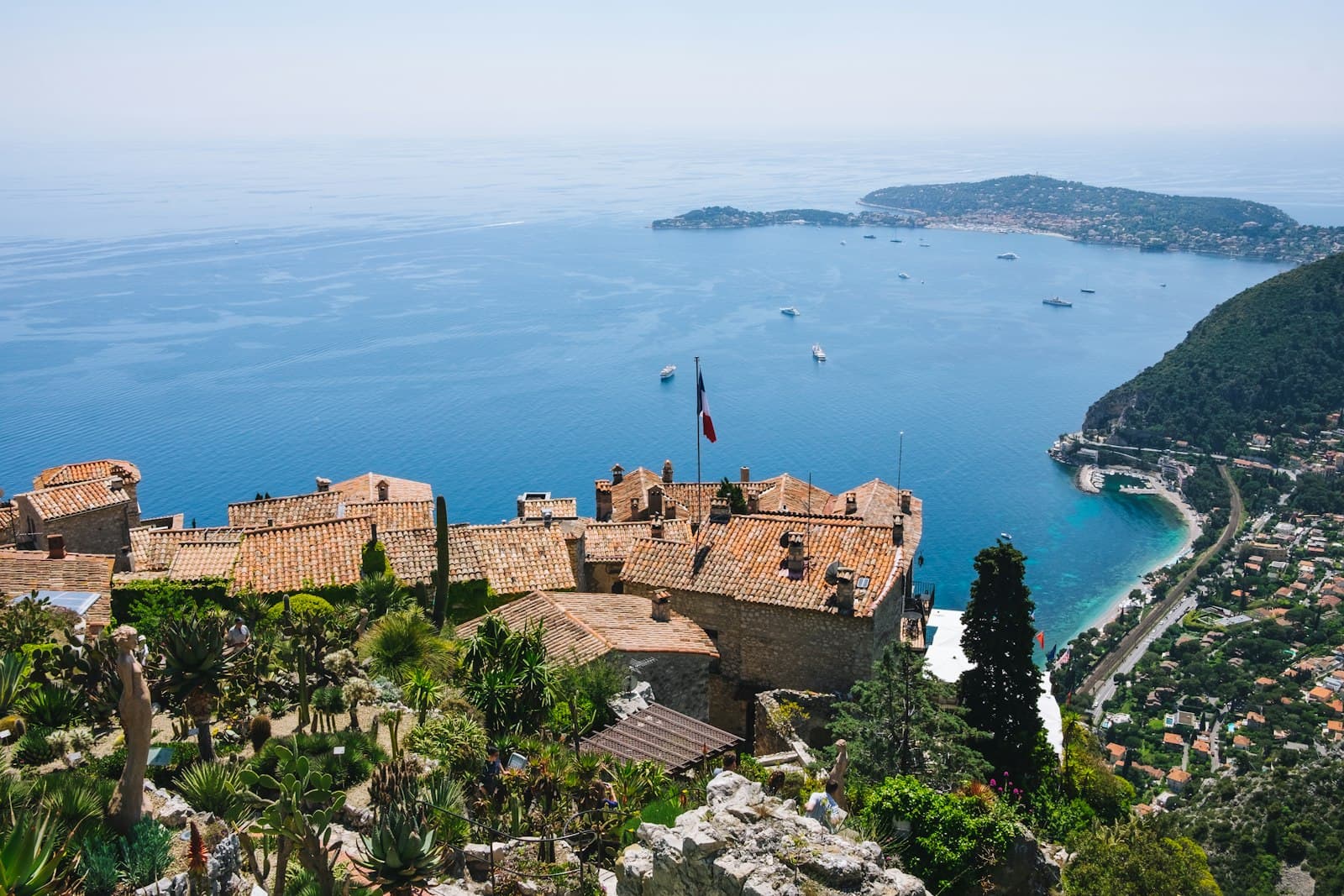
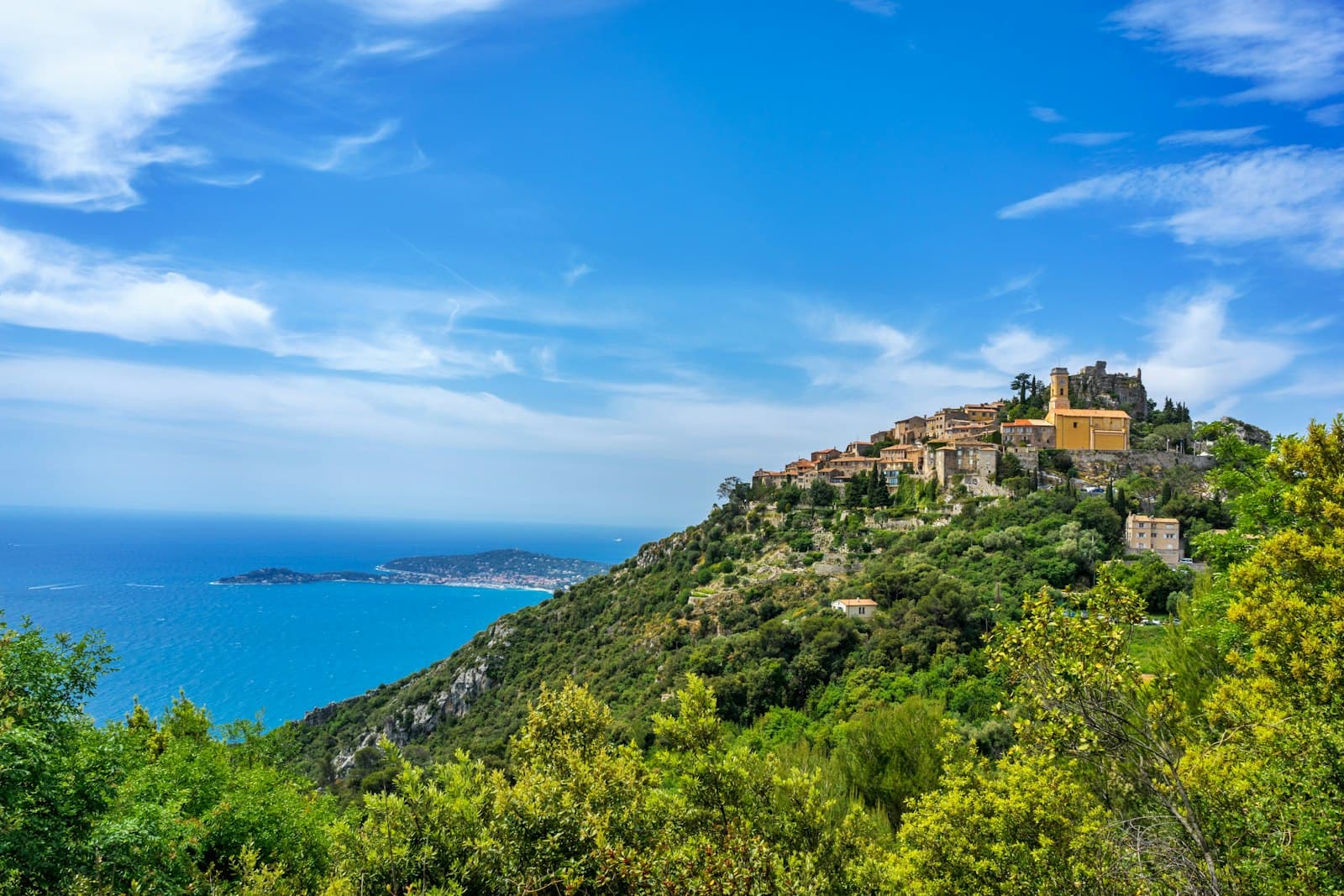
Èze sits 427 metres above the Mediterranean on a shard of rock so steep that, for most of its history, the only way in was a single gate in a wall. The sea is directly below — not as a distant shimmer but as a vertiginous presence, a drop of more than four hundred metres with nothing in between. From up here, on a clear day, the island of Corsica appears on the horizon.
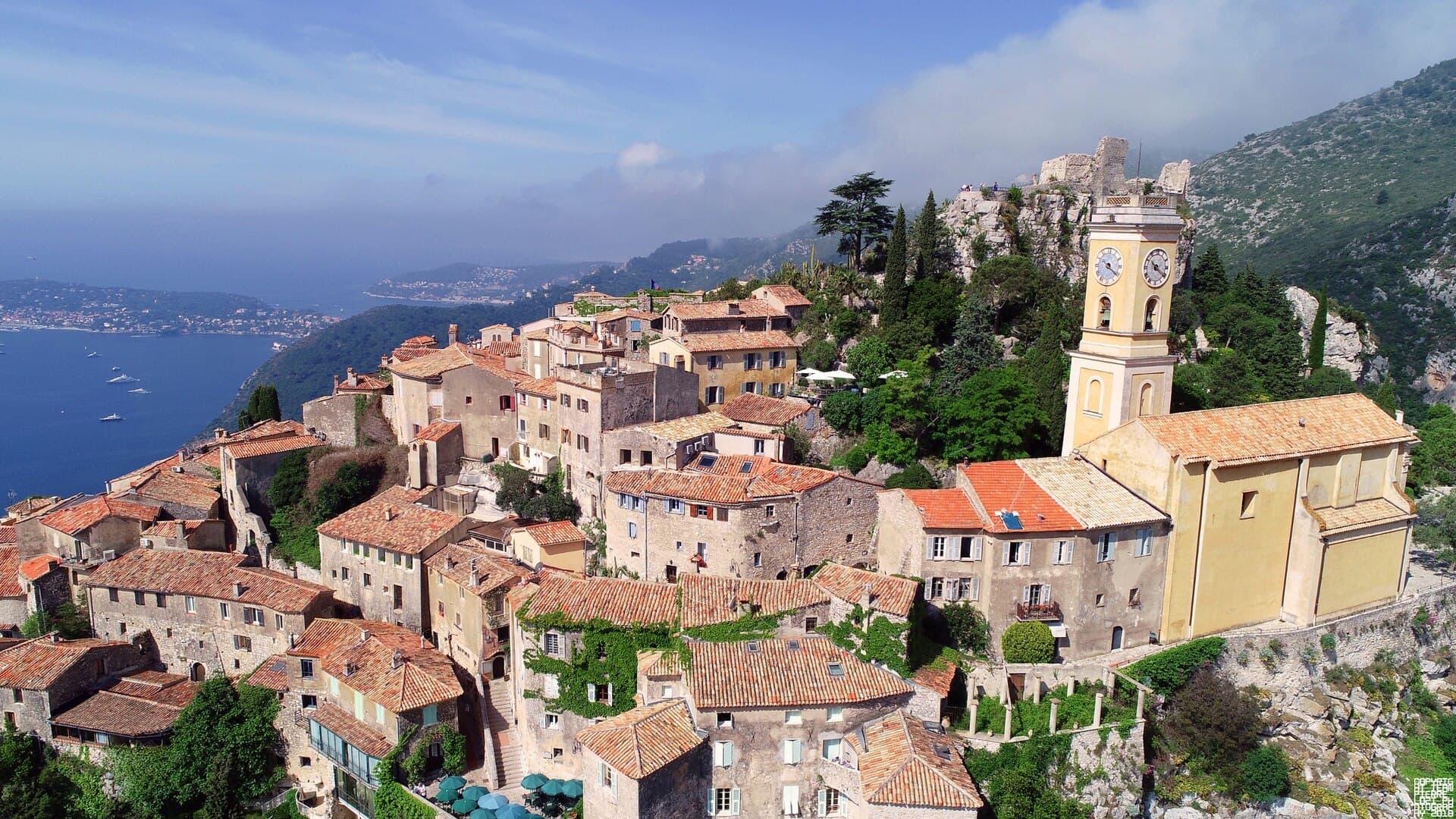
The village is small enough to walk across in twenty minutes, but layered enough that each lane conceals something the one before didn't: a doorway carved from Roman stone, a cactus garden growing in the rubble of a castle Louis XIV ordered flattened, a chapel where plague-workers once met in white hoods. About 2,100 people live here permanently. Most mornings between July and August, several thousand more arrive by bus and leave by sunset.
Lume's walk threads through the parts that the crowds tend to pass without pausing.
The rock at Èze has been occupied for at least four thousand years. Archaeological evidence places human settlement here around 2000 BC — the height offered sight-lines over the coast in every direction, which mattered first to whoever was being raided, and later to whoever was doing the raiding.
The Phoenicians, who colonised this stretch of coast and traded across the Mediterranean, built a temple on the summit dedicated to Isis, the Egyptian goddess of life and rebirth. The village's name is thought to derive from hers. A 4th-century Roman itinerary records the bay below as Avisionis portus. In the church built in 1764, an Egyptian cross survives from that first sanctuary. The village's coat of arms — a phoenix standing on a bone — carries the motto Isis Moriendo Renascor: in dying, I am reborn.
In the 3rd century BC, Greek traders were already here: a hoard of silver phialae, shallow ritual bowls, was buried on the promontory and unearthed in the nineteenth century. Those bowls now sit in the British Museum.
The Romans built baths. The Moors occupied the rock for roughly eighty years until 973, when William of Provence expelled them. In 1388, the House of Savoy took control, fortified the summit, and built the castle that would define the village's silhouette for three centuries — until 1706, when Louis XIV had it demolished during the War of the Spanish Succession to deny it to his Savoyard enemies.
In 1543, Ottoman admiral Hayreddin Barbarossa seized Èze as part of a Franco-Ottoman campaign against the House of Savoy. The village survived. In 1860, the people of Èze voted unanimously — in the very chapel built in 1306 to shelter plague workers — to become French.
The Jardin Exotique
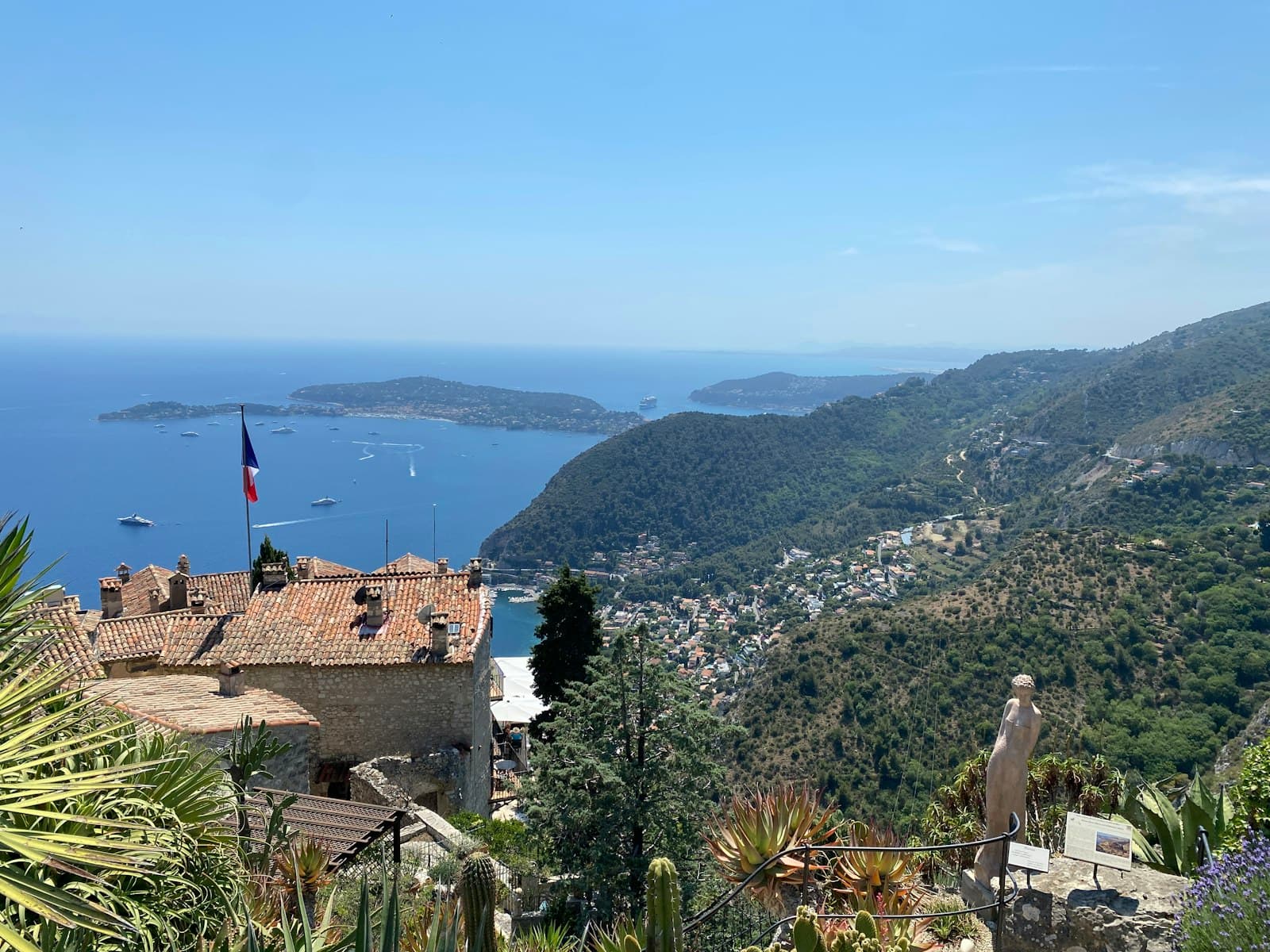
The garden at the summit occupies the demolished castle's footprint. In 1949, mayor André Gianton commissioned Jean Gastaud — who had designed Monaco's Jardin Exotique — to plant succulents and cacti from three continents on the rubble. No vehicle could reach the top; soil and plants were carried up by hand through the medieval lanes. The garden now holds species of barrel cactus, agave, aloe, euphorbia, and aeonium, with the sea visible through every gap in the vegetation, 429 metres below.
The Chapelle des Pénitents Blancs
Built in 1306, this is the oldest structure in the commune. The lay order of the White Penitents met here to care for the sick during plague epidemics, dressed in white robes and hoods. In 1860, it was in this chapel that the residents of Èze cast their unanimous vote to join France.
The Nietzsche Path
A 4.2-kilometre trail descends from the village to Èze-sur-Mer below, following the route Nietzsche walked daily during the winter of 1883–84. The descent takes forty-five minutes and gains (or loses) 440 metres. The path begins in stone steps, passes through pine forest, and opens at intervals onto the coast. Nietzsche wrote in Ecce Homo that the chapter "On Old and New Tablets" — the philosophical heart of Part III of Thus Spoke Zarathustra — was composed on this climb. Walking it up, as he did, takes roughly ninety minutes.
Château de la Chèvre d'Or
A medieval château converted into a restaurant by Robert Wolf in 1953, and into a luxury hotel after Walt Disney, visiting in 1956, told Wolf the setting deserved something more permanent. The hotel's restaurant earned its first Michelin star in 1978 and its second in 2000. The property is threaded through the village, with rooms in different historical buildings connected by terraces.
Galimard and Fragonard
Two of France's oldest perfume houses have outposts at or near Èze. Galimard, founded in Grasse in 1747, operates a factory and museum in the village. Fragonard, founded in 1926, opened a factory-laboratory on the Moyenne Corniche in 1968, at the base of the Èze rock above the sea. Both offer free guided visits and workshops where you can compose a personal fragrance at the perfumer's organ.
The village is at its quietest between November and March. Temperatures are mild by northern European standards — rarely below 5°C — and the lanes are accessible without negotiating tour groups. The Jardin Exotique is open year-round.
April, May, and early June offer the best balance: warm days, open restaurants, and manageable crowds. The Nietzsche Path is pleasant in these months before summer heat makes the climb punishing.
July and August bring the largest crowds: buses from Nice arrive full and the village fills by 10 a.m. If you visit in high season, arrive before 9 a.m. or after 4 p.m., when most day-trippers leave.
September and October are comfortable and less crowded than summer, with better light for the view from the garden.
Getting there from Nice: Bus 82 from Nice-Vauban tram stop runs approximately hourly and stops at the foot of the village. Journey time: 35–40 minutes. Bus 83 connects Èze-sur-Mer train station to the village, also roughly hourly — useful if you plan to walk the Nietzsche Path up and take the bus back down (or vice versa).
Getting there from Monaco: Bus 82 also stops at Monaco. Journey time from Monaco: about 20 minutes.
By car: Parking is limited and fills early in summer. The Oppidum car park at Col d'Eze on the Grande Corniche (€10/day in high season) has a free shuttle to the village every 15 minutes. The Effia car park beneath Place Charles de Gaulle is bookable in advance.
Entry: The village itself is free to enter and always open. The Jardin Exotique has a paid entry (check current rates at the gate). The Fragonard factory visit is free.
Walking the Nietzsche Path: Begin at Èze-sur-Mer train station. The path is 4.2 km, with 440 m of elevation gain. Allow 90 minutes going up, 45 minutes going down. Wear shoes with grip; sections are steep and uneven. Not suitable in wet weather.
- How long does a visit to Èze typically take?
- Allow two to three hours for the village itself: the Jardin Exotique (45–60 minutes), the medieval lanes and chapel, and time to sit somewhere with the view. Add 90 minutes if you plan to walk the Nietzsche Path down to Èze-sur-Mer. A half-day from Nice is realistic; a full day lets you linger.
- Is Èze accessible by public transport from Nice?
- Yes. Bus 82 from the Nice-Vauban tram stop runs roughly hourly and stops at the entrance to the village (journey: 35–40 minutes). No reservation required. Alternatively, take a train to Èze-sur-Mer and either hike the Nietzsche Path up (90 minutes) or catch bus 83, which connects the station to the village.
- What is the Nietzsche Path, and can anyone walk it?
- The Chemin de Nietzsche is a 4.2 km trail between Èze village and the seaside station at Èze-sur-Mer, dropping 440 metres. Nietzsche walked it daily during the winter of 1883–84 while composing Part III of Thus Spoke Zarathustra. The path is steep in sections with uneven stone steps. It is manageable for most people in good footwear, but not suitable in wet conditions or for those with limited mobility.
- When is the best time to visit Èze to avoid the crowds?
- April, May, and early June offer the best conditions: warm, uncrowded, and with the gardens in good shape. November to March is quietest but some restaurants and shops close. If visiting July–August, arrive before 9 a.m. or after 4 p.m. — the village fills completely during the midday hours of high season.
- What does the village motto mean, and why does it reference Isis?
- The motto is Latin: *Isis Moriendo Renascor*, meaning "In dying, I am reborn." The Phoenicians who settled here around 2000 BC built a temple to the Egyptian goddess Isis on the summit. The name Èze is thought to derive from hers. The motto was chosen to reflect the village's repeated destruction and reconstruction over four thousand years. The coat of arms shows a phoenix standing on a bone.
- Are there perfume workshops at Èze?
- Yes. Galimard (founded Grasse, 1747) has a factory and museum in the village offering free guided tours and a paid workshop where you compose your own fragrance. Fragonard opened a factory-laboratory on the Moyenne Corniche below the village in 1968; it also offers free guided visits and fragrance-creation workshops. Both can be combined in a single visit.