Plaza de las Flores
This central square, now a fragrant hub of activity, once bore a different name with every shift in political power.
Full story unlocks in the tour
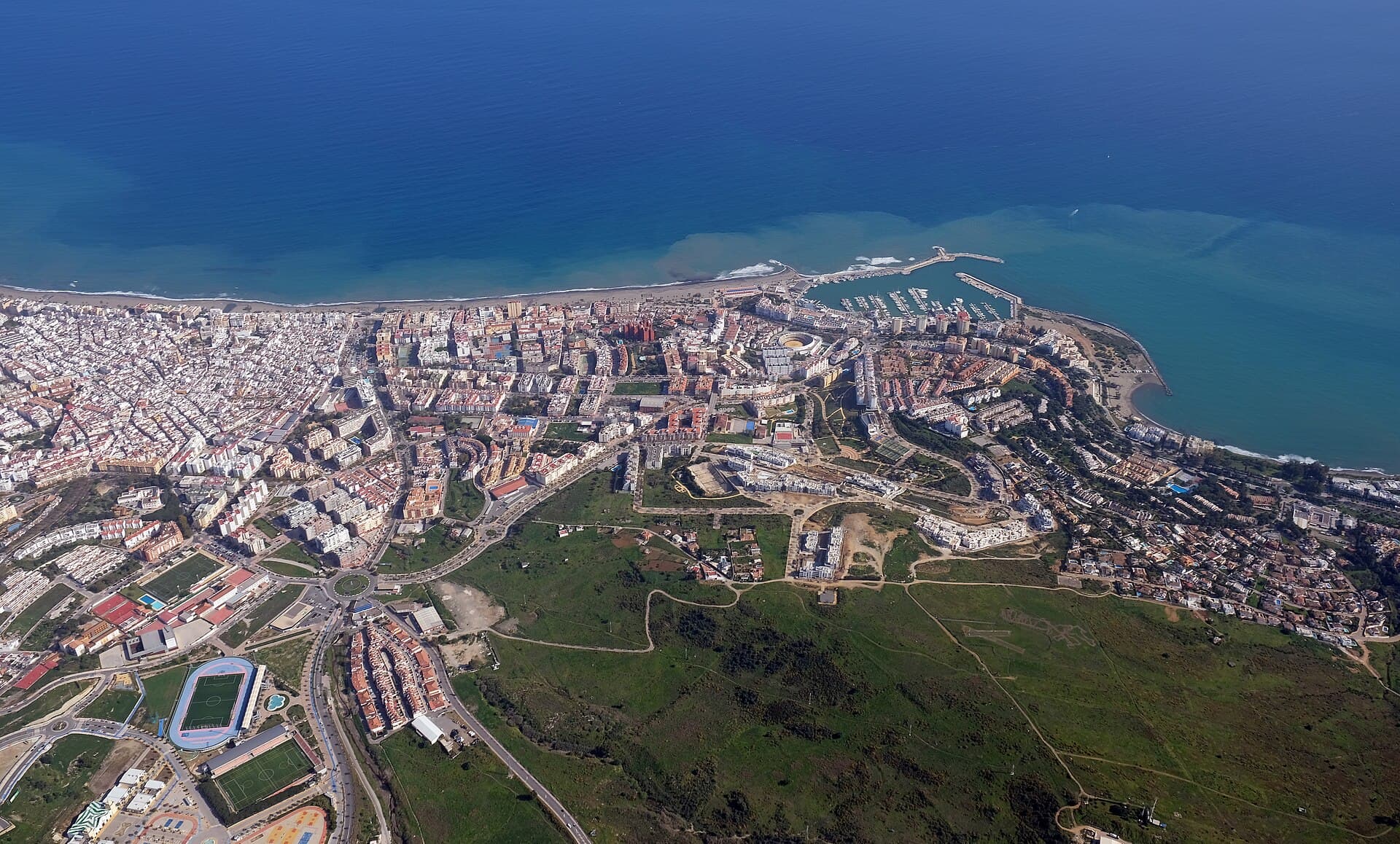 kallerna / CC BY-SA 4.0, via Wikimedia Commons
“Where whitewashed streets bloom with color, and ancient stories linger.”
Not the postcards. The stories even locals don't know — whispered in your ear, right where they happened.
This central square, now a fragrant hub of activity, once bore a different name with every shift in political power.
The bullring here stands out from all others, not for its age or size, but for a unique architectural quirk.
The abundance of colorful flower pots adorning Estepona's streets isn't just a charming aesthetic; it's the result of a long-standing town tradition.
Discover every secret of Estepona
Every address, every reveal in full — in your ear, right where it happened.
You pick your stops. You walk. The voice reveals what the others miss.
No tours available yet. Check back soon — we're preparing them.
Estepona, a coastal town on Spain's Costa del Sol, offers a blend of traditional Andalusian character and modern comforts. Unlike some of its more developed neighbors, Estepona has maintained its authentic feel, with fishing boats still returning to the marina each morning and locals tending to flower pots outside whitewashed houses. The town has earned the moniker 'The Garden of the Costa del Sol' due to a concerted effort to adorn its streets with thousands of colorful flower pots, botanical murals, and meticulously cared-for gardens.
Exploring Estepona feels like stepping into an open-air art gallery and botanical garden. Its pedestrianized Old Town is a labyrinth of narrow, cobbled streets, leading to unexpected plazas filled with the scent of jasmine and orange trees. Beyond its picturesque old quarter, Estepona presents a coastline stretching over 21 kilometers, featuring 17 beaches with clean waters and good facilities. The town also serves as a gateway to the dramatic Sierra Bermeja mountains, offering a contrasting natural landscape just a short distance from the sea.
Estepona's history stretches back thousands of years, with evidence of human existence dating approximately 5,000 years ago, as seen in the Corominas Necropolis found in the hills above the town. Phoenicians and Romans later settled in the area, with the town known as Astapa during Phoenician colonization. The Roman settlement near the River Guadalmansa, possibly linked to the city of Salduba, flourished during their era.
The 8th century marked the beginning of Muslim conquest, leading to the construction of fortresses like 'Munt Nis' or El Nicio Castle and later, 'Estebunna,' which gave the town its current name. For centuries, Estepona was a contested territory between the Moors and Christians.
King Enrique IV of Castile captured Estepona from the Moors in 1457, ordering the rebuilding of the castle to secure the territory. Following the reconquest of Granada in 1492, the Catholic Monarchs reinforced the old Muslim castle and added the separate San Luis Castle, along with watchtowers along the coast. Thirty families settled under the castle's protection, forming the nucleus of the modern town. Until 1729, Estepona was under the jurisdiction of Marbella. However, King Felipe V granted Estepona independent town status that year, allowing it to flourish.
In the 19th century, Estepona saw urban expansion towards the east, with the creation of Plaza de las Flores as a central square. The town entered the 20th century primarily as a village of farmers and fishermen. More recently, Estepona has undergone a significant beautification campaign, transforming its historic center into the 'Garden of the Costa del Sol' with its flower-lined streets and extensive mural route.
Estepona's Old Town, or Casco Histórico, is a highlight, characterized by narrow cobbled streets, whitewashed facades, and an abundance of colorful flower pots. The heart of the Old Town is Plaza de las Flores, a flower-filled square with café terraces, serving as an ideal starting point for exploration. From here, wander to discover the Iglesia de Los Remedios, where climbing the tower offers views over the rooftops, and Casa de las Tejerinas, a historic building hosting free contemporary art exhibitions.
The Mural Route transforms the town into an open-air art gallery, with over 60 large-scale murals adorning buildings. One notable mural, 'Día de Pesca,' spans six stories and is considered one of Spain's largest urban murals. Another unique artistic endeavor is the Poetry Route, a series of ceramic plaques with poems by Spanish and Latin American writers embedded throughout the Old Town.
For a botanical escape, the Orchidarium is an unexpected attraction, housing over 1,300 orchid species and a dramatic indoor waterfall under three glass domes. Estepona's 17 beaches, including the central Playa de la Rada, offer fine sand and calm waters, with the Senda Litoral coastal path providing a scenic walk. The Mirador del Carmen, a modern tower, offers panoramic views of the coast. The Estepona Marina comes alive in the evenings with open-air terraces, seafood restaurants, and boat trips.
Estepona enjoys a Mediterranean climate with over 320 days of sunshine annually. The best time to visit for comfortable temperatures and low rainfall is between April and June, or during September and October. Spring (April-June) offers mild temperatures ranging from 17°C to 25°C, ideal for outdoor exploration and enjoying the blooming flora. Autumn (September-October) brings pleasant temperatures between 18°C and 24°C, with continued opportunities for beach activities and hiking, though with slightly higher rainfall than spring and summer. Summers (July-August) are warm, with temperatures often reaching the high 20s and low 30s°C, perfect for beach lovers, with sea temperatures ideal for swimming.
Estepona's town center is highly walkable, making it easy to explore the Old Town and nearby beaches on foot. For excursions further afield, such as to Sierra Bermeja or neighboring towns, a car is recommended. Public transportation includes local buses that connect to places like Marbella and Málaga. Parking can be challenging in the Old Town, so consider accommodation with parking if driving.
Regarding expenses, utilities are reasonable, typically ranging from €60 to €200 per month depending on usage. Council tax is generally lower than in some other countries. Dining out can be affordable, with a menu del día (set lunch) costing around €10 to €15 for three courses. Groceries, particularly fresh produce and fish, are of excellent quality and often cheaper than in some other European countries.