Zollverein Coal Mine Industrial Complex
This UNESCO World Heritage site, once the world's largest coal mine, holds a secret beyond its impressive architecture and industrial history.
Full story unlocks in the tour
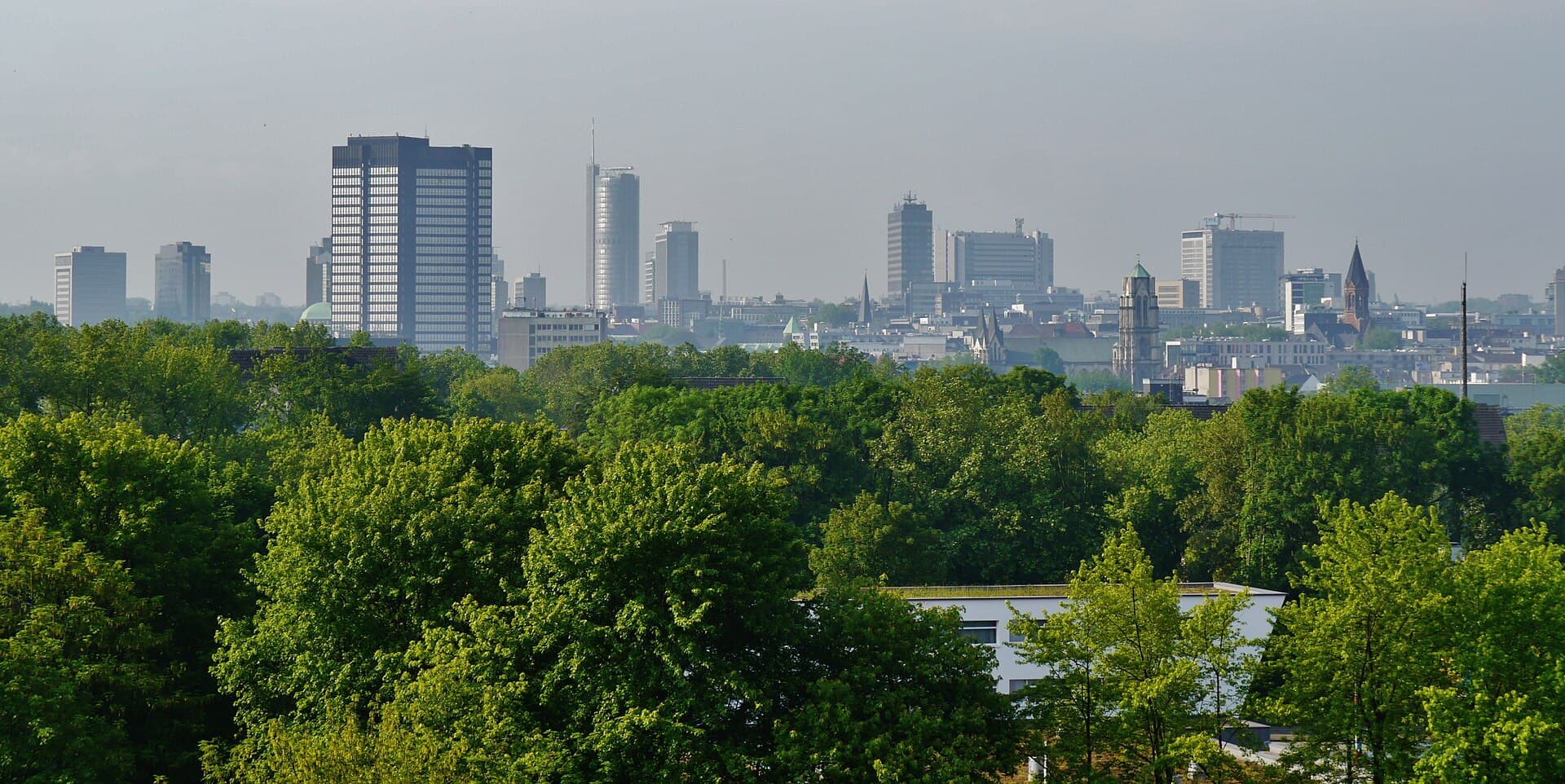 Zairon / CC BY-SA 4.0, via Wikimedia Commons
“Essen: Where industrial might transformed into cultural light.”
Not the postcards. The stories even locals don't know — whispered in your ear, right where they happened.
This UNESCO World Heritage site, once the world's largest coal mine, holds a secret beyond its impressive architecture and industrial history.
The opulent 269-room mansion of the Krupp family, industrial titans of Germany, was built with a surprising and very specific design philosophy.
Essen's largest lake, a popular spot for water sports and recreation, has a transformative origin story that's less serene than its current appearance.
Discover every secret of Essen
Every address, every reveal in full — in your ear, right where it happened.
You pick your stops. You walk. The voice reveals what the others miss.
No tours available yet. Check back soon — we're preparing them.
Essen, a city in the heart of Germany's Ruhr region, has undergone a remarkable transformation. Once a powerhouse of coal and steel, it has reinvented itself as a center for culture, design, and green initiatives. This reinvention earned Essen the title of European Green Capital in 2017, a testament to its commitment to sustainability and environmental quality.
Despite its industrial past, Essen is now recognized as the third greenest city in Germany, with expansive parks and green spaces. The city's unique blend of industrial heritage and modern cultural energy offers a compelling experience for visitors, from exploring former industrial complexes reimagined as cultural hubs to enjoying serene lakeside activities. Essen serves as a gateway to understanding the broader structural change (Strukturwandel) of the Ruhr area, demonstrating how a region can successfully pivot from heavy industry to a diverse economy focused on innovation and quality of life.
Essen's origins trace back to approximately 845 AD with the founding of Essen Abbey, an aristocratic convent that served as the city's spiritual, political, and cultural core for centuries. The Essen Cathedral, a significant religious site, still stands today, housing treasures like the Golden Madonna, a 10th-century sculpture considered the oldest known depiction of Mary.
The true turning point in Essen's history arrived in the 19th century with the onset of the Industrial Revolution. The city rapidly became a leading center for coal mining and steel production in Germany, largely due to the influence of the Krupp family. Friedrich Krupp established his steel factory in 1811, laying the groundwork for what would become one of Europe's largest industrial enterprises. The Krupp family's impact was so profound that Essen was even nicknamed 'Kruppstadt.' By 1890, the Zollverein Coal Mine, founded in 1847 by Franz Haniel, was producing one million tons of coal, making it one of Germany's most productive mines.
Essen's industrial dominance, however, came with a cost. As a major center for war industry, the city suffered extensive destruction during World War II. Following the war, the region experienced a significant decline in heavy industries starting in the 1950s. The Zollverein Coal Mine, once the largest of its kind in Europe, ceased operations in 1986, symbolizing the end of an era. The coking plant followed suit in 1993.
Rather than succumbing to industrial decline, Essen embarked on a remarkable journey of structural change. The former industrial sites were not demolished but reimagined. In 2001, the Zollverein Coal Mine Industrial Complex was designated a UNESCO World Heritage Site, recognizing its architectural significance and its role as a symbol of European industrial development. The city has since transformed into a hub for culture, design, and green initiatives, earning the title of European Capital of Culture for the entire Ruhr area in 2010 and European Green Capital in 2017. This ongoing transformation showcases Essen's ability to leverage its industrial past to build a sustainable and culturally rich future.
Begin your exploration at the Zollverein Coal Mine Industrial Complex, a UNESCO World Heritage site and a striking example of Bauhaus-inspired industrial architecture. Here, you can delve into the region's industrial past at the Ruhr Museum or explore contemporary design at the Red Dot Design Museum. Next, visit Villa Hügel, the former residence of the influential Krupp family. This 19th-century mansion, with its 269 rooms and expansive park, offers a glimpse into the lives of Germany's industrial magnates and now hosts cultural events and exhibitions.
For art enthusiasts, the Museum Folkwang is a rewarding experience, housing an impressive collection of 19th and 20th-century art, including works by renowned artists such as Van Gogh, Cézanne, and Manet. The museum also incorporates the German Poster Museum, holding one of Europe's largest collections of posters. Find respite in nature at Grugapark, one of Germany's largest urban parks, featuring botanical gardens, sculptures, and various recreational facilities. Finally, enjoy the serene Baldeneysee, Essen's largest lake, perfect for walking, cycling, or a boat tour, offering a peaceful contrast to the city's industrial heritage.
The best time to visit Essen for pleasant weather and outdoor activities is from mid-May to mid-September. July and August are the warmest months, with average daytime temperatures ranging from 16°C to 25°C (61°F to 77°F). While these months are ideal for exploring parks and lakes, be prepared for occasional summer showers. Spring (March-May) and autumn (September-November) offer milder temperatures and are suitable for museum visits and enjoying the changing foliage.
Essen is well-connected and easily accessible by car, train, and plane. The city is linked to major German motorways (A40, A42, A52). Essen Hauptbahnhof (Central Station) is a significant rail hub, with numerous InterCity, EuroCity, and InterCityExpress trains stopping daily, connecting it to major German and European cities. Düsseldorf International Airport (DUS) is a convenient option, approximately 20 minutes away by car or 21 minutes by train.
Within Essen, a comprehensive public transportation network, operated by Ruhrbahn under the Verkehrsverbund Rhein-Ruhr (VRR) association, includes U-Bahn (subway), Straßenbahn (trams), buses, and regional trains. Single tickets within the city typically cost around €3.00, while a 24-hour pass is approximately €7.00 to €8.30. Taxis are also readily available. The local currency is the Euro (€). German is the official language, but English is often understood in tourist areas.