Avenue de Champagne
This grand boulevard, lined with prestigious Champagne houses, holds a secret beneath its polished surface.
Full story unlocks in the tour
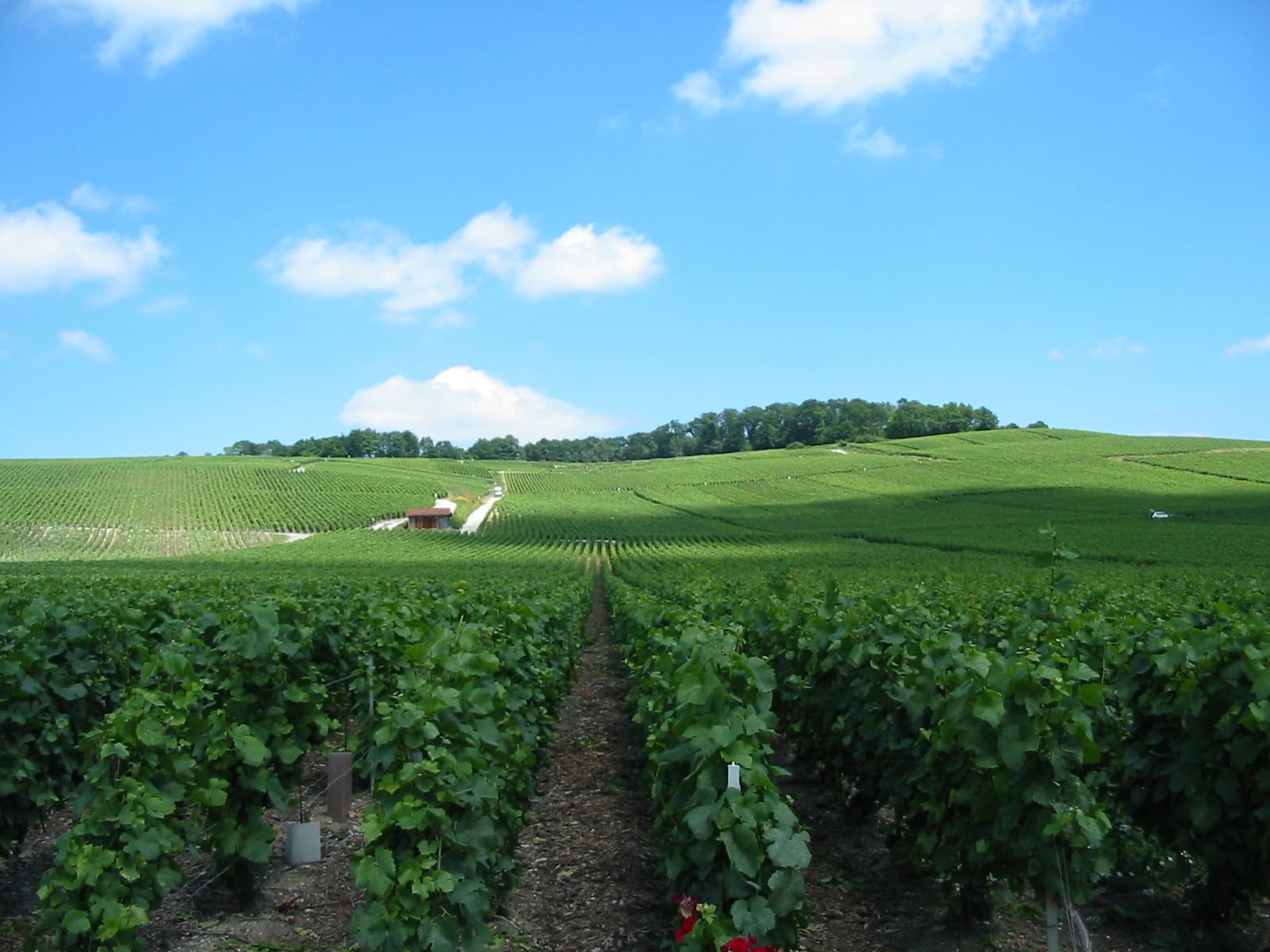 Tom Corser / CC BY-SA 2.0 uk, via Wikimedia Commons
“Beneath Épernay's quiet streets, billions of bubbles await.”
Not the postcards. The stories even locals don't know — whispered in your ear, right where they happened.
This grand boulevard, lined with prestigious Champagne houses, holds a secret beneath its polished surface.
A small river flows through Épernay, but parts of it have been rerouted underground, carrying with it a local legend.
During a tumultuous period in French history, the founder of one of Épernay's most famous Champagne houses made a surprising sacrifice.
Discover every secret of Épernay
Every address, every reveal in full — in your ear, right where it happened.
You pick your stops. You walk. The voice reveals what the others miss.
No tours available yet. Check back soon — we're preparing them.
Épernay, often called the 'Capital of Champagne,' is a town in northeastern France that sits on the left bank of the Marne River, embraced by vineyards. It stands as the epicenter of the Champagne wine region, where the world's most famous sparkling wine is produced. The town's layout and identity have been shaped by the rapid development of the wine trade, particularly since the 18th century.
Beyond its renowned bubbly, Épernay offers an intimate glimpse into French culture, blending historical heritage with winemaking traditions. Its compact size makes it ideal for exploration on foot, allowing visitors to discover its engaging streets and significant landmarks. Whether drawn by world-class tastings or picturesque landscapes, Épernay promises a unique and memorable experience.
Épernay's history stretches back to Roman times, with settlers establishing a community in the 1st century AD. The region, then known as 'Gaul,' saw the Romans build infrastructure like baths, which were later replaced by the current cathedral. Épernay's chalky, fertile subsoil, ideal for growing food, was a key reason for its early settlement. The Romans even planted the first vineyards, though the dry wines produced were initially only popular with locals.
Throughout its history, Épernay has endured significant turbulence, being badly damaged during the Hundred Years' War and burned by Francis I in 1544. It resisted Henry of Navarre in 1592, and Marshal Biron fell during the attack that led to its eventual capture. The town was destroyed and rebuilt numerous times, with much of its remaining architecture dating from the 19th and 20th centuries. Stability arrived in the early 17th century with the appointment of the Duke of Bouillon as governor.
Épernay's global reputation truly began in the 18th century with the mastery of Champagne production and its international distribution. The 19th century saw Champagne houses flourish, with figures like Claude Moët and Eugène Mercier establishing enduring dynasties. The first Champagne house, Ruinart, was founded in Épernay in 1729. The Meaux-Épernay section of the Paris-Strasbourg railway line, inaugurated in 1849 by Prince-President Louis-Napoléon Bonaparte, further connected the town. During World War II, German troops plundered Champagne cellars, stealing millions of bottles and burning many town buildings. Today, Épernay stands as the self-proclaimed 'Capital of Champagne,' a testament to its resilience and its sparkling legacy.
The Avenue de Champagne is Épernay's most famous thoroughfare, a UNESCO World Heritage site stretching for 1.5 kilometers. It is lined with elegant private mansions and grand châteaux belonging to prestigious Champagne houses like Moët & Chandon, Mercier, Perrier-Jouët, Pol Roger, and De Castellane. Beneath the avenue lies an extensive network of chalk cellars, totaling over 110 kilometers, housing millions of bottles of champagne.
Many Champagne houses offer cellar tours and tastings, providing a deep dive into the winemaking process. Notable experiences include a mini-train ride through Mercier's 18 kilometers of underground galleries or exploring the historic Moët & Chandon cellars.
For a broader understanding of the region's heritage, visit the Musée du Vin de Champagne et d'Archéologie Régionale (Champagne Wine and Regional Archaeology Museum) at Château Perrier. It showcases the history of Champagne wine, archaeology, and geology. You can also take a stroll through the museum's garden. The De Castellane advertising tower offers expansive views of the vineyards and the city.
Beyond the city center, explore the Champagne Tourist Route, with three circuits accessible from Épernay: the Marne Valley, Montagne de Reims, and Côte des Blancs. Consider a nature break in the vineyard gardens, which are open-air museums demonstrating Champagne's terroir and know-how. For sensory learning, Pressoria, the Champagne Wine Sensory Interpretation Center, offers an innovative and engaging experience.
The best time to visit Épernay for warm-weather activities is from late June to early September, when average daily high temperatures are above 69°F (20°C). July is typically the warmest month, with an average high of 75°F (24°C). However, the peak tourist season in the Champagne region generally runs from April/May to September/October.
Harvest season, usually in late August or early September, offers a particularly lively time to visit, providing a unique glimpse into the winemaking process. While July and August are warm and sunny, they can also be crowded, and some businesses may close for summer holidays. Spring (April-June) and early autumn (September-October) offer pleasant weather, fewer crowds, and various vineyard activities. The 'Habits de Lumière' festival in mid-December is a special event that attracts many visitors.
Épernay is a walkable town, especially its historic center and the Avenue de Champagne. For exploring the wider Champagne region, renting a car is recommended, though cycling is also a popular option. A local bus network, Mouv' Épernay, connects various districts and nearby settlements, but may not be necessary for most tourist routes. Taxis are available but should be booked in advance, especially during peak hours.
Épernay is well-connected by train. A direct train from Paris Gare de l'Est takes approximately 1 hour and 40 minutes, and a train from Reims takes about 25 minutes. The Épernay train station is small but offers ticket machines, restrooms, and a shop. The Avenue de Champagne is a short 400-meter walk from the station.
When packing, consider Épernay's temperate climate. Light clothing is suitable for summer, but a sweater or light jacket is advisable for cooler evenings and the consistently low temperatures in champagne cellars. Layered clothing and an umbrella or raincoat are useful for spring and autumn, as rainy days occur frequently throughout the year.
It is highly recommended to book Champagne house tours and tastings in advance, especially during peak season, as they can fill up quickly. Many businesses, including some wineries and restaurants, may close for annual leave in January and August, so it's wise to check opening hours ahead of your visit.