Forte de Nossa Senhora da Graça
This formidable fort, a masterpiece of 18th-century military engineering, holds a surprising secret within its walls.
Full story unlocks in the tour
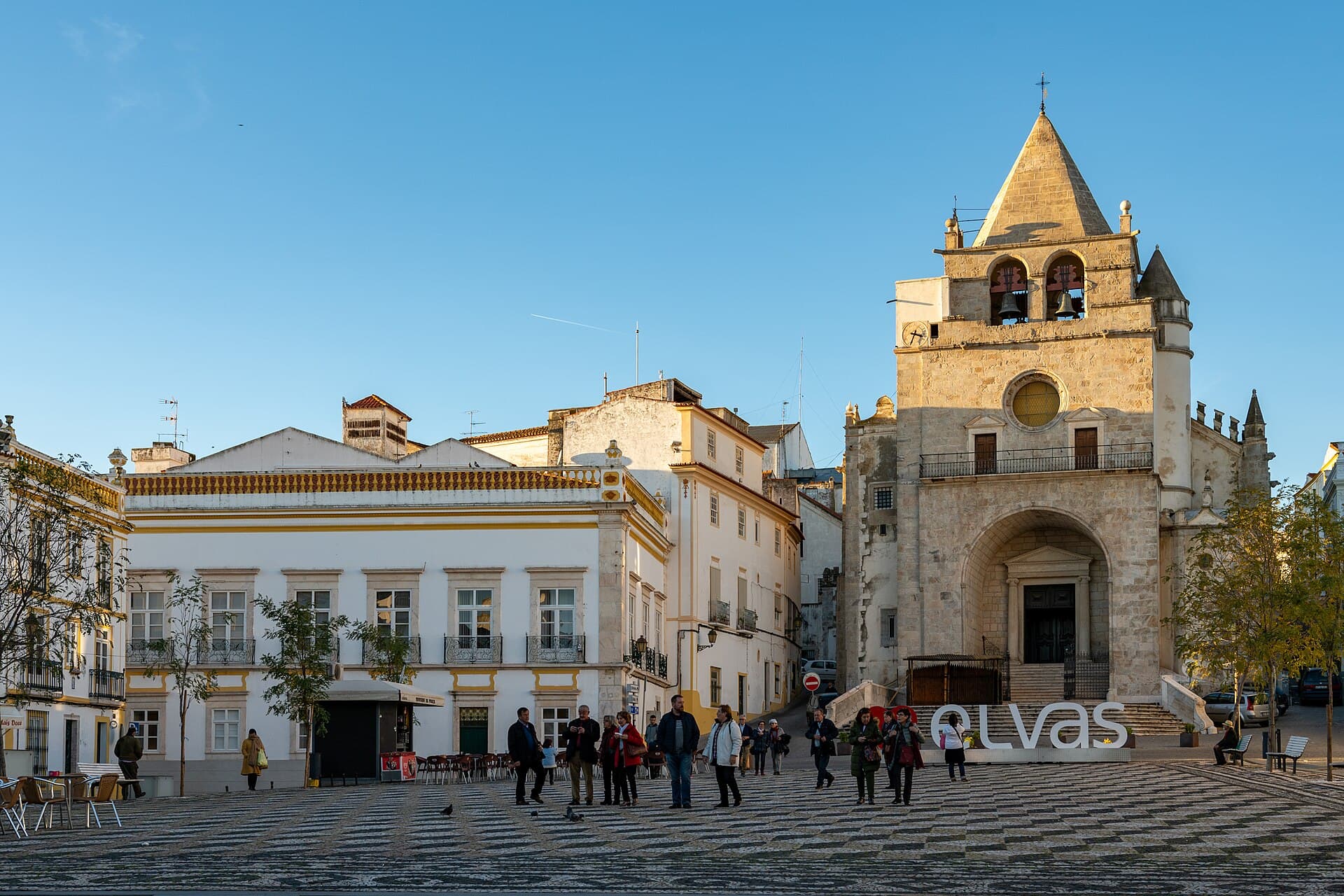 xiquinhosilva from Cacau / CC BY 2.0, via Wikimedia Commons
“Elvas: Where star-shaped fortifications tell tales of resilience.”
Not the postcards. The stories even locals don't know — whispered in your ear, right where they happened.
This formidable fort, a masterpiece of 18th-century military engineering, holds a surprising secret within its walls.
The monumental Amoreira Aqueduct, a defining feature of Elvas, has a profound connection to another iconic Portuguese landmark.
This quiet cemetery, situated on a hilltop, reveals a poignant chapter of international alliance.
Discover every secret of Elvas
Every address, every reveal in full — in your ear, right where it happened.
You pick your stops. You walk. The voice reveals what the others miss.
No tours available yet. Check back soon — we're preparing them.
Elvas, a city in Portugal's Alentejo region, stands as a testament to centuries of military prowess and strategic importance. Situated just 12 kilometers from the Spanish border, it earned its UNESCO World Heritage status for its extensive and remarkably preserved fortifications. Unlike many Portuguese towns built to welcome visitors, Elvas was designed to keep them out, featuring a 10km ring of walls, moats, and bastions laid out in a distinctive seven-pointed star shape. This unique defensive system allowed Elvas to withstand multiple sieges across 150 years, making it the finest surviving example of its kind globally.
Beyond its formidable defenses, Elvas offers a quieter, unhurried atmosphere, with cobbled lanes, whitewashed houses, and family-run tascas. It's a place where history is not just preserved but actively integrated into modern life, inviting visitors to explore its ancient streets at their own pace. The city's strategic location also makes it an excellent base for exploring both the Alentejo region of Portugal and nearby Spain.
## From Roman Outpost to Star Fortress Elvas' history is deeply intertwined with its strategic position near the Spanish border. A Celtic settlement first occupied the site, followed by the Romans, who recognized its importance as a post along major trading routes. After the decline of the Roman Empire, the Visigoths took control, only to be expelled by the Moors in the 8th century. The Moors named it Lalbax and left a lasting architectural influence, with remnants of their walls still visible in the castle.
Elvas was first conquered from the Moors by Afonso I of Portugal in 1166, though it was temporarily recaptured before its final integration into Portuguese territory by King Sancho II in 1229. The city received its charter in 1513 from King Manuel I. However, it was the ongoing conflict between Spain and Portugal that truly shaped Elvas into the formidable fortress it is today.
Recognizing its vulnerability as a border town, particularly after Portugal's independence was restored in 1640, extensive fortifications were constructed from the 17th to 19th centuries. These defenses, inspired by Dutch military architects like Padre João Piscásio Cosmander, created the largest bulwarked dry-ditch system in the world. The city's walls were designed in a distinctive seven-pointed star shape, ensuring no blind spots for attackers. This elaborate system proved highly effective, allowing Elvas to successfully repel Spanish sieges in 1659, 1711, and 1801. The Battle of the Lines of Elvas in 1659, where the city's garrison and citizens routed a Spanish army, marked a significant moment in the War of Restoration. During the Peninsular War, Napoleonic forces occupied Elvas briefly in 1808, and later, General Wellington used the fortifications as a base. This extensive military heritage, a testament to centuries of defense, led to Elvas being designated a UNESCO World Heritage site in 2012.
Elvas offers a wealth of sights, primarily centered around its impressive fortifications. Begin at the Amoreira Aqueduct, a monumental 16th-century engineering marvel stretching for 7 kilometers with 843 arches, some reaching 40 meters high. It is particularly striking in the golden light of early morning or late afternoon, and dramatically lit at night.
Explore the Elvas Castle, the oldest and highest part of the city, offering wide views of the town and surrounding plains. While you can no longer walk the castle walls, the elevated views from its terraces are still worthwhile. Delve into the outer defenses by visiting the Forte de Santa Luzia and the Forte de Nossa Senhora da Graça. Santa Luzia, a star-shaped fort, guarded the southern hillside and features concealed passages and historic battlements. Nossa Senhora da Graça, an 18th-century masterpiece of military architecture, offers expansive 360-degree views from its Governor's House.
Within the historic center, wander the cobbled streets and discover the Praça da República, the city's heart since the Middle Ages. Here, you will find the former cathedral, the Igreja de Nossa Senhora da Assunção, a blend of Manueline and Baroque styles. Do not miss the Military Museum of Elvas, housed in former barracks, which details the city's defensive role. For a unique cultural experience, visit the Museu Municipal de Fotografia de João Carpinteiro, showcasing vintage cameras and historical images of Elvas.
The best times to visit Elvas are during early spring (March to May) and autumn (September to November). These seasons offer mild temperatures, typically ranging from 15–28°C (59–82°F), making it ideal for exploring the extensive fortifications and walking the city's streets. In spring, the countryside is lush and green with blooming flowers. Summers (July and August) can be intensely hot, often exceeding 30°C (86°F), which can make sightseeing challenging during the middle of the day. Winters are generally mild, but can be rainy.
Elvas is a compact and largely walkable city, especially its historic center. However, some areas, particularly around the forts and castle, can be steep with cobbled streets, so comfortable walking shoes are essential. While public transportation exists, including buses and trains connecting to Lisbon and Évora, services can be limited and infrequent. Renting a car is highly recommended for greater flexibility, especially if you plan to explore the outlying forts, the surrounding Alentejo region, or nearby Spanish towns like Badajoz.
The Elvas Tourist Office, located on Praça da República, is a valuable resource for maps and information. Portuguese is the primary language, but many people in the tourism industry speak some English. The cost of living in Elvas is generally lower than in Portugal's major cities, with affordable dining and accommodation options. Nightlife is minimal, so plan for quieter evenings.