Huerto del Cura Garden
A specific palm tree in Elche's most famous garden isn't just old; it carries a royal title.
Full story unlocks in the tour
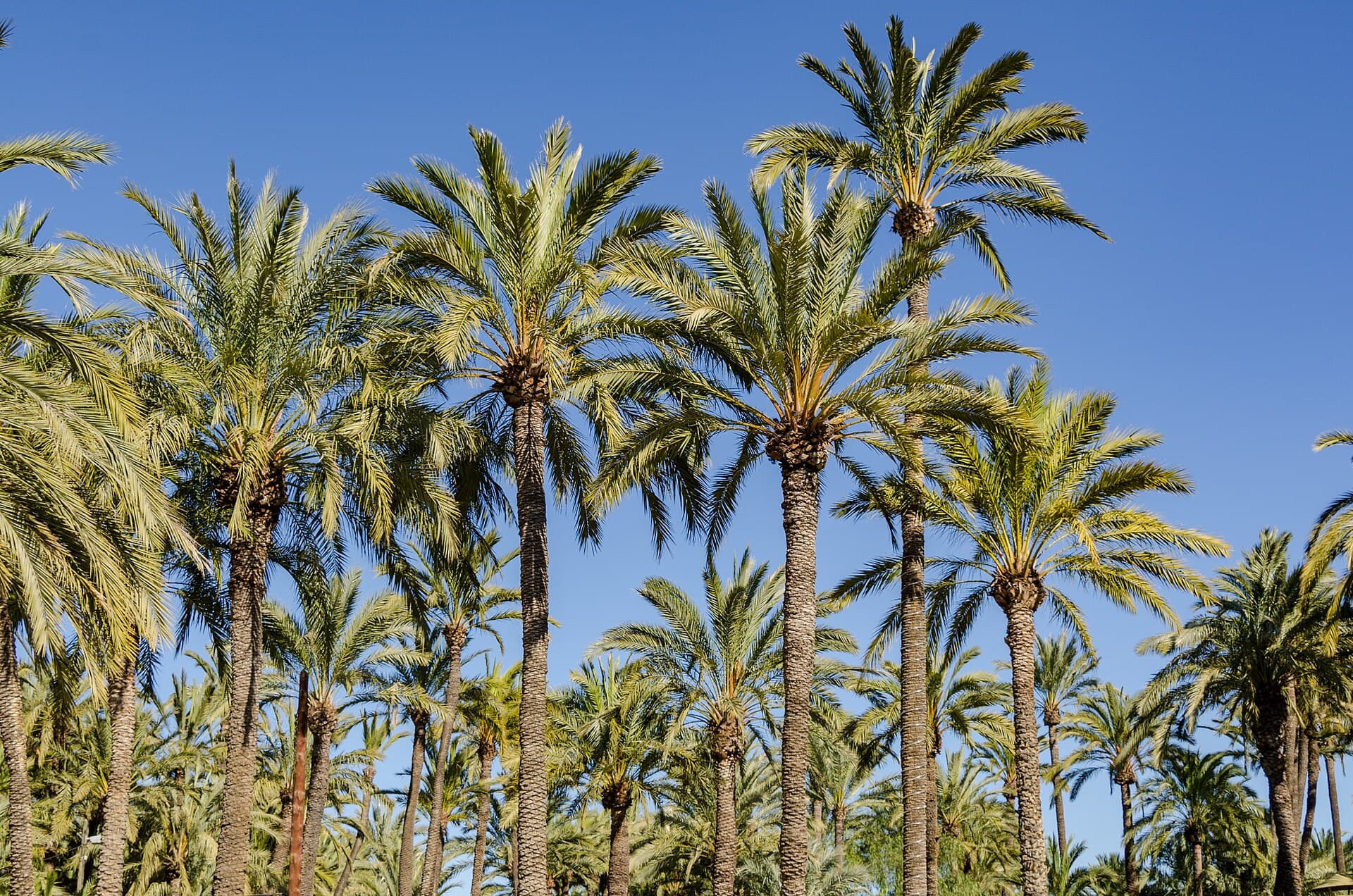 xiquinhosilva / CC BY 2.0, via Wikimedia Commons
“Where ancient palms whisper of Iberians, Romans, and a singular Spanish spirit.”
Not the postcards. The stories even locals don't know — whispered in your ear, right where they happened.
A specific palm tree in Elche's most famous garden isn't just old; it carries a royal title.
This medieval drama is the only one of its kind with a special papal dispensation.
Elche produces a surprising percentage of Spain's shoes, making it a quiet powerhouse in fashion.
Discover every secret of Elche
Every address, every reveal in full — in your ear, right where it happened.
You pick your stops. You walk. The voice reveals what the others miss.
No tours available yet. Check back soon — we're preparing them.
Elche, or Elx in Valencian, is a city in the province of Alicante, Spain, recognized for its extraordinary natural and cultural heritage. Situated inland, approximately 15 kilometers from the Mediterranean coast, it offers an experience distinct from the lively coastal resorts. The city is perhaps best known for its expansive palm groves, the Palmeral of Elche, a UNESCO World Heritage site and the largest palm grove in Europe.
With a population exceeding 230,000, Elche stands as the third most populous city in the Valencian Community. Despite its size and economic significance—it is a major center for Spain's footwear industry—Elche retains a calm, authentic Spanish atmosphere. Visitors can delve into ancient history, immerse themselves in unique traditions, and enjoy a relaxed pace of life amidst a remarkable landscape.
## From Iberian Roots to Roman Grandeur Elche's origins stretch back to 500 BC, when the Iberians founded the city of Hélike on a small mount. This early settlement was located at the archaeological site of La Alcudia, where, in 1897, the celebrated Dama de Elche (Lady of Elche) was unearthed. This limestone bust, dating from the 5th or 4th century BC, represents a masterpiece of Iberian art and a profound symbol of the city's ancient past.
## Roman and Muslim Influence In 209 BC, the city was claimed by the Romans, who named it Ilici and established it as a colony. The Roman presence fostered its prosperity as a trading center. Following the decline of the Roman Empire, it was under Muslim rule that the city was firmly established in its current location, in the area known as La Vila Murada. The Moors were instrumental in developing a sophisticated irrigation system and cultivating the iconic palm grove, which remains a defining feature of Elche today.
## Medieval and Modern Eras After the Christian Reconquista in the mid-13th century, Elche became part of the Crown of Aragon and later the Kingdom of Valencia. The city continued its growth, and the 19th century witnessed significant industrial development, particularly in the traditional footwear industry, for which Elche remains celebrated. In 1871, Elche was granted the title of city.
Elche is uniquely distinguished by its three UNESCO World Heritage designations: the Palmeral of Elche, the Misteri d'Elx (Mystery Play of Elche), and the Centre for Traditional Culture School Museum of Pusol. This makes Elche the only Spanish city with three properties inscribed on UNESCO's World Heritage list.
Begin your exploration in the historic center around Plaza de la Glorieta, a central square adorned with a white marble fountain and a replica of the Lady of Elche. Nearby stands the Basílica de Santa María, a Baroque church constructed on the site of a former mosque. You can ascend its bell tower for expansive city views.
Adjacent to the historic center lies the Municipal Park, a large public space with neo-Arabic fountains, tranquil ponds, and thousands of palm trees, offering abundant shade for a relaxed stroll. A short walk from here leads to the Palmeral of Elche, Europe's largest palm grove and a UNESCO World Heritage site. Within the Palmeral, be sure to visit the Huerto del Cura Garden, a renowned botanical garden showcasing a diverse collection of Mediterranean and tropical plants, including the celebrated Imperial Palm.
For those interested in history, the Altamira Castle, also known as Palacio de Altamira, is a medieval fortress that now houses the Archaeological and History Museum of Elche (MAHE), illustrating the city's past from its origins. The Calahorra Tower is another historical landmark worth exploring. Consider a day trip to the nearby beaches like Arenales del Sol, El Pinet, or La Marina, located about 15 minutes away, offering quiet, uncrowded shores.
Elche experiences a hot semi-arid climate with mild, dry winters and hot, dry summers, enjoying between 2,900 and 3,000 hours of sunshine annually. The ideal time to visit for pleasant weather and sightseeing is during spring (March to May) and autumn (September to November), when temperatures range from the mid-teens to low twenties Celsius. Summers (July and August) are warm, with average daily temperatures around 27°C, sometimes reaching 30°C or higher, but the palm groves offer natural shade.
Elche is well-connected and easily accessible. Alicante-Elche Miguel Hernández Airport (ALC) is approximately 15-20 minutes away by car or bus, serving as a major hub for flights across Europe. A taxi from the airport to Elche costs around €35. The city center is compact and pedestrian-friendly, making it ideal for walking. Public car parks are available if you're driving, but it's advisable to check with your accommodation for specific parking recommendations. Elche is a safe city with a low crime rate, offering all necessary amenities. Spanish is the primary language.