Castillo de San Marcos
Beneath the stones of this medieval fortress lies a secret that predates its Christian conquerors.
Full story unlocks in the tour
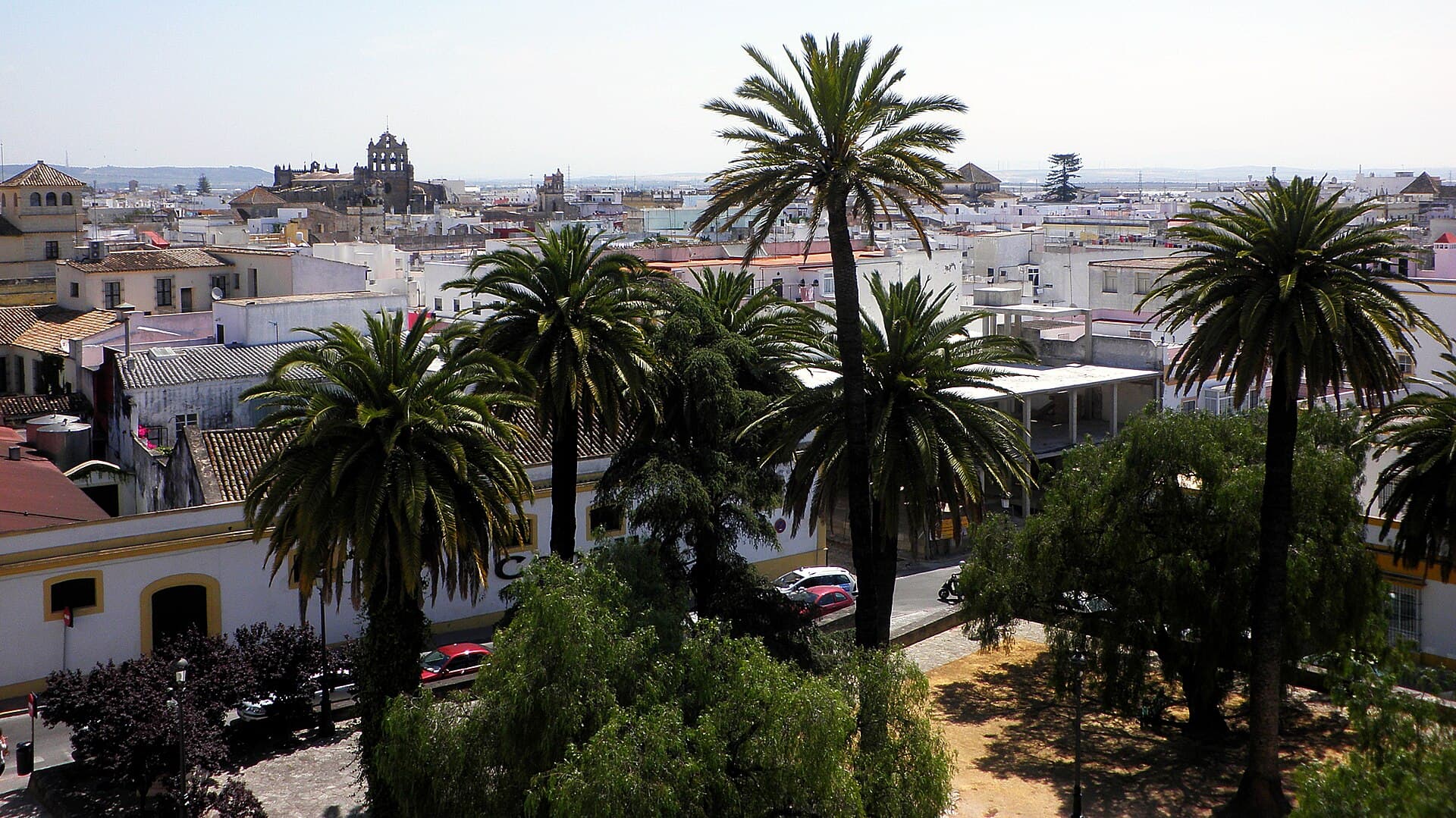 Emilio J. Rodríguez Posada / CC BY-SA 2.0, via Wikimedia Commons
“Where the Atlantic breeze carries the scent of salt and history.”
Not the postcards. The stories even locals don't know — whispered in your ear, right where they happened.
Beneath the stones of this medieval fortress lies a secret that predates its Christian conquerors.
The iconic black bull silhouettes across the Spanish landscape have a surprising connection to El Puerto de Santa María.
El Puerto de Santa María earned a grand nickname, though time has not been kind to all its aristocratic residences.
Discover every secret of El Puerto de Santa María
Every address, every reveal in full — in your ear, right where it happened.
You pick your stops. You walk. The voice reveals what the others miss.
No tours available yet. Check back soon — we're preparing them.
El Puerto de Santa María, frequently called "El Puerto" by those who live there, is a coastal city in the province of Cádiz, Andalusia, Spain. It rests at the mouth of the Guadalete River on the Bay of Cádiz, offering a compelling fusion of profound history, sherry wine culture, and a relaxed Atlantic temperament. The city's strategic position has shaped its identity for millennia, from ancient Phoenician and Roman settlements to its crucial role in the Age of Discovery.
Today, El Puerto invites visitors to stroll its narrow lanes, explore historic bodegas, and enjoy its extensive sandy shores. It is a place where the echoes of past maritime adventures intertwine with the lively rhythm of Andalusian life. The city also forms part of the acclaimed "Sherry Triangle," a region celebrated for its fortified wines, providing a distinctive gastronomic experience alongside its cultural and natural allure.
The history of El Puerto de Santa María extends into antiquity. Legend suggests the Athenian King Menestheus established a settlement here after the Trojan War, naming it Portus Menestheus. Archaeological findings confirm the presence of Phoenicians and Romans, who utilized the natural harbor for commerce. During Moorish dominion, the city was identified as Al-Kanatir, or "Port of the Salt Pans," reflecting its early economic focus on salt production.
The modern history of El Puerto commenced in 1260 when King Alfonso X the Wise reclaimed the city during the Reconquista and renamed it Santa María del Puerto. In 1281, it received a Royal Charter, solidifying its rights and privileges. The city's transfer to the powerful Medinaceli family in the 14th century further stimulated its urban development and port construction.
El Puerto played a foundational role in the Age of Discovery. It was the home of cartographer Juan de la Cosa, who crafted the first world map depicting the Americas in 1500. Christopher Columbus's second expedition to the New World departed from its harbor in 1493, cementing the city's place in maritime history. During the 16th and 17th centuries, it served as a base for the Royal Galleys, and the 18th century marked a "Golden Age of Trade," earning it the designation "City of a Hundred Palaces" due to the grand residences erected by affluent merchants.
By the late 19th century, the city's economy shifted from maritime trade to winemaking, becoming a central element of the "Sherry Triangle" alongside Jerez de la Frontera and Sanlúcar de Barrameda. The city also endured the Peninsular War, serving as a Napoleonic headquarters during the siege of Cádiz from 1810 to 1812. Today, El Puerto de Santa María gracefully blends these historical layers, with ancient palaces adapted into modern spaces and narrow medieval streets leading to wide, palm-lined avenues.
Begin your exploration at the Castillo de San Marcos, a 13th-century fortified church constructed on the site of a former mosque. Its tower offers expansive city views, and the interior reveals layers of history, including Phoenician and Roman remains. Next, immerse yourself in the world of sherry with a visit to one of the city's renowned bodegas. Bodegas Osborne, known for its distinctive bull logo, offers tours and tastings, as do others like Bodegas Caballero and Bodegas Gutiérrez Colosia.
Wander through the historic quarter, where you will find the Iglesia Mayor Prioral, a magnificent Gothic and Renaissance-style church dating back to 1486. Stroll along the Antigua Lonja (El Resbaladero), an 18th-century Baroque building that once housed the local fish market. For a taste of local culture, visit the Plaza de España, a lively square. The city also offers several beaches, including Playa de Valdelagrana and Playa de La Puntilla, ideal for relaxation or water sports.
Do not overlook the Museo Rafael Alberti, dedicated to the acclaimed poet born in El Puerto, displaying his works and personal effects. For a distinctive natural escape, explore the Bahía de Cádiz Natural Park or Los Toruños National Park, providing trails and opportunities for cycling and birdwatching. Consider a ferry trip across the Bay of Cádiz to the historic city of Cádiz itself.
El Puerto de Santa María experiences a mild, comfortable Mediterranean climate with abundant sunshine. The most favorable times to visit for general outdoor activities extend from early May to mid-August and mid-August to early October, with a peak in late June. Spring (April to June) and fall (September to October) offer pleasant weather and fewer visitors. Summers are warm and dry, with July and August seeing almost no rainfall, making them ideal for beach activities. Winters are mild, with average temperatures around 12-14°C, and frosts are rare, making it suitable for sightseeing.
El Puerto de Santa María is readily accessible. The nearest airport is Jerez Airport (XRY), approximately 30 minutes away by car. You can also reach the city by train from major Spanish cities like Seville and Cádiz. Public buses, taxis, and rental bicycles are available for navigating the town. A ferry service also connects El Puerto to Cádiz across the bay, providing a scenic 45-minute journey.
Accommodation options range from guesthouses and hostels to hotels and holiday apartments. Prices may be higher during peak seasons such as Carnival, Holy Week, and the Motorcycle Grand Prix in May. The local cuisine is a highlight, with an abundance of fresh seafood dishes and numerous tapas bars, particularly along Calle Misericordia. Many bodegas offer tours in English, but it is advisable to call ahead.