Perito Moreno Glacier
Most people know Perito Moreno for its dramatic ice calvings, but there's a lesser-known geological secret beneath its surface that impacts the entire region.
Full story unlocks in the tour
 Deensel / CC BY 2.0, via Wikimedia Commons
“Where ancient ice meets Patagonian winds.”
Not the postcards. The stories even locals don't know — whispered in your ear, right where they happened.
Most people know Perito Moreno for its dramatic ice calvings, but there's a lesser-known geological secret beneath its surface that impacts the entire region.
Lago Argentino is the largest freshwater lake in Argentina, but its unique, milky turquoise color isn't just from glacial meltwater; it's also a clue to its profound depths.
When you arrive at El Calafate's modern international airport, you might not realize a piece of the town's aviation history is literally underfoot.
Discover every secret of El Calafate
Every address, every reveal in full — in your ear, right where it happened.
You pick your stops. You walk. The voice reveals what the others miss.
No tours available yet. Check back soon — we're preparing them.
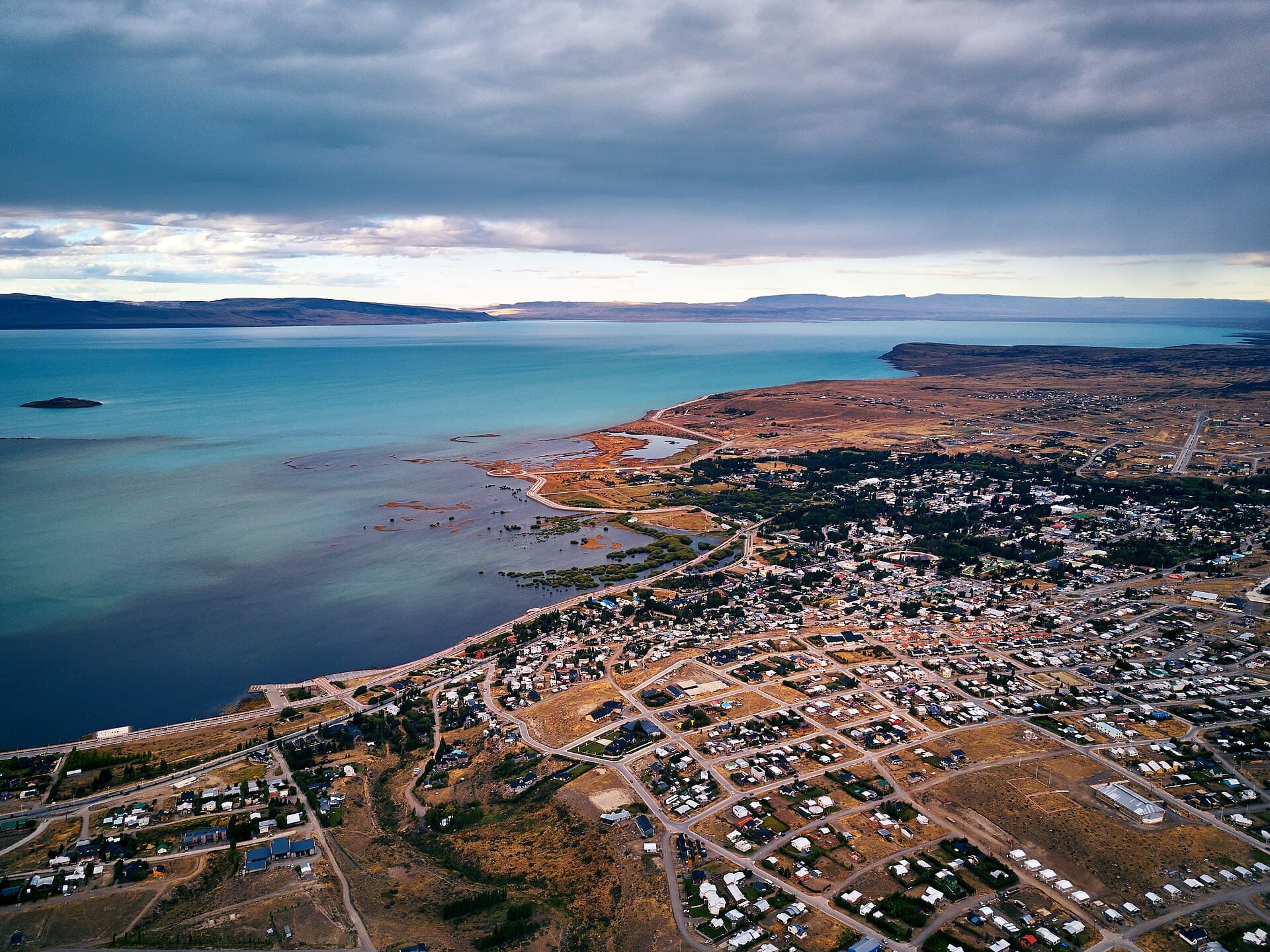
El Calafate, often called Argentina's Glacier Capital, is a captivating town in the Santa Cruz province of Patagonia. Situated on the southern shore of Lago Argentino, the largest freshwater lake in Argentina, it serves as the primary gateway to Los Glaciares National Park, a UNESCO World Heritage Site. The town itself, with a population of around 22,844 as of 2022, offers a blend of natural beauty, outdoor activities, and a developing tourism infrastructure.
The name "El Calafate" comes from a thorny evergreen shrub (Berberis buxifolia) native to the region, which produces yellow flowers and dark-blue berries. A local tradition suggests that anyone who eats the calafate berry is destined to return to Patagonia. While the Perito Moreno Glacier is undoubtedly the star attraction, the town and its surroundings offer a diverse range of experiences beyond the ice, from birdwatching to exploring ancient cave paintings.
The modern history of El Calafate began in the early 20th century, initially serving as a rudimentary sheltering place for wool traders traversing the Patagonian steppe. The Argentine government officially founded the town on December 7, 1927, with the intention of promoting settlement in the southern territories. However, it was the establishment of the nearby Perito Moreno National Park in 1937, later incorporated into Los Glaciares National Park, that truly spurred the town's growth and the development of better road access.
Early economic life in El Calafate revolved almost entirely around sheep farming, with the town functioning as a supply hub for surrounding estancias (ranches). The population during this period was a mix of European immigrants and settlers from other parts of Argentina, their lives dictated by the seasonal rhythms of shearing and wool harvesting. Key milestones followed, including the stationing of the 42nd Squadron of the National Gendarmerie in 1943 to ensure communication and security, and the establishment of the first Development Commission in 1946, marking the start of organized local self-governance.
El Calafate officially gained municipality status in 1973 as its permanent population grew. A significant turning point came in 1981 when UNESCO designated Los Glaciares National Park as a World Natural Heritage site, drawing considerable international attention to the region. The opening of the Comandante Armando Tola International Airport in 2000 further transformed El Calafate from a quiet village into a bustling tourist hub, dramatically increasing the influx of visitors eager to explore Patagonia's icy wonders. Today, while tourism is the primary economic driver, the town maintains elements of its traditional character, blending modern amenities with its Patagonian roots.
The undisputed highlight of any visit to El Calafate is the Perito Moreno Glacier, located approximately 78 kilometers (48 miles) from town within Los Glaciares National Park. This immense ice formation, one of the few advancing glaciers in the world, can be experienced from a network of panoramic walkways, offering diverse viewpoints and the chance to witness dramatic ice calvings. Boat tours provide an up-close perspective of the glacier's towering walls, and for the adventurous, guided ice trekking on the glacier itself is an unforgettable experience.
Beyond Perito Moreno, explore Lago Argentino, Argentina's largest freshwater lake, with its striking turquoise-blue waters. Scenic boat trips on the lake often include views of other glaciers like Upsala and Spegazzini, and navigate past impressive icebergs. In town, the Glaciarium Patagonian Ice Museum offers an interpretive look into glaciers and their ecosystems, complete with an ice bar. For bird enthusiasts, the Laguna Nimez Reserve is an easy, flat walk offering opportunities to spot various bird species, including flamingos, against a backdrop of Patagonian landscapes. Do not miss the Walichu Caves, featuring ancient Tehuelche rock paintings, which can be visited as part of a 4x4 tour.
The best time to visit El Calafate is during the Southern Hemisphere's summer, from November to March, when the weather is milder, and most activities and tours are fully operational. Daytime temperatures during this period typically range from 15-20°C (59-68°F), with long hours of daylight, sometimes extending clarity until 11 PM. Shoulder seasons, from September to November (spring) and March to April (autumn), also offer favorable conditions with fewer crowds and potentially more affordable prices. While Los Glaciares National Park is open year-round, many tourist facilities reduce services or close during the colder winter months (May to August), when temperatures can drop below freezing and snowfall is common.
El Calafate is well-equipped for tourism, offering a wide range of accommodation options to suit various budgets. The city has its own international airport (Comandante Armando Tola International Airport - FTE), with daily flights to and from Buenos Aires and other key Patagonian destinations like Bariloche and Ushuaia, especially during high season. Buses connect El Calafate to other Patagonian towns such as El Chaltén (about 3 hours) and Río Gallegos (4 hours), as well as Puerto Natales in Chile (5-6 hours). Renting a car offers flexibility for exploring the surrounding areas, though be prepared for a mandatory police checkpoint when driving into town from the airport.
Within El Calafate, the town center is compact and easily navigable on foot. Banks and ATMs are available in the center, though it's wise to carry some cash, especially when visiting smaller establishments. Shops generally operate with a midday siesta, opening from 10:00 to 13:00 and then from 15:00 to 20:00. Given the variable Patagonian weather, pack layers, including warm clothing, comfortable walking shoes, sunscreen, and insect repellent. Travel insurance is highly recommended due to the isolated nature of the region and potentially extreme climatic conditions.