Eger Minaret
This slender stone tower is a striking remnant of a 91-year occupation, but a local legend claims it almost didn't survive at all.
Full story unlocks in the tour
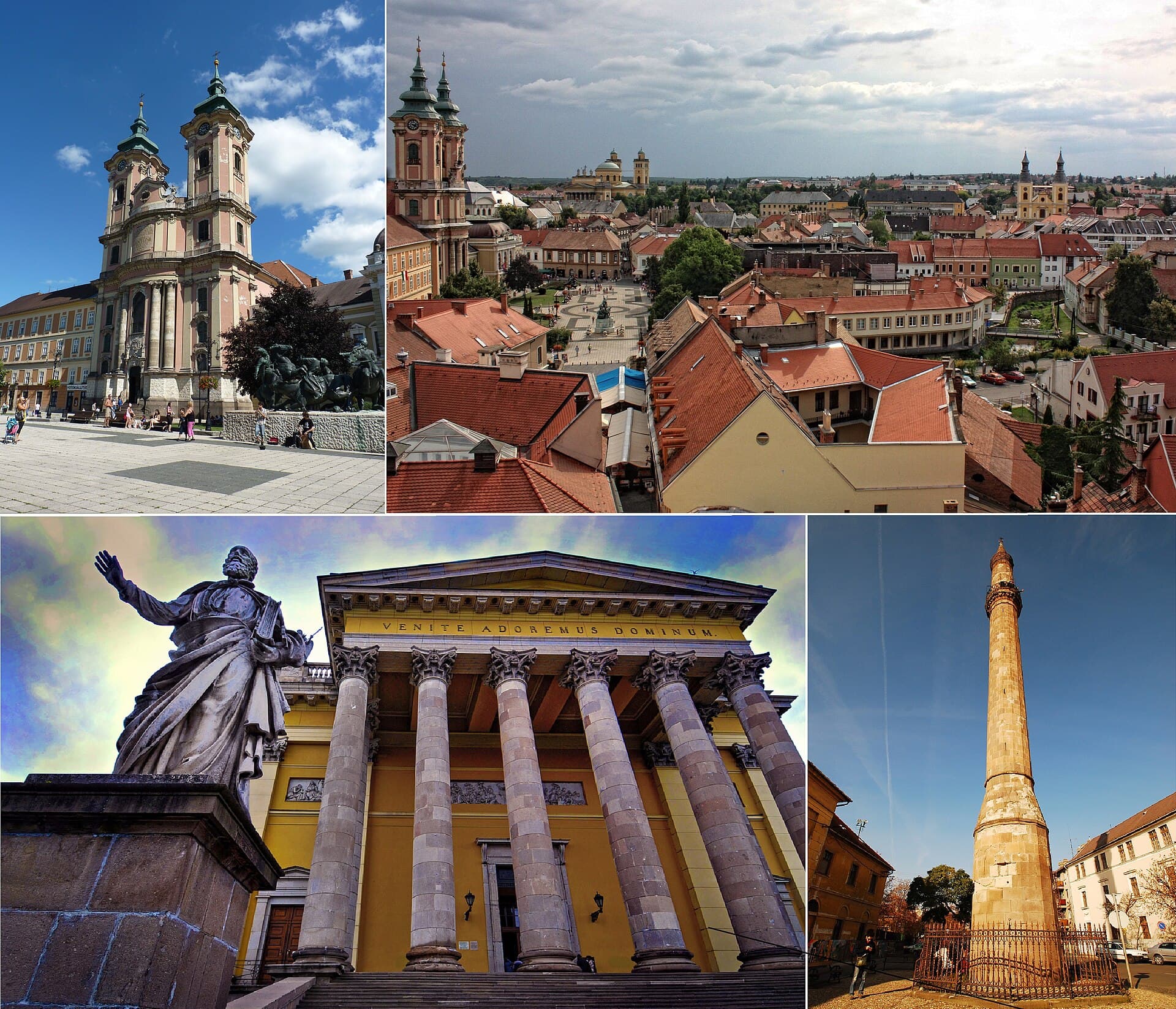 Imoti95 / CC BY-SA 4.0, via Wikimedia Commons
“Where heroic history meets hedonistic harvests.”
Not the postcards. The stories even locals don't know — whispered in your ear, right where they happened.
This slender stone tower is a striking remnant of a 91-year occupation, but a local legend claims it almost didn't survive at all.
Eger's famous 'Bull's Blood' wine has a name full of local legend, but the truth behind its origin is far less dramatic than the tale suggests.
Beneath the historic Eger Castle lies a vast, intriguing world that once played a crucial role in the city's survival.
Discover every secret of Eger
Every address, every reveal in full — in your ear, right where it happened.
You pick your stops. You walk. The voice reveals what the others miss.
No tours available yet. Check back soon — we're preparing them.
Eger, a city in northern Hungary, offers a compelling blend of history, thermal waters, and celebrated wines. It's a place where baroque architecture lines peaceful streets, all under the watchful gaze of a medieval castle. With a population of around 53,000, Eger is the second largest city in Northern Hungary and serves as the county seat of Heves County. Situated on the Eger Stream, between the Mátra and Bükk Mountains, its location has shaped its character and history.
The city is perhaps best known for its heroic defense against the Ottoman Turks in 1552, a pivotal moment in Hungarian history that continues to resonate today. Beyond its storied past, Eger is a center for viticulture, particularly famous for its 'Bull's Blood' wine, and a destination for relaxation thanks to its thermal baths. Whether you're exploring ancient fortifications, savoring local vintages, or unwinding in warm waters, Eger provides a distinctive Hungarian experience.
The origins of Eger trace back to the 10th century, when Hungary's first Christian king, Saint Stephen, established an episcopal see here. The first cathedral was constructed on Castle Hill, laying the foundation for the city's development as an important religious center. However, this early growth was interrupted by the Mongol invasion of 1241, which left much of the town in ruins.
Following the devastation, King Béla IV granted permission to build a stone castle in 1248, initiating a period of rebuilding and renewed prosperity. The 15th century saw the castle's church center flourish during the Renaissance. By the 16th century, Eger Castle had become a crucial border stronghold, acting as the 'shield of Europe' against the encroaching Ottoman Empire.
The most famous event in Eger's history is the Siege of Eger in 1552. A vastly outnumbered Hungarian force, led by Captain István Dobó, successfully repelled an Ottoman army of 35,000-40,000 soldiers after a 38-day siege. This heroic victory became a cornerstone of Hungarian national identity and is still celebrated annually. Despite this triumph, the Turks returned in 1596, conquering the castle and occupying Eger for 91 years. During this period, many churches were converted into mosques, and structures like the Eger Minaret and Turkish baths were built.
The Ottoman rule ended in 1687 when Christian forces liberated Eger. The 18th century marked a period of significant development and prosperity, with the population growing substantially. Many baroque, rococo, and neoclassical buildings were constructed, including the present-day Basilica and the Lyceum. Eger's viticulture also reached its peak during this time, with vineyards expanding significantly. In the 20th century, Eger managed to avoid heavy bombardment during World War II and was permitted to open spas in 1932, further enhancing its appeal. Today, Eger continues to preserve its unique character, offering a tangible link to its often turbulent past.
Eger offers a concentrated experience of history and culture, easily explored on foot. The Eger Castle is an essential starting point, offering museums, exhibitions detailing the 1552 siege, and wide views of the city. Descend into the Kazamaták, a labyrinth of underground cellars beneath the castle. Dominating Dobó Square, the heart of the city, is the Minorite Church, a baroque masterpiece. Just a short walk away, the Eger Minaret, the northernmost Ottoman minaret in Europe, stands as a testament to Turkish occupation; climb its 97 spiral steps for a unique perspective. The Cathedral Basilica of St. John the Apostle, Hungary's second-largest church, impresses with its neoclassical design and grand interior. For a different kind of immersion, the Eger Turkish Bath provides a historic thermal experience with radon-rich waters and a dome adorned with gold-plated mosaics. Finally, venture to the Valley of the Beautiful Woman (Szépasszony-völgy), a short taxi ride or walk from the center, to explore numerous wine cellars carved into the hillside and sample local wines, including the famous 'Bull's Blood.'
Eger experiences a mild continental climate, with warm summers and freezing, snowy winters. The best time to visit for warm-weather activities is from early June to early September, when daily high temperatures are above 70°F (21°C). May and September are particularly pleasant, offering comfortable temperatures (18-23°C) and fewer crowds than the peak summer months of July and August. July is the hottest month, with an average high of 79°F (26°C) and a low of 60°F (16°C). The least rainy month is October, while June sees the most rainfall. For those interested in thermal bathing and wine, visiting in winter can be appealing, with a charming Christmas market and lower accommodation prices.
The local currency in Hungary is the Hungarian Forint (HUF). While credit cards are widely accepted, it's advisable to carry some cash for smaller purchases or establishments. The official language is Hungarian, a Finno-Ugric language distinct from most other European languages. While English is spoken in tourist areas, learning a few basic Hungarian phrases can enhance your experience. Electrical outlets in Hungary are Type F, with a voltage of 230V and a frequency of 50Hz, so bring appropriate adapters if needed. Eger is generally considered safe, but standard precautions regarding personal belongings in crowded areas are always recommended. The compact city center is easily navigable on foot, but taxis are readily available for trips to areas like the Valley of the Beautiful Woman. Public transport within the city is available, primarily by bus. For travel to Eger, regular train and bus services connect it with Budapest and other major Hungarian cities.