Edam Museum
Beneath a 16th-century merchant's house, a peculiar cellar bobs with the groundwater.
Full story unlocks in the tour
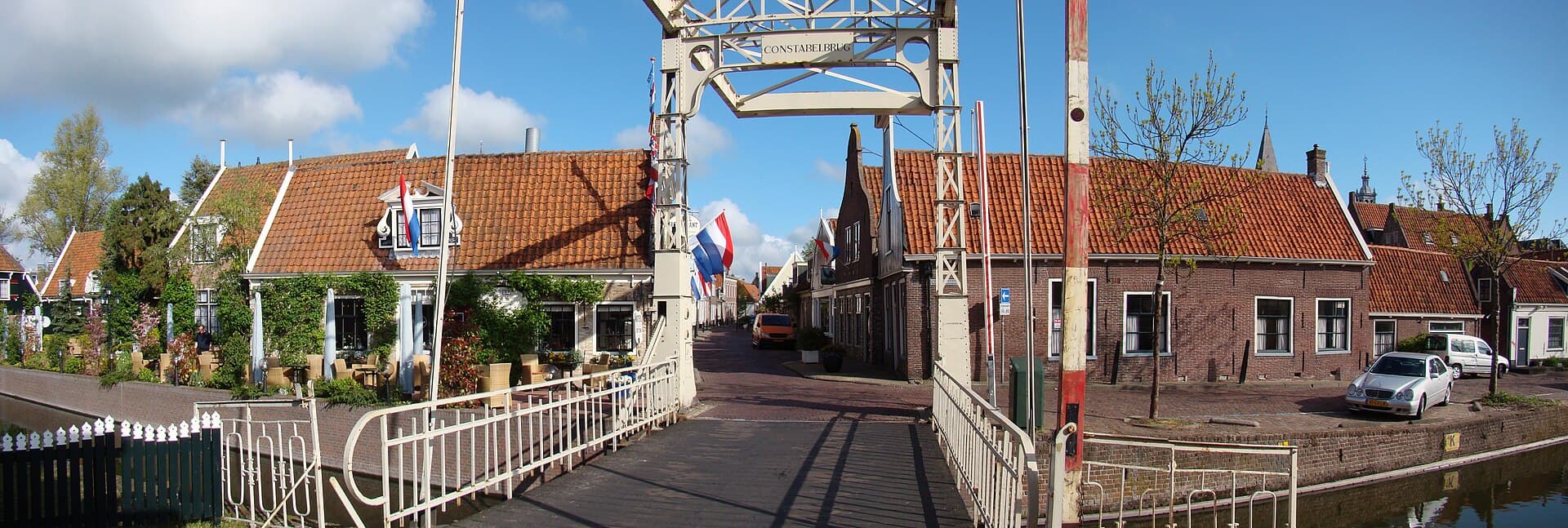 Arch / Public domain, via Wikimedia Commons
“Where canals reflect gabled houses and cheese tells a centuries-old story.”
Not the postcards. The stories even locals don't know — whispered in your ear, right where they happened.
Beneath a 16th-century merchant's house, a peculiar cellar bobs with the groundwater.
The bells of a leaning tower in Edam have a tune that changes with the season.
Inside Edam's largest church, the vaulted ceiling holds a secret about the town's past.
Discover every secret of Edam
Every address, every reveal in full — in your ear, right where it happened.
You pick your stops. You walk. The voice reveals what the others miss.
No tours available yet. Check back soon — we're preparing them.
Edam, a small city in the North Holland province, offers a serene escape into a quintessential Dutch landscape, distinct from its more bustling neighbors. With approximately 7,395 residents, it's a place where historic architecture, tranquil canals, and drawbridges create a picturesque setting. The town's enduring allure lies in its ability to preserve the atmosphere of centuries past, making a stroll through its ancient pathways feel like stepping back in time.
While globally recognized for its namesake cheese, Edam is more than just a culinary landmark. Its well-preserved old city center invites exploration, revealing a deep narrative tied to trade, shipbuilding, and a strong sense of community. The town's canals reflect gabled houses, and the quiet rhythm of daily life unfolds against a backdrop of historical significance.
Edam forms part of the municipality of Edam-Volendam, situated northeast of Amsterdam. It's a destination that promises a blend of cultural immersion and peaceful exploration, inviting visitors to uncover its stories and savor its unique character.
## From Dam to Trading Port Edam's origins trace back to the 12th century, when farmers constructed a dam on the River E (or Ye) to protect their crops from the North Sea. This dam, around 1230, became the focal point for a settlement, and the town, initially called IJedam, grew around it. The dam's strategic location meant goods had to be transferred between vessels, allowing Edam to levy tolls and flourish as a trading town.
By 1357, Count Willem V of Holland granted Edam borough rights, a significant step that boosted its growth. This led to the construction of a new harbor, connecting Edam to major cities in Holland and international trade routes. The 16th century marked a period of immense prosperity, with Edam supporting as many as 33 shipyards and holding the right to host a market three times a year. This era saw Edam contending for importance with other prominent North Holland towns like Hoorn, Enkhuizen, and Amsterdam.
## The Rise of Edam Cheese While shipbuilding and fishing were crucial to Edam's early wealth, the town's most enduring legacy became its cheese. Emperor Charles V granted Edam the right to a weekly market in 1526, a privilege later made perpetual by Prince Willem I in 1594 as a reward for the town's support during the Siege of Alkmaar. This established Edam as a thriving cheese market, where farmers would bring their spherical cheeses by boat and sledge for trade. The cheese, known for its long shelf life, became a primary export during the Dutch Golden Age, reaching markets across the Americas, Asia, and Africa.
## Challenges and Preservation Despite its prosperity, Edam faced challenges. The open sea mouth of its harbor led to recurring flooding, prompting Emperor Charles V to order the construction of lock gates in 1544, which were completed in 1569. However, this measure eventually caused the harbor to silt up, leading to the decline of the shipbuilding industry by the late 17th century. Commercial cheese markets continued until 1922, but the industrialization of cheese production brought an end to this traditional trade. In 1989, the Edam cheese market was revived as a popular tourist event, preserving the historical spectacle of cheese carriers and merchants. Today, Edam maintains its historic appeal, with many buildings and the town's layout remaining as they were centuries ago.
Edam's compact center is ideal for exploration on foot or by bike, revealing a network of canals, drawbridges, and historic buildings. The Edam Museum, housed in the town's oldest brick house from 1530, offers a glimpse into Edam's past, including its unique 'floating cellar'. Opposite the museum, the Town Hall (Stadhuis), built in 1737 in Louis XIV style, stands on a slightly grander scale than its surroundings.
The Grote Kerk (St. Nicholas Church), a prominent landmark, dates back to the early 15th century and is one of the largest three-ridged churches in Europe. It is notable for its stained-glass windows, many of which were gifts from neighboring towns and guilds after a fire in 1602. Near the church, the Carillon Tower, a slender late Gothic structure, still chimes melodies every 15 minutes with bells cast in 1566.
For those interested in Edam's most famous export, the Edam Cheese Market is a lively event during July and August. This reenactment brings the town's centuries-old cheese trading traditions to life with carriers in traditional attire. The Cheese Weigh House (Kaaswaag), an 18th-century building, now serves as a museum where you can learn about cheese making and enjoy tastings.
The best time to visit Edam for warm weather activities and to experience the famous Edam Cheese Market is from late June to early September. During July and August, the cheese market is held every Wednesday morning, sometimes with an evening market on select dates. The warmest month is July, with an average high of 69°F (21°C).
For those seeking a quieter experience, Edam in autumn offers fewer tourists and a golden light on the canals. Winter visits mean having the town almost to yourself, though temperatures are colder, averaging 34-42°F (1-6°C) in February. The sky is clearest in July and cloudiest in December.
Edam is easily accessible, located approximately 20 km northeast of Amsterdam. While there is no train station in Edam, regional buses from Amsterdam, Purmerend, or Hoorn provide convenient transportation. The journey from Amsterdam typically takes around 30 minutes by bus.
Once in Edam, the town is best explored on foot or by bicycle. Bike rentals are available locally. For those driving, convenient parking spots are available. Most people in the Netherlands speak English, so communication is generally not an issue, especially in tourist areas. Edam offers various accommodation options, including charming bed and breakfasts and boutique hotels, and it's advisable to book in advance, particularly during the summer months. The local tourist information office (VVV Edam-Volendam) can provide further details on activities, dining, and stays.