The Old Town Hall (Det Gamle Rådhus)
This half-timbered building, a familiar sight in photographs, holds a quiet secret beyond its appealing facade.
Full story unlocks in the tour
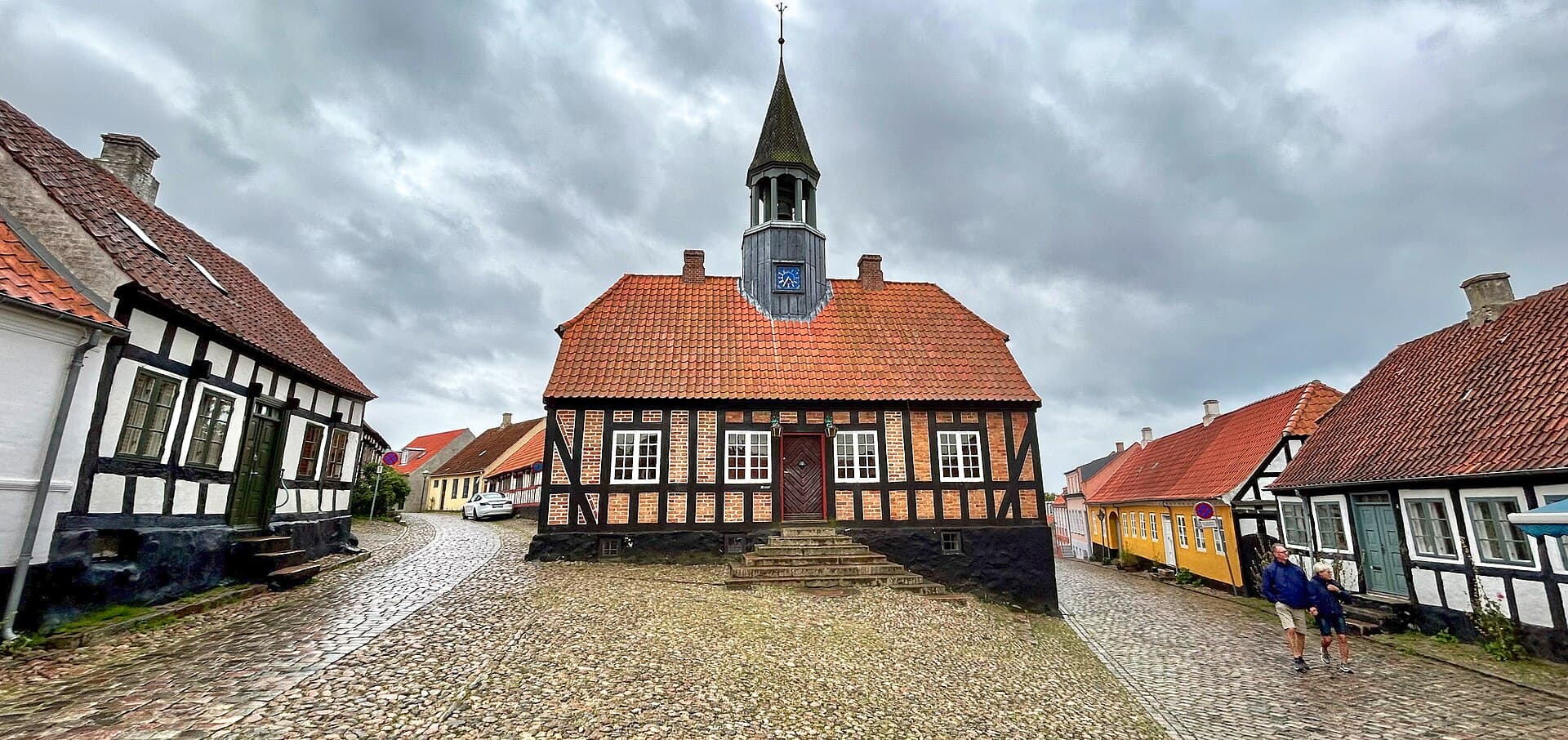 Olgierd Rudak / CC BY-SA 4.0, via Wikimedia Commons
“Maritime whispers and sun-dappled lanes in Denmark's 'Apple Orchard'.”
Not the postcards. The stories even locals don't know — whispered in your ear, right where they happened.
This half-timbered building, a familiar sight in photographs, holds a quiet secret beyond its appealing facade.
This grand wooden warship, a focal point in Ebeltoft's harbor, carries a distinction that reaches beyond its sheer scale.
Strolling through Ebeltoft's ancient core feels like a journey through time, and there is a particular reason its old buildings remain so remarkably intact.
Discover every secret of Ebeltoft
Every address, every reveal in full — in your ear, right where it happened.
You pick your stops. You walk. The voice reveals what the others miss.
No tours available yet. Check back soon — we're preparing them.
Ebeltoft, a coastal settlement on the eastern edge of Djursland in Denmark, offers a compelling blend of history, culture, and natural splendor. Known for its brightly painted half-timbered houses and narrow lanes, it presents a destination that feels both serene and animated, particularly during the summer months. With a story stretching back over 700 years, Ebeltoft received its town charter in 1301, evolving from a medieval trading post into a favored holiday retreat.
The town rests upon a hill, gazing out over Ebeltoft Bay, providing expansive views and a gentle atmosphere. Beyond its evocative town center, Ebeltoft serves as an entrance to the Mols Bjerge National Park, revealing diverse landscapes from sandy shores to rolling hills. Whether drawn to naval history, contemporary glass artistry, or simply the allure of a well-kept Danish town, Ebeltoft promises a memorable experience.
Ebeltoft's beginnings can be traced to approximately 1200, officially receiving its municipal rights from King Erik Menved on January 21, 1301. Initially a village or fishing settlement, it blossomed into an important trading center during the Middle Ages, thanks to its harbor. The town's name itself, 'Ebeltoft,' originates from 'apple' or 'apple orchard' in Danish.
Through the centuries, Ebeltoft navigated various trials. A Latin school was founded in 1558, yet the town suffered from the plague in 1619-1620 and sustained damage during the 17th-century conflicts. A significant blow arrived in 1659 when the Swedish army invaded, pillaging the port and incinerating the merchant fleet, a setback from which Ebeltoft struggled to recover for nearly two centuries. The town's population ebbed and flowed, with 817 inhabitants in 1672 diminishing to 562 by 1769 after the Great Northern War.
Economic quietude in the 18th and 19th centuries, largely a consequence of wars, inadvertently preserved Ebeltoft's historic core. Its half-timbered houses and narrow lanes remained largely untouched by modern construction. It was not until the 1960s that Ebeltoft experienced a resurgence, transforming into a beloved tourist destination. Ironically, Swedish travelers were among the first to rediscover its antique charms. Today, the town embraces its past, with many of its historic buildings restored and still in use. The old town hall, constructed in 1789, stands as a testament to its enduring story, now home to a museum and a favored setting for weddings.
Ebeltoft presents a range of sights, from ancient landmarks to contemporary cultural spaces. The Frigate Jylland is a significant stop, a 19th-century wooden warship that holds the title of the world's longest preserved wooden warship. Visitors can walk its decks and delve into its history through engaging exhibits.
The Old Town Hall (Det Gamle Rådhus), constructed in 1789, is a distinctive half-timbered structure that now serves as a museum and a venue for weddings. Wander through the town's historic passages like Adelgade, Overgade, and Nedergade to admire the well-kept buildings and inviting atmosphere.
For those who appreciate art, Glasmuseet Ebeltoft is an international museum dedicated to modern glass art, featuring rotating exhibitions and live glassblowing demonstrations. The Maltfabrikken, once a malt factory, has been redeveloped into a cultural hub with a library, museum, workshops, and a brewery. Just beyond the town's edge, the Mols Bjerge National Park provides opportunities for walking and experiencing varied natural landscapes.
The most pleasant time to experience Ebeltoft for outdoor pursuits is from late June to late August. During these summer months, temperatures are agreeable, with averages reaching highs around 18-21°C (64-70°F) and lows around 12-15°C (54-59°F). This period offers extended, sun-filled days, making it ideal for exploring the town, beaches, and outdoor attractions. While summer is the busiest period, visiting in spring or autumn provides milder temperatures and fewer people, perfect for enjoying the historic avenues and national park.
Ebeltoft is situated approximately 50 km east of Aarhus. From Copenhagen, one can drive, a journey of about four hours, or take a ferry from Sjællands Odde directly to Ebeltoft, which lasts about 55 minutes. Public transport options include Flixbus or Kombardo Expressen from Copenhagen, connecting to local buses like route 123 from Aarhus to Ebeltoft. The town center is easily navigated on foot, with many attractions a short walk away. Consider bringing adaptable layers of clothing, especially during spring and autumn, as temperatures can shift. While Ebeltoft is generally considered a relaxed destination, securing accommodation in advance, particularly during the busy summer months, is advisable.