The City Walls
Dubrovnik's formidable city walls, symbols of enduring strength, hold a secret about their construction that speaks to the city's resourcefulness.
Full story unlocks in the tour
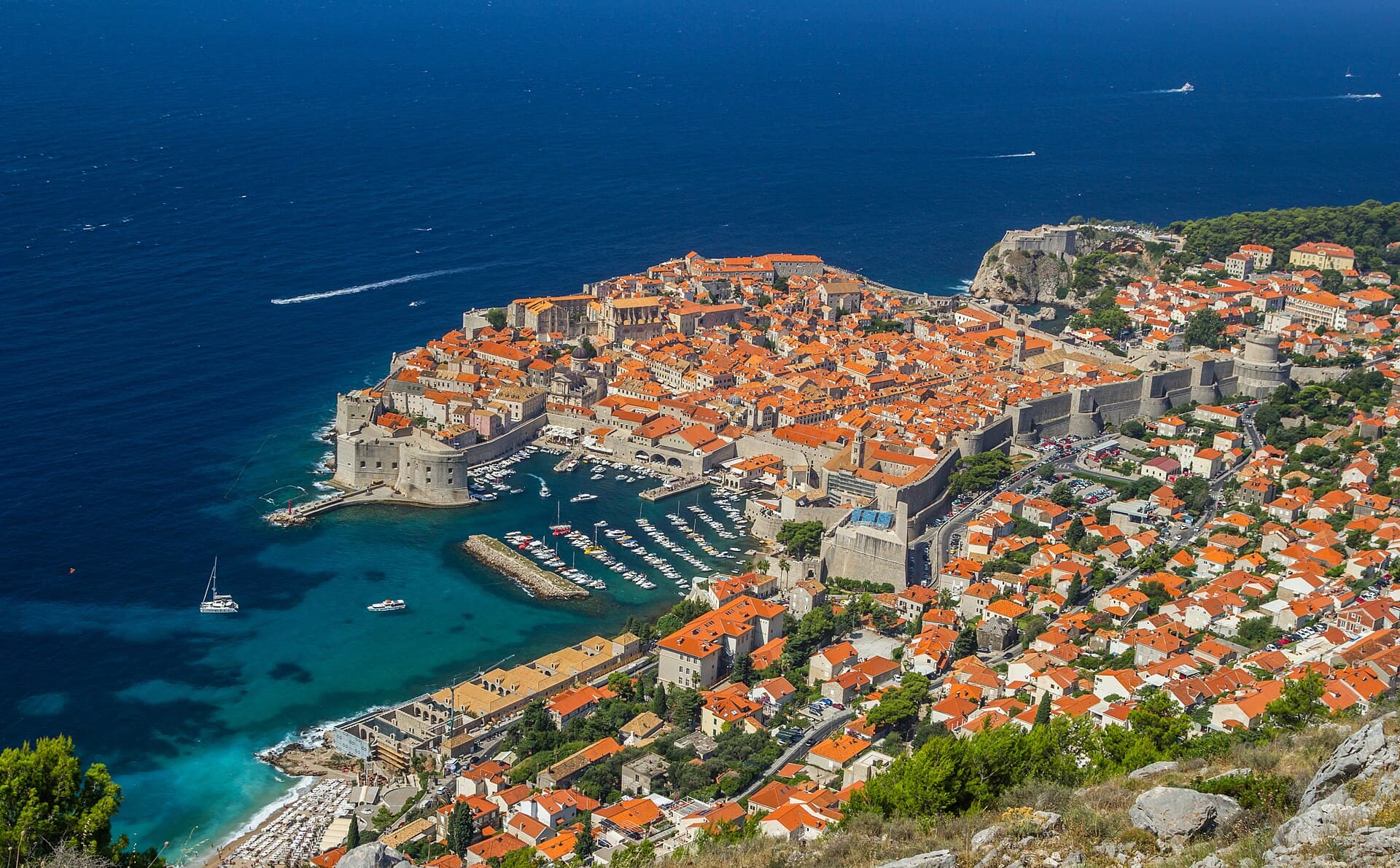 Zysko serhii / CC BY-SA 4.0, via Wikimedia Commons
“Beyond the Walls: Unveiling Dubrovnik's Enduring Spirit”
Not the postcards. The stories even locals don't know — whispered in your ear, right where they happened.
Dubrovnik's formidable city walls, symbols of enduring strength, hold a secret about their construction that speaks to the city's resourcefulness.
Just a short ferry ride from Dubrovnik, Lokrum Island offers a serene nature reserve with a captivating, yet unsettling, legend.
The large Onofrio's Fountain, a prominent landmark at the entrance to the Old Town, has a history beneath its ancient stones.
Discover every secret of Dubrovnik
Every address, every reveal in full — in your ear, right where it happened.
You pick your stops. You walk. The voice reveals what the others miss.
No tours available yet. Check back soon — we're preparing them.
Dubrovnik, often called the "Pearl of the Adriatic," is a city where history breathes through every stone. This picturesque city in southern Dalmatia, Croatia, is renowned for its remarkably preserved medieval architecture and formidable fortifications. Inscribed as a UNESCO World Heritage Site in 1979, Dubrovnik's Old City is a captivating labyrinth of limestone streets, baroque buildings, and ancient monuments.
Stepping into Dubrovnik's Old Town is like stepping back in time. No motor vehicles are allowed within the walls, encouraging exploration on foot through its maze of narrow streets. The city's enduring charm, combined with its dramatic coastal setting, makes it a prominent destination in the Mediterranean.
The city's origins trace back to the 7th century, when Roman refugees fleeing the destruction of Epidaurum (modern-day Cavtat) established a settlement called Rausa, or Ragusium, on a rocky island. A Slavic community later joined them on the mainland, and eventually, the channel between the two settlements was filled in, becoming the Stradun, Dubrovnik's main street. For centuries, Dubrovnik was known as Ragusa.
Initially under the protection of the Byzantine Empire, Dubrovnik grew into an oligarchic republic. From 1205 to 1358, it was under Venetian sovereignty, though it largely maintained its independence. The city's prosperity was built on maritime trade, strategically positioned at the crossroads of East and West. Dubrovnik's skillful diplomacy allowed it to thrive as a free state between the 14th and 19th centuries, even navigating complex relationships with the mighty Ottoman Empire by paying tribute in exchange for free trade.
The 15th to 17th centuries marked a flourishing period for art and literature, earning Dubrovnik the moniker "the South Slav Athens." The city was also remarkably forward-thinking, establishing the first medical service and one of Europe's oldest pharmacies in the 14th century, and abolishing the slave trade in 1418. However, a catastrophic earthquake in 1667 devastated much of the city, destroying many Renaissance buildings and killing thousands. The city was largely rebuilt in the Baroque style that defines its appearance today.
Dubrovnik's independence ended in 1808 with Napoleon's conquest, after which it passed through French and then Austrian control, eventually becoming part of Yugoslavia after World War I. The city faced another significant challenge during the Croatian War of Independence in the early 1990s, when over two-thirds of its historic buildings were damaged by artillery. Despite these trials, Dubrovnik has been meticulously restored, highlighting its resilience and commitment to preserving its heritage. The name Dubrovnik, derived from the Croatian word for oak, eventually replaced Ragusa in official use.
Dubrovnik's Old Town is a treasure trove of historical sights. Begin by walking the City Walls, a truly iconic experience offering wide views of the terracotta rooftops and the Adriatic Sea. These impressive fortifications, dating back to the 13th-17th centuries, stretch for 1,940 meters and reach heights of 25 meters.
Explore the Stradun, the main thoroughfare, lined with late-Renaissance houses. At its western end, you'll find the Large Onofrio's Fountain, a 15th-century masterpiece that was once part of the city's advanced water supply system. Nearby, the Franciscan Monastery houses one of Europe's oldest functioning pharmacies.
For expansive vistas, take the Dubrovnik Cable Car up Mount Srđ. The ride offers views of the Old Town and Lokrum Island. At the summit, you can explore the Imperial Fortress, built by Napoleon.
Just a 15-minute ferry ride away, Lokrum Island is a tranquil nature reserve with botanical gardens, peacocks, and even a small salt lake known as the Dead Sea. Back on the mainland, visit Fort Lovrijenac, often called "Dubrovnik's Gibraltar," which stands dramatically on a rock outside the western city walls and offers impressive views.
Don't miss the Sponza Palace, one of the few buildings to survive the 1667 earthquake, showcasing Gothic-Renaissance architecture. The Rector's Palace, another survivor of the earthquake, is a Gothic-Renaissance palace that once served as the seat of the Rector of the Republic of Ragusa.
The best times to visit Dubrovnik are during the shoulder seasons: May to early June and September to mid-October. During these months, the weather is warm and pleasant, ideal for sightseeing and swimming, but the crowds are smaller than in peak summer. Temperatures in spring and fall range from the high 50s to mid-70s°F (13–24°C).
Summer (June to August) is hot and dry, with temperatures reaching the 80s°F (27–30°C), perfect for beach activities and a lively atmosphere, but be prepared for larger crowds and higher prices. Winter (December to February) is cooler and can be rainy, with average temperatures around 50°F (10°C). While some attractions may be closed, it offers a more authentic feel for the city and lower prices.
Croatia adopted the Euro (€) as its national currency in January 2023. Credit cards are widely accepted, but it's useful to have some cash on hand. Dubrovnik is a pedestrian-friendly city, especially within the Old Town where no cars are allowed. The public bus network provides good coverage for areas outside the Old Town.
For airport transfers, the Dubrovnik Airport Shuttle Bus is the most economical option. Consider purchasing a Dubrovnik Pass, available for 1, 3, or 7 days, which offers access to major sights, free bus tickets, and discounts. To avoid crowds, especially during peak season, visit the Old Town early in the morning or later in the afternoon. Tap water in Dubrovnik is safe to drink, and you can refill bottles at public fountains like Onofrio's.