Dortmund U-Tower
The prominent 'U' crowning Dortmund's former Union Brewery building signifies more than just a beverage; it embodies a profound shift in the city's character.
Full story unlocks in the tour
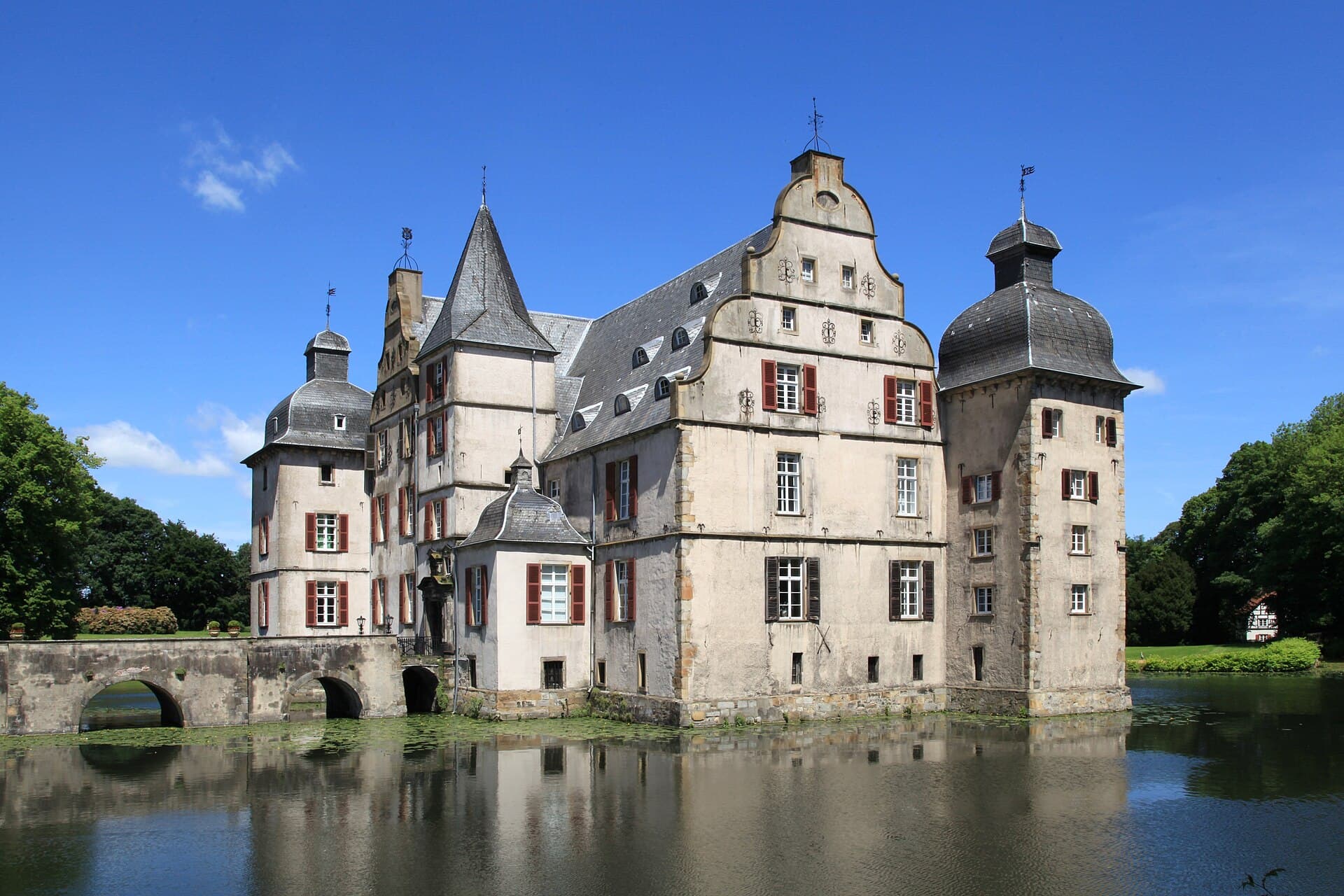 Frank Vincentz / CC BY-SA 3.0, via Wikimedia Commons
“From industrial heartland to green metropolis, Dortmund reveals its surprising layers.”
Not the postcards. The stories even locals don't know — whispered in your ear, right where they happened.
The prominent 'U' crowning Dortmund's former Union Brewery building signifies more than just a beverage; it embodies a profound shift in the city's character.
The thunderous ovation from the 'Yellow Wall' is legendary, yet the club's very genesis arose from an unexpected act of defiance.
Each year, Dortmund constructs a Christmas tree that holds a global distinction, though its true nature is not immediately apparent.
Discover every secret of Dortmund
Every address, every reveal in full — in your ear, right where it happened.
You pick your stops. You walk. The voice reveals what the others miss.
No tours available yet. Check back soon — we're preparing them.
Dortmund, a city in Germany's North Rhine-Westphalia, has undergone a remarkable metamorphosis. Once a pivotal center for coal, steel, and beer, it endured extensive bombing during World War II, with 98% of its inner-city structures reduced to rubble. Yet, Dortmund has meticulously rebuilt itself, blossoming into an "innovation city" and one of Germany's most forward-thinking and sustainable urban environments.
Today, Dortmund is recognized for its accomplished football club, Borussia Dortmund, its expansive green spaces, and a flourishing cultural landscape. It functions as a vital transport junction for the Ruhr area and beyond, featuring a central train station, an airport, and Europe's largest canal port. The city's convergence of industrial origins and contemporary innovation offers a compelling journey for any visitor.
Dortmund's beginnings trace back to approximately 882, when it was first documented as 'Throtmanni'. By 1220, it had attained the status of an Imperial Free City, and during the 13th and 14th centuries, it emerged as a significant member of the Hanseatic League, acting as the "chief city" for the Rhine, Westphalia, and Netherlands Circle. Its extensive trade networks generated such prosperity that the English crown was even offered to its merchants as collateral for loans on several occasions throughout the 14th century.
The city's influence diminished after the Thirty Years' War, but a new period of expansion commenced with the Industrial Revolution. The 19th century witnessed Dortmund's rise as a major hub for coal mining and steel manufacturing, earning it the moniker "Stahlstadt" (Steel City). The population swelled from approximately 57,000 in 1875 to nearly 380,000 by 1905, leading to the swift development of new residential districts.
Dortmund's industrial significance rendered it a target during World War II, resulting in devastating aerial assaults that obliterated 98% of the inner city by March 1945. The post-war era presented considerable obstacles, alongside a remarkable reconstruction endeavor. The substantial demand for coal and steel facilitated a swift recovery. In 1946, the state of North Rhine-Westphalia was established, with Dortmund becoming a key city within this newly formed region.
Since the decline of its traditional heavy industries in the late 20th century, Dortmund has successfully transitioned into a center for advanced technology, particularly in biomedical and microsystems technology, and a service-driven economy. The city has embraced sustainability and digitalization, transforming former industrial areas into verdant parks and cultural venues. This ongoing evolution has solidified Dortmund's reputation as a forward-looking city that deeply respects its past.
Dortmund presents a varied array of sights, merging its industrial foundations with contemporary cultural highlights and expansive green spaces. The Signal Iduna Park, home to the celebrated Borussia Dortmund football club, is a compelling destination for sports enthusiasts. It stands as Germany's largest football stadium, and its South Stand, known as the 'Yellow Wall,' is Europe's most extensive standing terrace, cultivating an electric atmosphere on match days.
For a deeper exploration of Germany's football legacy, the German Football Museum is situated near the central station. It features interactive displays and memorabilia chronicling the sport's evolution. The Dortmund U-Tower, a former brewery structure, has been reimagined as a nucleus for arts and ingenuity, housing the Museum Ostwall with its collection of 20th and 21st-century art.
To experience Dortmund's green expanses, Westfalenpark is a sprawling city park with flower gardens, play areas, and the Florian Tower, an observation deck offering sweeping city views. The LWL Industrial Museum Zollern, a former colliery, offers insight into the city's coal-mining heritage with its aristocratic-style architecture contrasting the arduous working conditions it once represented. For a distinctive artistic encounter, the Stadtgarten U-Bahn station features an underground art gallery with rotating contemporary exhibitions.
Dortmund experiences a sub-oceanic climate, offering mild to pleasantly warm summers and cool, gentle winters. The most opportune time to visit for warm-weather pursuits is from late June to early September, with July and August being the warmest months. During this period, average daytime temperatures range from 18°C to 23°C, perfect for exploring parks and outdoor attractions. Spring (March-May) and autumn (September-November) provide agreeable transitional weather, though rainfall is possible throughout the year. Carrying an umbrella or raincoat is advisable in any season.
Dortmund Airport (DTM) is a regional international airport located approximately 10 km east of the city, primarily serving budget and leisure flights. Düsseldorf Airport (DUS) offers a larger international alternative, about 70 km southwest, with convenient train connections to Dortmund. Public transportation within Dortmund is efficient, managed by VRR (Verkehrsverbund Rhein-Ruhr), encompassing buses, trams, and the Stadtbahn (a light rail system combining tram and subway elements). A single ticket is valid across all modes of transport, with pricing based on zones. Taxis are readily available, with fares commencing at around €3.50.
Germany's currency is the Euro (€). While generally secure, it is always prudent to be aware of your surroundings, particularly in crowded areas where petty theft can occur. The Nordstadt area, north of the central station, has a reputation for higher crime rates, so exercising caution there, especially after dark, is recommended.