Grote Kerk (Great Church)
The grand Grote Kerk features a tower that tilts, though not for the most obvious reason.
Full story unlocks in the tour
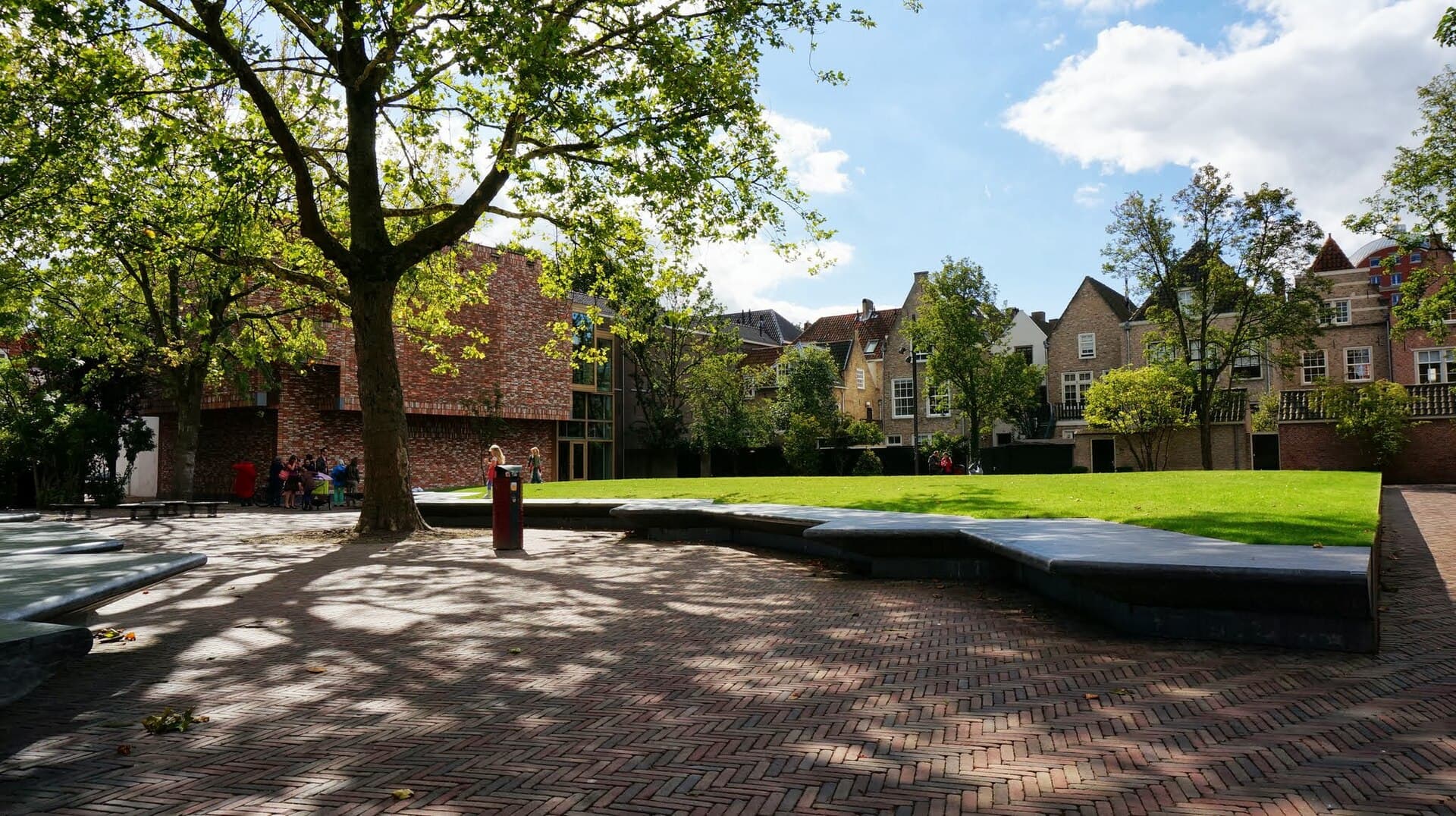 Ben Bender / CC BY-SA 3.0, via Wikimedia Commons
“Where ancient waterways meet Dutch ingenuity, shaping a city of enduring character.”
Not the postcards. The stories even locals don't know — whispered in your ear, right where they happened.
The grand Grote Kerk features a tower that tilts, though not for the most obvious reason.
Residents of Dordrecht are known by an endearing, yet curious, animal-inspired nickname.
A substantial water tower, once integral to the city's infrastructure, has found an unexpected new purpose.
Discover every secret of Dordrecht
Every address, every reveal in full — in your ear, right where it happened.
You pick your stops. You walk. The voice reveals what the others miss.
No tours available yet. Check back soon — we're preparing them.
Dordrecht, often simply called 'Dordt' by those who live there, is a city where water and the passage of time are deeply interwoven. Situated upon an island at the convergence of several significant rivers—the Oude Maas, Beneden Merwede, Nieuwe Merwede, Hollands Diep, and Dordtsche Kil—it possesses a singular identity forged by centuries of maritime endeavors. As the most ancient city in the historical province of Holland, Dordrecht offers an engaging passage through time, with its evocative inner harbors, slender, paved lanes, and over 1,000 national monuments.
Only 20 kilometers from Rotterdam, Dordrecht provides a more tranquil, authentic Dutch experience, set apart from larger crowds. Its historic core stands as a testament to its former prosperity, with merchant dwellings, warehouses, and grand churches reflecting its earlier status as a vital trading hub. Whether navigating its waterways by boat, wandering through its old alleyways, or simply savoring a coffee beside the harbor, Dordrecht invites you to uncover its allure and profound cultural legacy.
The city's strategic position within the Rhine-Meuse delta not only fostered its economic expansion but also defined its enduring connection with water. It is a place where every bridge, canal, and historic facade recounts a story, making it an ideal destination for those who appreciate art, history, and the quiet beauty of a Dutch city shaped by its liquid terrain.
Dordrecht's origins trace back to approximately 1008, established by Count Theodore (Dirk) III of Frisia/Holland. It was first documented as 'Thuredrech' around 1120, a name thought to signify 'thoroughfare,' referring to a river or canal where vessels were towed between the Dubbel and Merwede rivers. The city's strategic position in the Rhine-Meuse delta swiftly established it as a significant commercial nexus, primarily trading in wine, wood, and cereals.
Dordrecht was granted its city rights by William I, Count of Holland, in 1220, making it the oldest city in the current province of South Holland. This early recognition laid the foundation for its expansion, and by 1299, Dordrecht was awarded staple rights, which mandated traders to unload their goods there. This cemented its economic supremacy in the medieval Netherlands.
The 15th century brought considerable challenges, notably the St. Elisabeth flood of 1421, which severely damaged the city and transformed Dordrecht into an island. Despite this adversity, Dordrecht continued to be a leading city in Holland. In 1572, it played a crucial role in the Eighty Years' War when it hosted the First Free Assembly of the States of Holland. This assembly, where the Seven United Provinces declared independence from Spain under William I of Orange, is regarded as a defining moment in the formation of the Netherlands.
Another momentous historical event was the Synod of Dort, an international gathering of the Reformed Church held in Dordrecht from 1618 to 1619. This synod aimed to resolve theological disagreements within the Dutch Reformed Church.
While Dordrecht thrived as a financial center and port from the 11th to 17th centuries, its economic significance began to diminish in the 18th century. It was gradually surpassed by Rotterdam as a seaport and by Amsterdam as the capital of the Netherlands. However, Dordrecht's profound past remains palpable today. The city contains over 950 national monuments, including medieval churches, merchant homes, and the Augustinian monastery Het Hof. Noted figures such as the 17th-century Grand Pensionary Johan de Witt and his brother Cornelis were born in Dordrecht, as were celebrated Dutch Golden Age painters like Aelbert Cuyp, Ferdinand Bol, and Nicolaes Maes. Today, Dordrecht embraces its history, with many of its historic buildings repurposed as restaurants, museums, and theaters, offering a seamless integration of past and present.
Begin your journey at the Grote Kerk (Great Church), an imposing Gothic edifice with a distinct leaning tower that commands the horizon. You may ascend the tower for expansive views of the city and its surrounding waterways.
Walk through Dordrecht's historic inner harbors, such as Wolwevershaven and Nieuwe Haven, where you will discover historic vessels, picturesque facades of old dwellings, and inviting cafes. The Groothoofdspoort, a 14th-century city gate, stands at the confluence of three rivers, providing a magnificent perspective of the converging currents.
Those with an interest in art should visit the Dordrechts Museum, recognized for its collection of Dutch Golden Age paintings, including works by Ferdinand Bol and Aert de Gelder. For insight into 19th-century life, explore Museum Huis Van Gijn, the preserved residence of a wealthy collector with its original interior. The Hof van Nederland Museum presents a multimedia narrative on Dutch and Dordrecht history, situated within a national monument that was once an Augustinian monastery.
Beyond the city center, consider an excursion to De Biesbosch National Park, a singular freshwater delta ideal for kayaking, walking, and observing birds. Only 20 minutes away, the Kinderdijk windmills, a UNESCO World Heritage site, illustrate an ingenious historic water management system featuring 19 windmills.
The most favorable period to visit Dordrecht is during the late spring months of May and June. At this time, the weather is agreeably warm, with average temperatures ranging from 12°C to 21°C, and fewer rainy days compared to other seasons. This provides ideal conditions for exploring the historic city center and engaging in outdoor pursuits. Late spring also coincides with the blossoming of flowers, adding vivid color to the canals and parks.
Alternatively, late June to early September is also suitable for warm-weather activities, with average daily high temperatures exceeding 19°C. The summer months offer lively events and sidewalk cafes.
Dordrecht is readily accessible by train, with Dordrecht Centraal station connecting to major hubs like Rotterdam Centraal, a journey of only 20-30 minutes. The city is best explored on foot, with a clearly marked 'Rondje Dordt' walking route guiding you through its historic streets and harbors. Boat tours also offer a pleasant way to experience the city's waterways.
The climate is temperate maritime, meaning the weather can be variable. It is advisable to bring comfortable, waterproof shoes for walking on paved surfaces and alongside canals, and to dress in layers. While Dordrecht is generally a safe city, standard precautions such as remaining aware of your belongings in crowded areas are always recommended. Pharmacies are easily found, and for medical emergencies, the number is 112.