Souq Waqif
Beyond the lively spice stalls and glittering gold, a quieter, feathery corner awaits discovery.
Full story unlocks in the tour
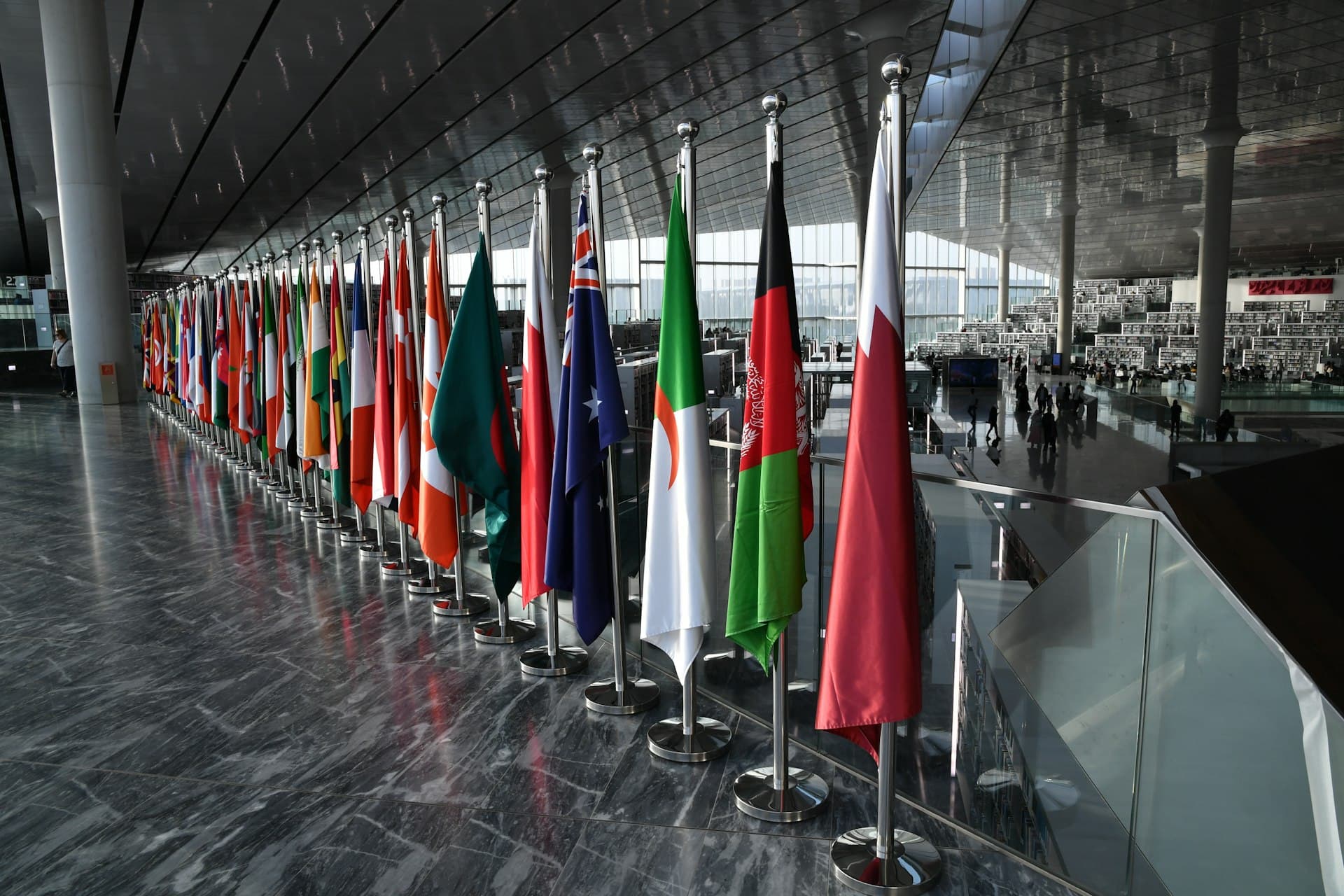 Photo: Thomas Lohmann / Unsplash
“Where ancient traditions meet a futuristic skyline.”
Not the postcards. The stories even locals don't know — whispered in your ear, right where they happened.
Beyond the lively spice stalls and glittering gold, a quieter, feathery corner awaits discovery.
Amongst the grand architecture and art galleries, look closely for a unique take on a common city dwelling.
The museum's exterior is a marvel, yet its unusual form is more than abstract design.
Discover every secret of Doha
Every address, every reveal in full — in your ear, right where it happened.
You pick your stops. You walk. The voice reveals what the others miss.
No tours available yet. Check back soon — we're preparing them.
Doha, the capital city of Qatar, offers a captivating blend of deep-rooted heritage and audacious modernity, situated along the Persian Gulf coast. Once a pearl-diving and fishing village, it has rapidly transformed into a significant financial and cultural center in the Middle East. The city's skyline, a dramatic display of contemporary architecture, stands in striking contrast to its traditional markets and cultural sites, offering a dynamic experience for visitors.
Doha is Qatar's fastest-growing city, home to over 80% of the nation's population. It is a place where global influences converge, creating a multi-ethnic society that welcomes travelers with open arms. From world-class museums to desert adventures, Doha provides a diverse range of activities and excursions, making it an ideal starting point for exploring Qatar.
Doha's origins trace back to the 1820s, emerging as an offshoot of an earlier settlement known as Al Bidda. The earliest documented mention of Al Bidda dates to 1681 by the Carmelite Convent. For centuries, the area's economy was intrinsically linked to the sea, primarily through pearl diving and fishing. By the early 20th century, pearling played a pivotal commercial role, supporting a population of around 12,000 inhabitants.
The city's trajectory shifted dramatically with the decline of the pearl market in the 1930s, exacerbated by the introduction of Japanese cultured pearls and the global economic depression. However, the discovery of oil in the late 1930s and the commencement of oil exports in 1949 ushered in an era of rapid economic growth and modernization.
Doha officially became the capital of Qatar in 1971, upon the country gaining independence from its status as a British protectorate. This period marked a significant transformation, with old slum sections being replaced by modern commercial and residential quarters. The city's strategic location on the Persian Gulf has consistently made it a natural center for maritime trade. Today, Doha is recognized as a "Beta+" global city by the Globalization and World Cities Research Network, signifying its integration into the world city network and its status as an emergent financial center in the Middle East.
Doha offers a captivating array of sights that bridge its past and future. Begin at Souq Waqif, one of the city's oldest markets, meticulously restored to its traditional appearance. Here, you can wander through a labyrinth of stalls selling spices, textiles, handicrafts, and even visit the Falcon Souq.
Journey to the Museum of Islamic Art (MIA), an architectural masterpiece designed by I.M. Pei, housing a collection spanning 1,400 years of Islamic art. The adjacent MIA Park offers green spaces and expansive views of the Doha skyline.
Experience Katara Cultural Village, a sprawling complex of art galleries, theaters, performance venues, and exceptional restaurants, all set against a waterfront promenade. Do not miss the striking Katara Mosque and the distinctive pigeon towers.
For a glimpse into Qatar's modern aspirations, explore The Pearl-Qatar, an artificial island featuring luxury shops, yachts, and the charming, pastel-colored buildings of the Qanat Quartier. A stroll along the Doha Corniche, a 7-kilometer promenade, offers picturesque views of the city's iconic skyline and the Dhow Harbour.
The best time to visit Doha is during the cooler months, from November to April. During this period, daytime temperatures are mild, ranging from the low 20s to mid-30s°C (68–95°F), making it ideal for outdoor activities and sightseeing. The winter months, specifically December to February, offer some of the most pleasant weather, with temperatures between 18–25°C (64–77°F). Avoid the peak summer months of June to September, when temperatures can soar above 40°C (104°F) with high humidity.
Doha is a safe and welcoming city. Modest dress is appreciated in public areas; women should cover shoulders and knees, and a scarf can be useful for mosque visits. Lightweight, breathable fabrics are recommended due to the warm climate. While credit cards are widely accepted, carrying some Qatari Riyal (QAR) for smaller purchases at traditional markets or for tipping is advisable.
Getting around Doha is convenient. The Doha Metro is a clean, modern, and affordable option connecting many key areas and major sites. Taxis and ride-hailing apps like Uber are also readily available, reliable, and affordable. While some areas like Souq Waqif and the Corniche are walkable, distances between major attractions often require transportation.