Diyarbakır City Walls
The formidable black basalt walls of Diyarbakır are famous for their length and historical significance, yet a lesser-known tale is woven into their very construction.
Full story unlocks in the tour
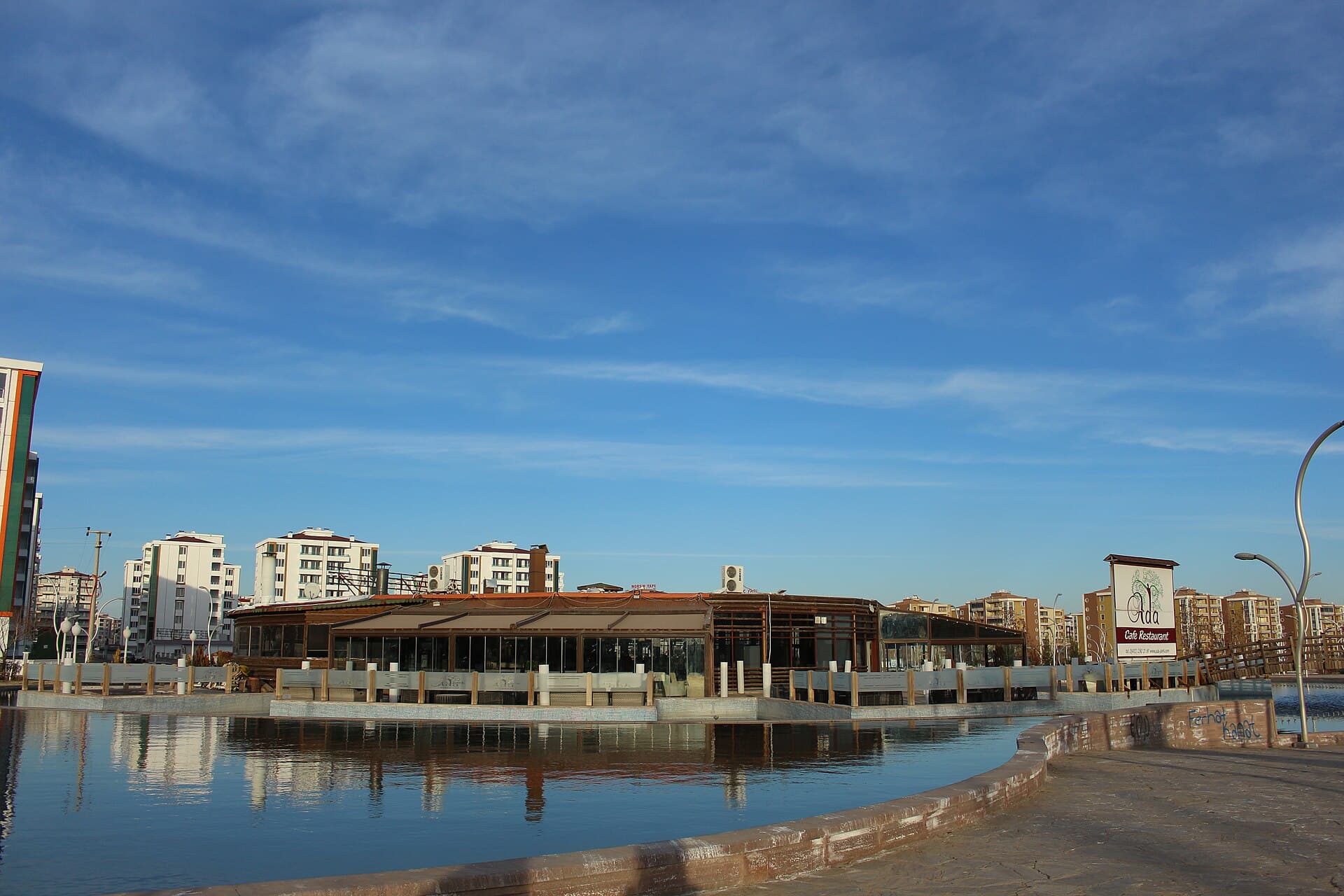 Cemallamec / CC BY-SA 4.0, via Wikimedia Commons
“Where ancient black basalt walls guard millennia of stories.”
Not the postcards. The stories even locals don't know — whispered in your ear, right where they happened.
The formidable black basalt walls of Diyarbakır are famous for their length and historical significance, yet a lesser-known tale is woven into their very construction.
This singular minaret, balanced on four basalt pillars, is an architectural marvel. Locals often walk between its legs, not merely to admire its unusual design.
In a city renowned for its oral traditions, the Dengbêj Evi preserves a distinctive form of Kurdish storytelling through song. The performances here transcend mere entertainment.
Discover every secret of Diyarbakır
Every address, every reveal in full — in your ear, right where it happened.
You pick your stops. You walk. The voice reveals what the others miss.
No tours available yet. Check back soon — we're preparing them.
Diyarbakır, a city in southeastern Turkey, stands as a testament to millennia of continuous habitation, with its roots tracing back to approximately 8,000 BCE. Positioned on a high plateau by the Tigris River, it serves as the administrative center of Diyarbakır Province and a significant cultural nexus. The city's defining characteristic is its colossal black basalt walls, a UNESCO World Heritage site, which encircle the old city and offer dramatic vistas of the Tigris River and the fertile Hevsel Gardens.
Diyarbakır's identity is deeply intertwined with its varied history, having been a crossroads for numerous civilizations including the Assyrians, Romans, Byzantines, and Ottomans. This layering of cultures is evident in its architecture, language, and culinary traditions. Frequently referred to as a cultural capital for Kurds in Turkey, Diyarbakır is a place where ancient traditions continue to flourish amidst a dynamic urban landscape.
The area surrounding modern Diyarbakır has been continuously inhabited since the Stone Age, with archaeological findings from sites like Çayönü dating back over 10,000 years. The city first appears in Assyrian texts from the 13th century BCE under the name Amida. It served as the capital of the Aramean kingdom of Bit-Zamani and later became part of the Urartu and Assyrian states.
In the 1st century BCE, the Roman Republic gained control, and the city, still known as Amida, was heavily fortified. Emperor Constantius II ordered the construction of immense black basalt walls around 349 CE, transforming it into a formidable fortress on the eastern Roman borders. These walls, largely intact today, are a defining feature of the city.
The 7th century CE marked a significant shift with the conquest of Diyarbakır by Muslim armies in 639 CE. The city was renamed Diyar Bakr, meaning 'land of the Bakr tribe,' an Arab tribe that had settled in the region. During this period, the existing Cathedral of St. Thomas was converted into the Great Mosque of Diyarbakır, making it one of the oldest mosques in Anatolia. The city thrived as a trade hub on the Silk Road, connecting Persia and Mesopotamia with Anatolia, a period evidenced by the construction of caravanserais like the Hasan Pasha Han.
Diyarbakır continued to change hands among various Islamic empires, including the Umayyads, Abbasids, Seljuks, and Artuqids, each leaving their architectural and cultural imprint. The Ottoman Empire took control in 1514, establishing Diyarbakır as an important military base and a center for skilled craftsmen. The city's population grew significantly throughout the 20th century, reaching over a million by the early 2000s. In 1937, the city's name was officially changed to Diyarbakır, meaning 'land of copper,' reflecting the region's mineral wealth.
Today, Diyarbakır is recognized for its deep Kurdish and Mesopotamian heritage, with its ancient walls and Hevsel Gardens designated as a UNESCO World Heritage site since 2015.
Begin your exploration with the Diyarbakır City Walls, a UNESCO World Heritage site. These imposing black basalt fortifications, stretching approximately 5.8 kilometers, are among the longest and best-preserved defensive structures globally. Walk along sections to appreciate the scale and the 82 watchtowers, many adorned with inscriptions from various civilizations. From atop the walls, particularly near the Mardin Gate, you'll gain expansive views of the Hevsel Gardens, a fertile agricultural landscape extending to the Tigris River, also a UNESCO site.
Within the walled city, known as the Sur district, explore the Great Mosque of Diyarbakır (Ulu Cami), one of Anatolia's oldest mosques, dating back to 639 CE. Its architecture reflects early Muslim influence and is considered an important example of Seljuk design. Seek out the distinctive Four-Legged Minaret (Dört Ayaklı Minare), a singular structure balanced on four stone pillars.
Just outside the Mardin Gate, the Ten-Eyed Bridge (On Gözlü Köprü), built in 1065, gracefully spans the Tigris River. This historic stone bridge is a favored spot to observe local life and enjoy sunset views. For a deeper dive into local culture, visit the Dengbêj Evi (House of Dengbêj), where the ancient art of Kurdish storytelling through song is preserved. The Diyarbakır Archaeological Museum, located within the İçkale complex, offers an overview of the region's history from the Neolithic era through Ottoman times.
The most pleasant times to visit Diyarbakır are during the spring (April to June) and autumn (September to early November). During these months, the weather is warm but comfortable for exploring outdoor attractions like the City Walls and Hevsel Gardens, with blooming vegetation in spring and mild temperatures in autumn. Summers (June to September) can be very hot, with average daily temperatures around 31°C and highs reaching 38°C in July, making midday sightseeing challenging. Winters (December to February) are cold, with average temperatures around 1.8°C, which can be suitable for visiting museums and enjoying local cuisine indoors.
Diyarbakır Airport (DIY) is approximately 7 kilometers from the city center, with municipal buses and taxis readily available for transport. Within the city, especially the historic Sur district, walking is the best way to explore the narrow, winding streets. For longer distances or evening travel, taxis are plentiful and reasonably priced.
Turkish is the official language, and while English may be understood in major hotels, having a translation app or phrasebook is recommended. Basic Turkish greetings like "Merhaba" (Hello) and "Teşekkürler" (Thanks) are appreciated. Local hospitality is a cornerstone of the culture; accepting an invitation for tea is a sign of friendship. When entering mosques or local homes, remember to remove your shoes. It's also advisable to ask for permission before photographing people.