Colorado State Capitol
Denver is famously known as the "Mile High City," but did you know there's a specific spot marking this exact elevation?
Full story unlocks in the tour
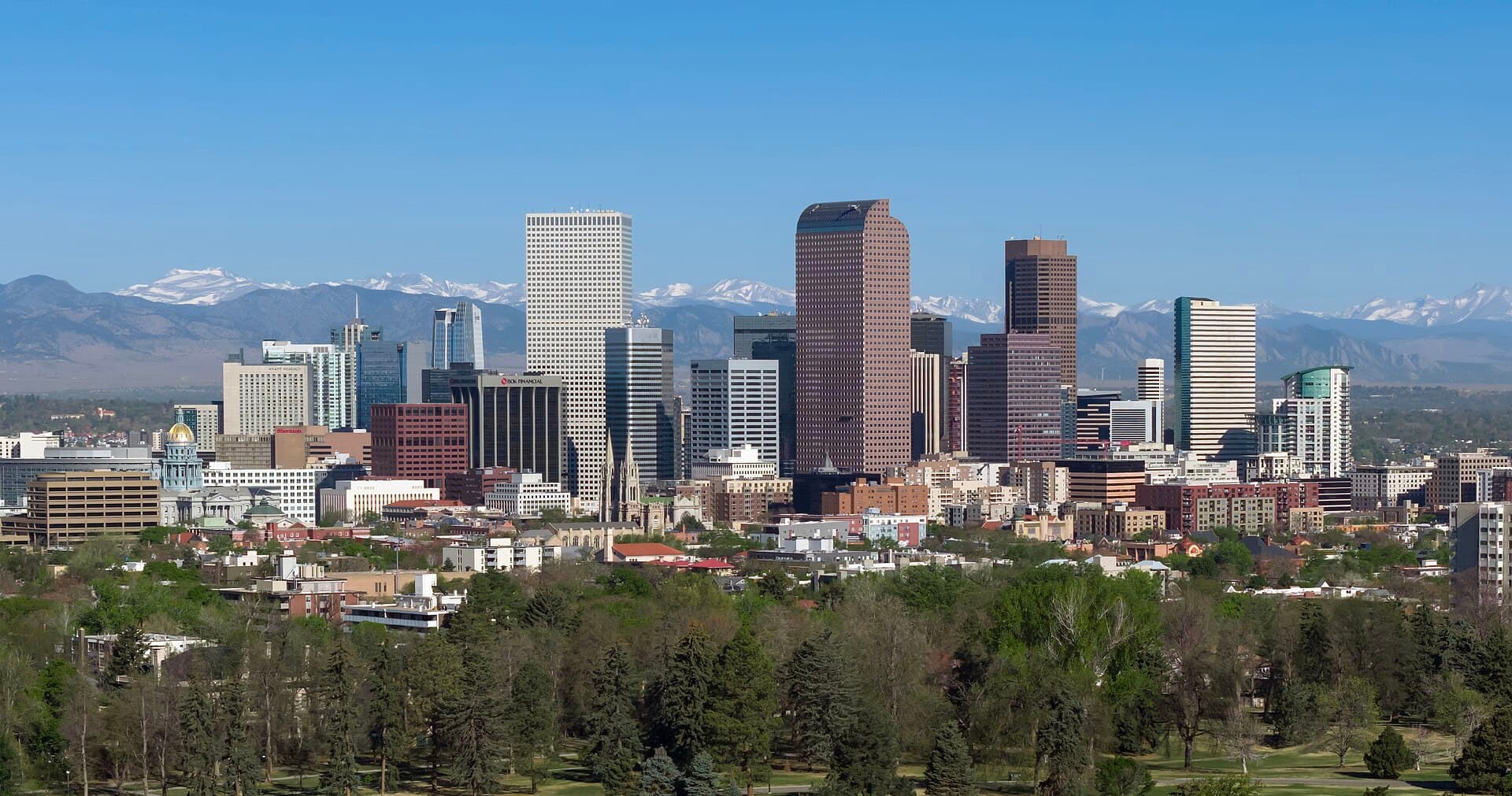 Quintin Soloviev / CC BY 4.0, via Wikimedia Commons
“Where the high plains meet the Rockies, a city forged from gold and grit.”
Not the postcards. The stories even locals don't know — whispered in your ear, right where they happened.
Denver is famously known as the "Mile High City," but did you know there's a specific spot marking this exact elevation?
The humble cheeseburger is a global phenomenon, but its official birthplace might surprise you.
Before the days of widespread air travel, Denver's main transportation hub once had a rather unusual rule for departing passengers.
Discover every secret of Denver
Every address, every reveal in full — in your ear, right where it happened.
You pick your stops. You walk. The voice reveals what the others miss.
No tours available yet. Check back soon — we're preparing them.
Denver, Colorado, often called the "Mile High City," rests at an elevation of 5,280 feet above sea level, where the expansive Great Plains transition into the formidable Rocky Mountains. It's a city that marries its Old West origins with a contemporary, outdoors-focused spirit, offering a distinctive urban experience against a dramatic mountain background. While the Rockies are visible, the city itself spreads across high plains, not within the mountain range.
With approximately 300 days of sunshine each year, surpassing even Miami or San Diego, Denver fosters an active, outdoor way of life. From its walkable downtown to its extensive park system, the city invites exploration, whether you seek cultural institutions, a flourishing culinary landscape, or ready access to mountain adventures.
Denver's narrative begins in 1858, when a group of prospectors uncovered gold, igniting the Pike's Peak Gold Rush. This discovery prompted a swift influx of settlers, transforming a sparse camp into a bustling frontier settlement. Initially, Denver comprised three distinct towns—Auraria, Highland, and Denver City—which eventually unified in 1861 to form the city of Denver. The city was named after James W. Denver, the Governor of Kansas Territory, though he never actually visited the area.
While the initial gold deposits were quickly depleted, new discoveries in the mountains to the west secured Denver's future as a vital supply center for mining operations. The arrival of the railroad in 1870 further cemented Denver's importance, connecting it to the national rail system and ensuring its prosperity as other settlements faded. By 1876, when Colorado achieved statehood, Denver was officially designated the state capital, solidifying its regional significance.
The late 19th and early 20th centuries saw Denver flourish through commerce, manufacturing, and a growing financial sector, including breweries, bakeries, and meatpacking industries that established it as a regional agricultural center. Despite an economic depression in 1893 due to the collapse of the silver industry, Denver recovered, propelled by sugar beet and manufacturing industries after 1900. In the mid-to-late 20th century, the city diversified its economy, investing in technology, aerospace, healthcare, and renewable energy, while also expanding its public transportation and redeveloping areas like Lower Downtown (LoDo) into a lively district.
Begin your exploration downtown, where the 16th Street Mall, designed by I.M. Pei, offers a pedestrian promenade with a free shuttle for easy access to shops and eateries. Nearby, Larimer Square presents Victorian buildings housing boutiques and unique dining experiences. Be sure to visit the Colorado State Capitol, where you can stand precisely one mile high on its 13th step and ascend to the rotunda for sweeping mountain views.
For art and culture, the Golden Triangle Creative District south of the Capitol contains the Denver Art Museum, History Colorado Center, and Clyfford Still Museum. The Denver Botanic Gardens offers a 23-acre sanctuary with diverse plant collections. For a distinctive experience, explore Meow Wolf Denver's "Convergence Station," an immersive art installation. Beyond the city center, Red Rocks Park & Amphitheatre, sculpted from towering red rock formations, is a globally recognized concert venue and provides opportunities for hiking.
Denver experiences approximately 300 days of sunshine annually, making it a destination year-round. For comfortable temperatures, fewer crowds, and more favorable prices, the shoulder seasons of April to May and September to October are ideal. Spring brings blooming gardens and outdoor dining, though occasional showers may occur. Autumn offers mild weather, vivid fall foliage, and numerous festivals. Summers (June to August) are warm and sunny, perfect for outdoor concerts and festivals, but also see higher tourist numbers and hotel prices. Winters (November to March) are cold with snowfall, but often feature clear skies, making them suitable for winter sports in nearby mountains.
Denver International Airport (DEN) is well-connected, and the most economical way to reach downtown is via the RTD A Line train to Union Station. The 37-minute journey costs $10, and trains depart every 15-30 minutes. From Union Station, you can access local buses, light rail, and the free 16th Street Mall shuttle. The Regional Transportation District (RTD) operates an extensive bus and rail system throughout the Denver metro area. Day passes are available for RTD services. Taxis and ride-shares are also available from the airport, with travel times of 25-35 minutes depending on traffic.
Denver's elevation of one mile can affect visitors. It is advisable to stay hydrated and take it easy on physical activities initially. Alcoholic drinks may also have a stronger effect at this altitude.