Oude Kerk (Old Church)
Delft's oldest church has a prominent lean, earning it a local nickname.
Full story unlocks in the tour
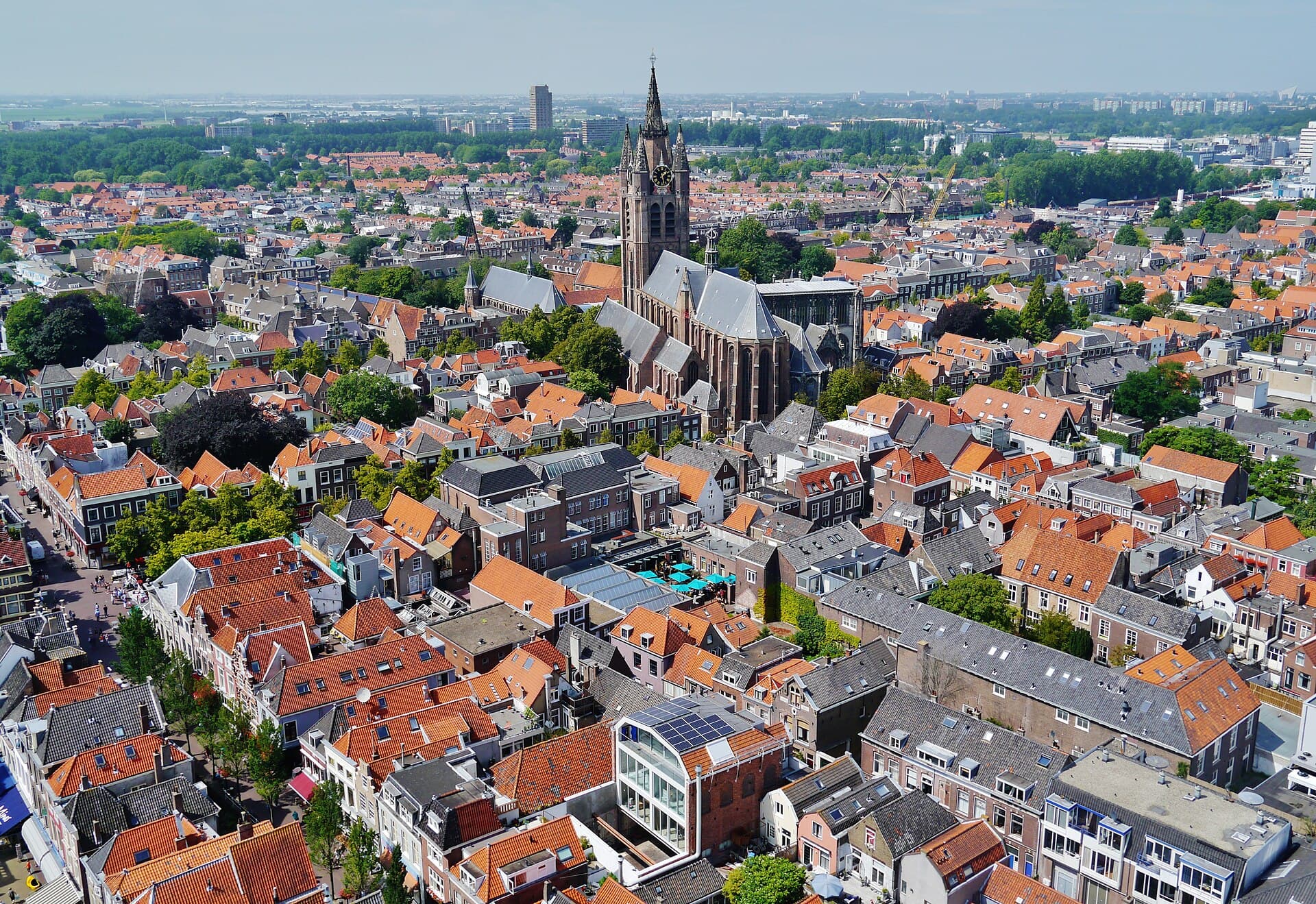 Zairon / CC BY-SA 4.0, via Wikimedia Commons
“Where Vermeer's Light Meets the Dutch Golden Age.”
Not the postcards. The stories even locals don't know — whispered in your ear, right where they happened.
Delft's oldest church has a prominent lean, earning it a local nickname.
The iconic blue and white pottery isn't quite what it seems before it's fired.
This historic building holds a dramatic secret that shaped Dutch history.
Discover every secret of Delft
Every address, every reveal in full — in your ear, right where it happened.
You pick your stops. You walk. The voice reveals what the others miss.
No tours available yet. Check back soon — we're preparing them.
Delft, a city in the western Netherlands, is a place where history feels alive, with its picturesque canals, enduring architecture, and a quiet charm that invites exploration. Frequently associated with its distinctive blue and white Delftware pottery and as the birthplace of the celebrated painter Johannes Vermeer, Delft offers a blend of artistic heritage and historical significance. Its compact city center, largely car-free, makes it ideal for walking or cycling, allowing visitors to easily discover its many sights.
The city's origins trace back to the 11th century, developing from a rural village into an important market town. Today, Delft seamlessly blends its enduring past with a lively present, thanks in part to its renowned Technical University, which brings a youthful energy to the cafes, bars, and cultural events. Whether you're drawn by the masterpieces of the Dutch Golden Age, the intricate beauty of Delftware, or simply the pleasure of wandering along historic canals, Delft promises a memorable experience.
Delft is part of the Rotterdam–The Hague metropolitan area and the Randstad, making it easily accessible for a day trip or a longer stay.
## From Canal to City: Delft's Early Beginnings Delft's story begins not with grand pronouncements, but with a simple act of digging. The city's name itself is derived from the Dutch word delven, meaning "to delve" or "to dig," a direct reference to the creation of its oldest canal, the 'Delf' (now the Oude Delft), around 1100. This man-made waterway was initially for draining land, but quickly became vital for transport, laying the foundation for Delft's growth. By 1246, Count Willem II granted Delft its city charter, solidifying its status as an important market town, evident in the generous size of its central market square.
## A Golden Age and its Challenges The 16th and 17th centuries marked Delft's Golden Age, a period of significant economic and cultural prosperity. The city flourished as a center for trade, industry, and the arts, with beer, textiles, and printing being prominent trades. In 1389, the Delfshavensche Schie canal was dug, connecting Delft to the Maas River and the sea via the port of Delfshaven. This connection further boosted its trading power. Delft was also a significant office location for the Dutch East India Company (VOC) from 1602, playing a crucial role in the lucrative trade of goods like Chinese porcelain, which in turn inspired the local production of Delftware.
However, this era of prosperity was not without its trials. A devastating fire in 1536 destroyed a large part of the city, including much of the municipal archive, leading to a requirement for new houses to be built from stone. Another catastrophic event, the Delft Thunderclap, occurred in 1654 when a gunpowder magazine exploded, causing widespread destruction and claiming hundreds of lives.
## Artistic and Scientific Legacies Delft is perhaps best known for its association with two giants of the 17th century: painter Johannes Vermeer and scientist Antonie van Leeuwenhoek. Vermeer, born and interred in Delft, used the city's streets and interiors as subjects and backgrounds for his masterpieces, capturing light in a way that continues to inspire artists today. While no original Vermeer paintings remain in Delft, the Vermeer Centre offers insights into his life and work.
Antonie van Leeuwenhoek, a Delft native, made groundbreaking discoveries in microbiology with his pioneering work on microscopes, essentially becoming the father of the field. His tomb can be found in the Oude Kerk. Delft also holds a special place in Dutch royal history, serving as the burial place for members of the House of Orange-Nassau, including William of Orange, who was assassinated in the Prinsenhof in 1584. These intertwined threads of art, science, and national history firmly establish Delft's enduring legacy.
Begin your exploration at the Markt, Delft's central square, where you'll find the impressive Nieuwe Kerk (New Church) and the historic City Hall. Climb the Nieuwe Kerk's 85-meter tower for expansive views of Delft and even the Rotterdam skyline. The Nieuwe Kerk also serves as the royal burial vault for the Dutch royal family, including William of Orange.
A short walk away is the Oude Kerk (Old Church), Delft's oldest church, notable for its leaning tower known as "Scheve Jan" (Leaning John). Inside, you can find the grave of Johannes Vermeer.
For a deeper dive into Delft's artistic heritage, visit the Vermeer Centrum Delft, which provides insightful information on the painter's life and works, though it doesn't house original paintings. No visit to Delft is complete without experiencing its world-renowned pottery at the Royal Delft Factory (De Koninklijke Porceleyne Fles), the only remaining Delftware factory from the 17th century. Here, you can witness the traditional hand-painting process and explore a museum showcasing historic and modern ceramics.
Wander along the Oude Delft canal, one of the city's oldest, lined with monuments and historic buildings like the Gemeenlandshuis. Don't miss the Oostpoort (Eastern Gate), the only surviving gate of the old city walls. For a moment of tranquility, seek out the charming courtyards like Hofje van Pauw. You can also take a canal cruise to see the city from a different perspective.
The ideal time to visit Delft is during the spring (April to May) and autumn (September to October) months. In April, temperatures range from 10°C to 15°C, with the city blooming and offering a pleasant atmosphere for walking and outdoor cafes. This also coincides with the famous tulip season in the Netherlands. May and June offer slightly warmer weather, between 15°C and 20°C, with moderate rainfall, perfect for outdoor sightseeing and enjoying markets. The summer months (June to August) are the warmest, with average highs around 21°C, but also mark the peak tourist season, leading to more crowds. September and October provide a calmer experience with mild weather and beautiful autumn colors. Winter (November to March) is cold, with temperatures from 2°C to 10°C, but can offer a magical, less crowded experience with Christmas markets and light displays.
Delft is easily accessible by train, with direct connections from major cities like Amsterdam, Rotterdam, and The Hague. The city's compact center is best explored on foot or by bicycle, with numerous bike rental options available. Public transportation within Delft is efficient, though many attractions are within a 20-minute walk of the city center. If arriving by car, ample parking is available on the outskirts of the city, with shuttle buses and bike paths leading into the old town.
Most locals communicate in English, so learning Dutch is not essential for visitors. Wi-Fi is generally available in cafes and public spaces. When visiting museums like the Royal Delft Factory, bags larger than A4 size may need to be stored in lockers. For accommodation, Delft offers various options, though hostels are not common, and booking in advance is advisable, especially during peak season.