Reformed Great Church
Debrecen's Great Church stands as a symbol of Protestantism in Hungary, yet its prominent twin towers were not always part of the initial design.
Full story unlocks in the tour
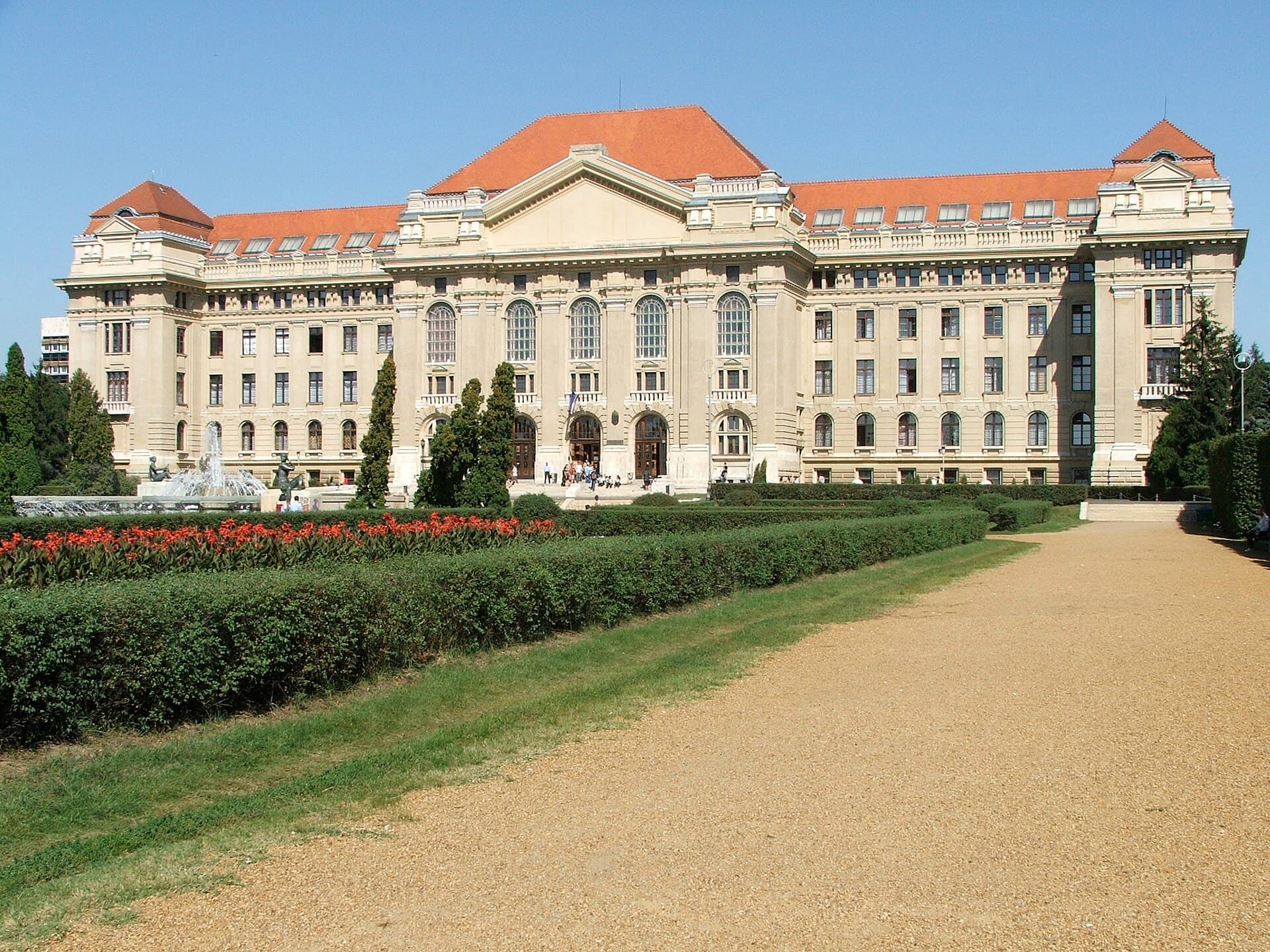 Björn Láczay / CC BY 2.0, via Wikimedia Commons
“Where the Great Plain's spirit finds its voice.”
Not the postcards. The stories even locals don't know — whispered in your ear, right where they happened.
Debrecen's Great Church stands as a symbol of Protestantism in Hungary, yet its prominent twin towers were not always part of the initial design.
Among the Déri Museum's compelling collection, a particular room safeguards a secret about the city's artistic soul.
The Debrecen Flower Carnival unfolds as a joyous spectacle, but its origins are surprisingly interwoven with a far older, more solemn tradition.
Discover every secret of Debrecen
Every address, every reveal in full — in your ear, right where it happened.
You pick your stops. You walk. The voice reveals what the others miss.
No tours available yet. Check back soon — we're preparing them.
Debrecen, Hungary's second-largest city, spreads across the Great Hungarian Plain, a landscape that has profoundly shaped its character and narrative. Frequently referred to as the 'Calvinist Rome' for its pivotal role in the Hungarian Reformation, the city emanates a distinct intellectual and spiritual ambiance. It is a place where history is tangible, from the stately architecture of its Reformed Great Church to the verdant boulevards that invite unhurried exploration.
Beyond its historical gravity, Debrecen is a dynamic urban core with a flourishing university, a lively cultural landscape, and a surprising abundance of green spaces. It gracefully balances its traditional foundations with a forward-looking energy, offering visitors a glimpse into a unique facet of Hungarian life that extends beyond the more frequently visited capital. The city serves as an entry point to the Hortobágy National Park, a UNESCO World Heritage site, further solidifying its role as a significant regional center.
## Early Beginnings and Royal Charters Debrecen's narrative commences in the 13th century, first appearing in historical records in 1235. Its strategic position along trade routes swiftly fostered its expansion, and by 1361, King Louis I of Hungary bestowed upon it the distinction of a free royal city. This charter granted considerable autonomy and economic advantages, allowing Debrecen to thrive as a market town.
## The Reformation and a City of Faith The 16th century marked a crucial turning point with the expansion of the Protestant Reformation. Debrecen embraced Calvinism with zeal, becoming a leading hub of the movement in Hungary. This strong Protestant identity earned it the appellation 'Calvinist Rome.' The city's Great Church, an emblem of this heritage, has borne witness to numerous historical moments, including the declaration of Hungary's independence from Habsburg rule in 1849.
## Trials, Rebirths, and Modernity Debrecen has confronted its share of adversities, including devastating fires and periods of foreign occupation. The immense fire of 1802, in particular, ravaged much of the city, necessitating extensive reconstruction efforts. Despite these setbacks, Debrecen consistently demonstrated resilience and a dedication to learning and culture. The city's university, established in 1912 but with origins tracing back to the 16th-century Calvinist College, remains a cornerstone of its intellectual life. During World War II, Debrecen sustained considerable damage, but it once again rebuilt and re-emerged as a vital regional capital, continuing its legacy as a center of Hungarian culture and innovation.
Begin your exploration at the Reformed Great Church, an imposing neoclassical structure that presides over Kossuth Square. Its twin towers afford expansive views of the city. Inside, the elegant simplicity of its Calvinist design is striking.
Adjacent to the church, the Déri Museum houses an eclectic collection, most notably Mihály Munkácsy's monumental Christ Trilogy. The museum also provides insights into local history and ethnography.
Amble through Nagyerdő Park (Great Forest), an expansive green sanctuary ideal for repose. Here you will find the Debrecen Zoo and Amusement Park, the Aquaticum Mediterranean Pleasure Baths, and the tranquil Békás Lake.
For a taste of local existence, visit the Great Market Hall, where vendors offer fresh produce, regional delicacies, and handcrafted items. It is a lively nexus of activity and a wonderful place to experience the city's daily rhythm.
Do not overlook the Csokonai Theatre, a beautiful neo-Renaissance edifice that stages a variety of performances, reflecting Debrecen's enduring commitment to the arts.
The most agreeable times to visit Debrecen are spring (April-May) and early autumn (September-October). During these months, the weather is agreeably mild, perfect for exploring the city on foot and enjoying its parks. Summer (June-August) can be warm, but it is also when the city awakens with festivals, most notably the Debrecen Flower Carnival in August. Winters are cold, with occasional snow, but offer a cozy atmosphere for indoor attractions.
Debrecen enjoys excellent connectivity by air, with Debrecen International Airport (DEB) offering flights to several European cities. The city center is readily accessible from the airport via bus or taxi. Within the city, public transport comprises an efficient network of buses and trams, facilitating easy navigation. Tickets can be acquired at kiosks, ticket machines, or directly on board.
Accommodation options span from international hotel chains to delightful guesthouses. Hungarian Forint (HUF) is the local currency, and credit cards are widely accepted. English is spoken in areas frequented by visitors, but knowing a few basic Hungarian phrases will be appreciated. Tipping is customary in restaurants and for services rendered.