Yungang Grottoes
Among the thousands of Buddha statues carved into the cliffs, one particular detail reveals a surprising connection to imperial power.
Full story unlocks in the tour
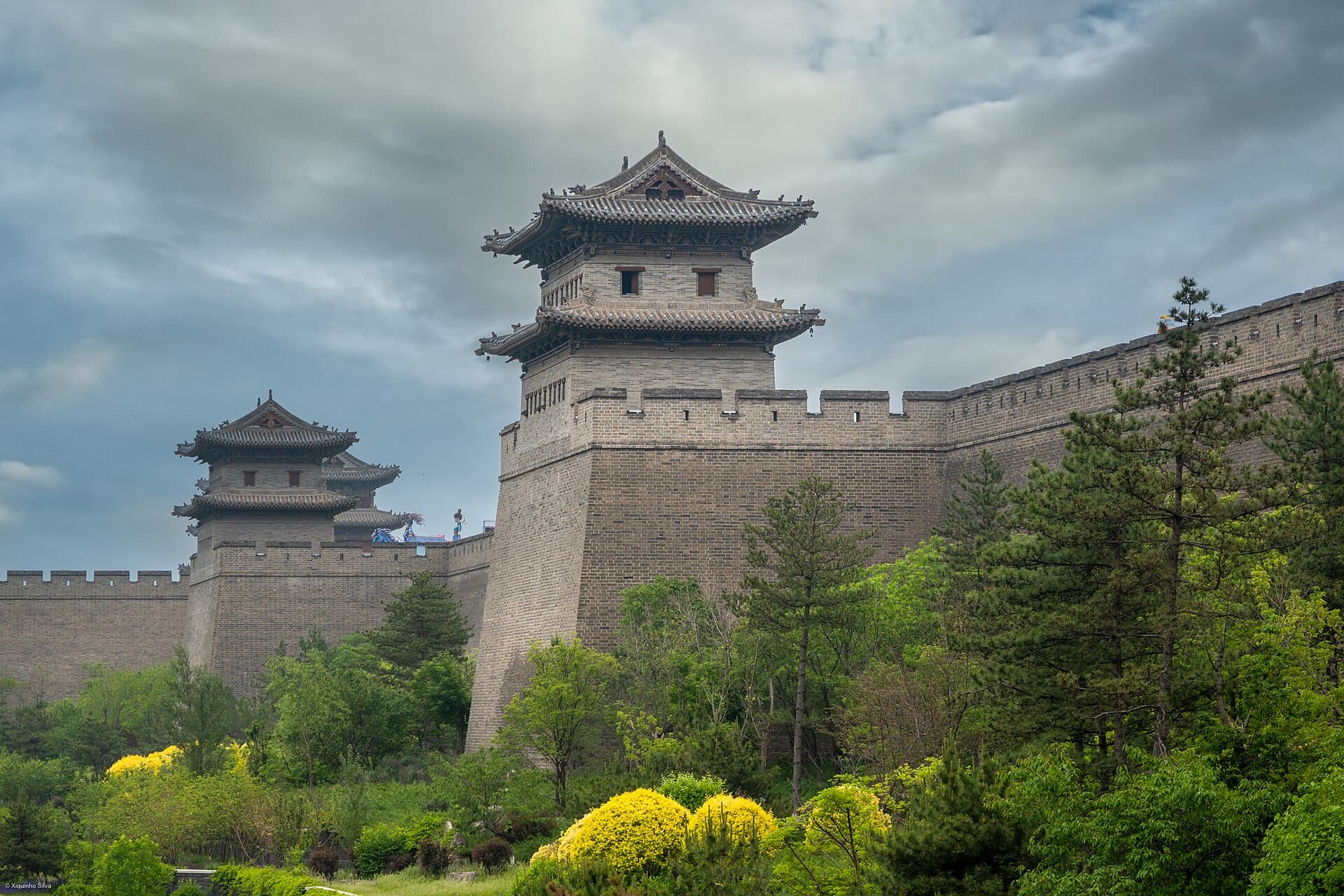 xiquinhosilva / CC BY 2.0, via Wikimedia Commons
“Where ancient empires carved faith into stone and mountains.”
Not the postcards. The stories even locals don't know — whispered in your ear, right where they happened.
Among the thousands of Buddha statues carved into the cliffs, one particular detail reveals a surprising connection to imperial power.
This gravity-defying temple, seemingly clinging to a sheer cliff, holds a secret about its foundational support that isn't immediately visible.
While other famous Nine-Dragon Screens exist in China, Datong's version holds a unique distinction that makes it particularly significant.
Discover every secret of Datong
Every address, every reveal in full — in your ear, right where it happened.
You pick your stops. You walk. The voice reveals what the others miss.
No tours available yet. Check back soon — we're preparing them.
Datong, a city in northern Shanxi Province, offers a profound journey into China's imperial and Buddhist past. Situated just south of the Great Wall on a fertile plain, Datong's strategic position shaped its destiny as a crucial frontier command and a cultural crossroads. For centuries, it served as a bulwark against nomadic groups and, notably, as the capital of the Northern Wei Dynasty (386–534 AD), a period that saw the flourishing of Buddhist art and architecture.
Today, Datong stands as a testament to these bygone eras, with its ancient city wall, magnificent grottoes, and gravity-defying temples drawing those curious about early Chinese history and religious art. While often overlooked by more prominent tourist destinations, Datong provides a less crowded and deeply rewarding experience for travelers seeking to connect with the authentic layers of China's heritage. It's a place where the scale of human endeavor, from massive stone carvings to precarious cliffside construction, inspires awe and contemplation.
Datong's history stretches back over a thousand years, with its origins as a frontier land between agricultural Chinese settlements and the nomadic peoples of the Great Steppe. During the Han Dynasty (2nd and 1st centuries BCE), the area, then known as Pingcheng County, served as a vital command post against northern nomadic groups.
The city's most significant period began in 398 CE, when the Tuoba founders of the Northern Wei Dynasty established Pingcheng (modern-day Datong) as their capital. This era marked a transformative phase for Datong, as it evolved from a military garrison into a metropolis. The Northern Wei actively embraced Chinese traditions and, crucially, adopted Buddhism as their state religion, leading to a massive state-sponsored artistic and religious flourishing. The most enduring legacy of this period is the construction of the Yungang Grottoes, a monumental undertaking that began around 460 CE and continued for decades, creating thousands of Buddhist statues carved into the cliffs.
Following the Northern Wei's relocation of their capital to Luoyang in 494 CE, Datong continued to hold strategic importance. It was overrun by the Khitan people in 947 CE and became an important administrative center under the Liao Dynasty (916–1125), serving as their western capital. The Jurchen Jin Dynasty (1115–1234), who succeeded the Liao, also designated Datong as their western capital. During the Ming Dynasty (1368–1644), Datong was once again fortified, becoming a critical stronghold against the Mongols, with its city walls rebuilt in the late 14th century. Many of Datong's notable historical structures, such as the Drum Tower and the Nine-Dragon Wall, were built during the Ming period. Though sacked at the end of the Ming Dynasty in 1649, the city was promptly rebuilt in 1652, demonstrating its enduring significance.
Datong's historical and cultural attractions are primarily spread across the city and its surrounding areas. The Yungang Grottoes, a UNESCO World Heritage site located about 16 km west of Datong, are a collection of 53 major caves and over 51,000 Buddhist statues carved into a sandstone cliff. These 5th and 6th-century carvings are a striking example of early Chinese Buddhist cave art. Plan for 3-4 hours to explore the site.
About 65 kilometers southeast of Datong, the Hanging Temple (Xuankong Temple) is an architectural marvel. This temple, built over 1,500 years ago, clings to a sheer cliff face near Mount Heng and uniquely incorporates elements of Buddhism, Taoism, and Confucianism. Allow 1-2 hours for your visit.
Within Datong's ancient city, the Nine-Dragon Screen is a lively glazed wall, 45.5 meters long and 8 meters high, dating back to 1392. It is the largest and oldest of its kind in China. Nearby, Huayan Temple, established in 1038 during the Liao Dynasty, is one of the largest and best-preserved temple complexes from that period and the subsequent Jin Dynasty. It houses impressive Liao Dynasty statues, including one known as the "Venus of the East." Another significant site is Shanhua Temple, founded in the early 8th century during the Tang Dynasty, which features a well-preserved layout from the Liao and Jin dynasties. You can also walk along sections of the recently rebuilt Datong Ancient City Wall for panoramic views.
The best times to visit Datong are spring (March–May) and autumn (September–November). Spring offers mild weather, blossoming landscapes, and moderate tourist numbers, though it can be dry and occasionally windy. Autumn provides the most pleasant conditions with clear skies, comfortable temperatures, and colorful foliage. Summers (June–August) are warm and can be humid with concentrated rainfall, but Datong is generally cooler than other northern Chinese cities. Winters (December–February) are long, cold, and dry with frequent snowfall, making it a less ideal time for outdoor sightseeing, though the city hosts a lively Lantern Festival during Chinese Lunar New Year.
Datong is accessible by high-speed train from Beijing (2-2.5 hours) and Taiyuan (1.5 hours) to Datong South Railway Station. Datong Yungang Airport (DAT) offers flights to major Chinese cities. Taxis are readily available, with a starting fare of around 6-10 RMB. Public buses are an economical option, with most routes costing 1-2 RMB. For flexibility when visiting sites outside the city center like the Yungang Grottoes and Hanging Temple, consider hiring a private car or taxi for the day. Many travelers spend 1-2 days to see the main sights, or 3-4 days for a more relaxed pace and deeper exploration, potentially including a trip to Pingyao. Accommodations are available both within the ancient city for a more atmospheric stay and near Datong South Railway Station for convenience.