Daejeon Expo Science Park
The Hanbit Tower stands as a beacon of Daejeon's scientific identity, yet its initial purpose reached beyond mere observation.
Full story unlocks in the tour
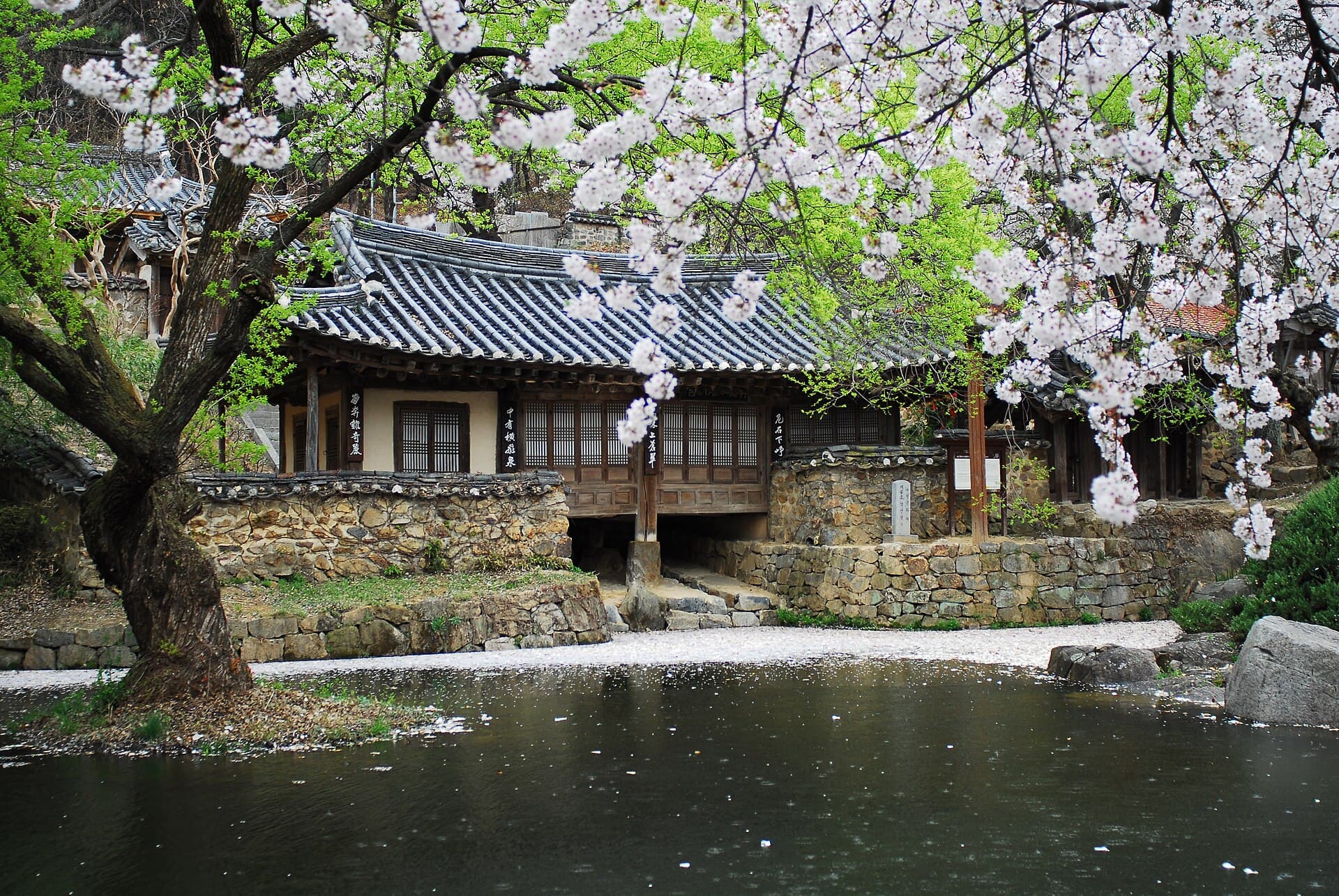 Jo / CC BY 2.0, via Wikimedia Commons
“Where intellect meets serenity, Daejeon serves as South Korea's unexpected nexus of scientific advancement and tranquil landscapes.”
Not the postcards. The stories even locals don't know — whispered in your ear, right where they happened.
The Hanbit Tower stands as a beacon of Daejeon's scientific identity, yet its initial purpose reached beyond mere observation.
This distinctive trail invites visitors to walk barefoot, but the story behind its creation springs from a surprising personal initiative.
Among the contemporary academic structures of Hannam University, a collection of older homes narrates a story of unforeseen architectural convergence.
Discover every secret of Daejeon
Every address, every reveal in full — in your ear, right where it happened.
You pick your stops. You walk. The voice reveals what the others miss.
No tours available yet. Check back soon — we're preparing them.
Daejeon, South Korea's fifth-largest metropolis with a population nearing 1.5 million, is a city that often delights visitors with its singular blend of cutting-edge science and calm natural splendor. Situated in a central lowland valley, embraced by mountains and traversed by three rivers—the Gapcheon, Yudeungcheon, and Daejeoncheon—it functions as a vital transportation and administrative nexus, linking Seoul to Busan via high-speed rail in under an hour. Known as 'Asia's Silicon Valley,' Daejeon is home to Daedeok Innopolis, an expansive research and development cluster that houses numerous government-funded research institutes, universities like KAIST, and hundreds of private R&D centers, propelling the nation's technological advancements.
Beyond its scientific prowess, Daejeon offers a relaxed pace of life, a welcome counterpoint to Seoul's bustling energy. The city's landscape gracefully integrates urban spaces with wide parks, hot springs, and forested mountains, affording ample opportunities for outdoor recreation and cultural discovery. From exploring the legacy of the 1993 World Expo at Expo Science Park to unwinding in the mineral-rich waters of Yuseong Hot Springs, Daejeon presents a multifaceted experience for every traveler.
Daejeon's modern identity is a relatively recent phenomenon, a striking contrast to many of South Korea's ancient cities. Before the turn of the 20th century, the area was a modest village known as Hanbat, meaning "large field" in Korean, a name echoed in the city's current Hanja characters.
### The Railway Catalyst The city's transformation commenced in 1905 with the inauguration of the Gyeongbu railway line, connecting Seoul to Busan, and further solidified in 1914 with the completion of the Honam railway branch to Mokpo. These railway lines were pivotal, establishing Daejeon as a central transportation hub and stimulating rapid growth during the Japanese colonial period. Daejeon's administrative significance grew, leading to the relocation of the South Chungcheong Province capital from Gongju to Daejeon in 1932.
### Post-War Reconstruction and Scientific Ambition Daejeon officially achieved city status in 1949. However, the Korean War (1950–53) devastated the city, destroying approximately 70 percent of its infrastructure, and it briefly served as a temporary capital for the Republic of Korea. The post-war years saw a significant rebuilding effort. A crucial turning point for Daejeon's future arrived in 1959 with the founding of the Atomic Energy Research Institute (AERI), laying the groundwork for its scientific future.
### The Rise of the Science City The 1970s marked the beginning of Daedeok Science Town's formation, which would eventually earn Daejeon the moniker "Asia's Silicon Valley." This concentration of research institutes, universities, and high-tech businesses has been a driving force behind Korea's innovation. In 1993, Daejeon hosted the World's Fair (Expo '93), an international event that drew over 14 million visitors from 108 countries and solidified the city's reputation as a global center for science and technology. The Expo left a lasting legacy, including the modern Expo Park, the Hanbit Tower, and the Expo Bridge. By 1995, Daejeon was officially renamed a Metropolitan City, reflecting its growing importance as a national administrative and economic center. The relocation of several national government ministries and agencies from Seoul to the Daejeon Government Complex in 1997 further elevated its administrative standing.
Daejeon presents a varied array of attractions, blending its scientific identity with natural retreats. Begin at Expo Science Park, a legacy of the 1993 World's Fair, featuring the iconic Hanbit Tower for city views and the National Science Museum, South Korea's largest science museum with interactive exhibits for all ages. Nearby, the Hanbat Arboretum offers a wide urban green space with themed gardens and walking paths.
For a singular experience, make your way to Yuseong Hot Springs, where you can immerse your feet in free outdoor foot pools or indulge in one of the many spas. Those who appreciate nature will find Daecheong Lake appealing, a large reservoir providing scenic driving routes and walking trails, and serving as a sanctuary for migratory birds. The Gyejoksan Red Clay Trail invites barefoot walking through a peaceful forest, a truly distinctive way to connect with the natural world. For a glimpse into Daejeon's past, explore Uam Historical Park with its restored historical buildings. Families might enjoy Daejeon O-World, a theme park combining a zoo, bird land, and amusement rides. Do not overlook the lively Skyroad and the traditional Jungang Traditional Market for shopping and local street food.
Daejeon experiences four distinct seasons. The most agreeable times to visit are spring (late March to May) and autumn (mid-September to October). During these months, temperatures are mild, ranging from 15°C to 29°C, and rainfall is lower, making it ideal for sightseeing and outdoor activities. Spring brings delicate cherry blossoms, while autumn transforms the surrounding mountains with lively fall foliage. Summers (June to August) are warm and humid with significant rainfall, especially in July and August due to the monsoon season. Winters (December to February) are cold and dry, with average temperatures dropping to -1°C.
Daejeon is well-connected and simple to navigate. The city is a major transportation hub, accessible from Seoul in about an hour via the KTX high-speed train. Cheongju International Airport (CJJ) is the nearest airport, approximately 30 minutes away by road, though most international travelers arrive at Incheon International Airport (ICN) and connect to Daejeon by KTX or express bus. Within the city, Daejeon Metro Line 1 is efficient, and an extensive bus network covers areas not served by the subway. A T-money card, available at convenience stores, allows for easy payment and discounted transfers on both buses and the metro. Taxis are also readily available, and ride-hailing apps like Kakao T are widely used.
South Korea's official currency is the Korean Won (KRW). While tap water in Daejeon is purified and safe to drink, many locals and foreigners opt for filtered or bottled water. Korean is the official language. Daejeon is considered a very safe city with a low crime rate, even for solo female travelers, though general common sense is always advised. For stays exceeding 90 days, foreign residents must apply for an Alien Registration Card at the Daejeon Immigration Office. Visa requirements vary by nationality, with many countries enjoying visa-free entry for short tourist or business trips.