Qorikancha (Temple of the Sun)
Beneath the Spanish colonial architecture of the Santo Domingo Convent lies the most sacred site of the Inca Empire, a place once adorned with unimaginable riches.
Full story unlocks in the tour
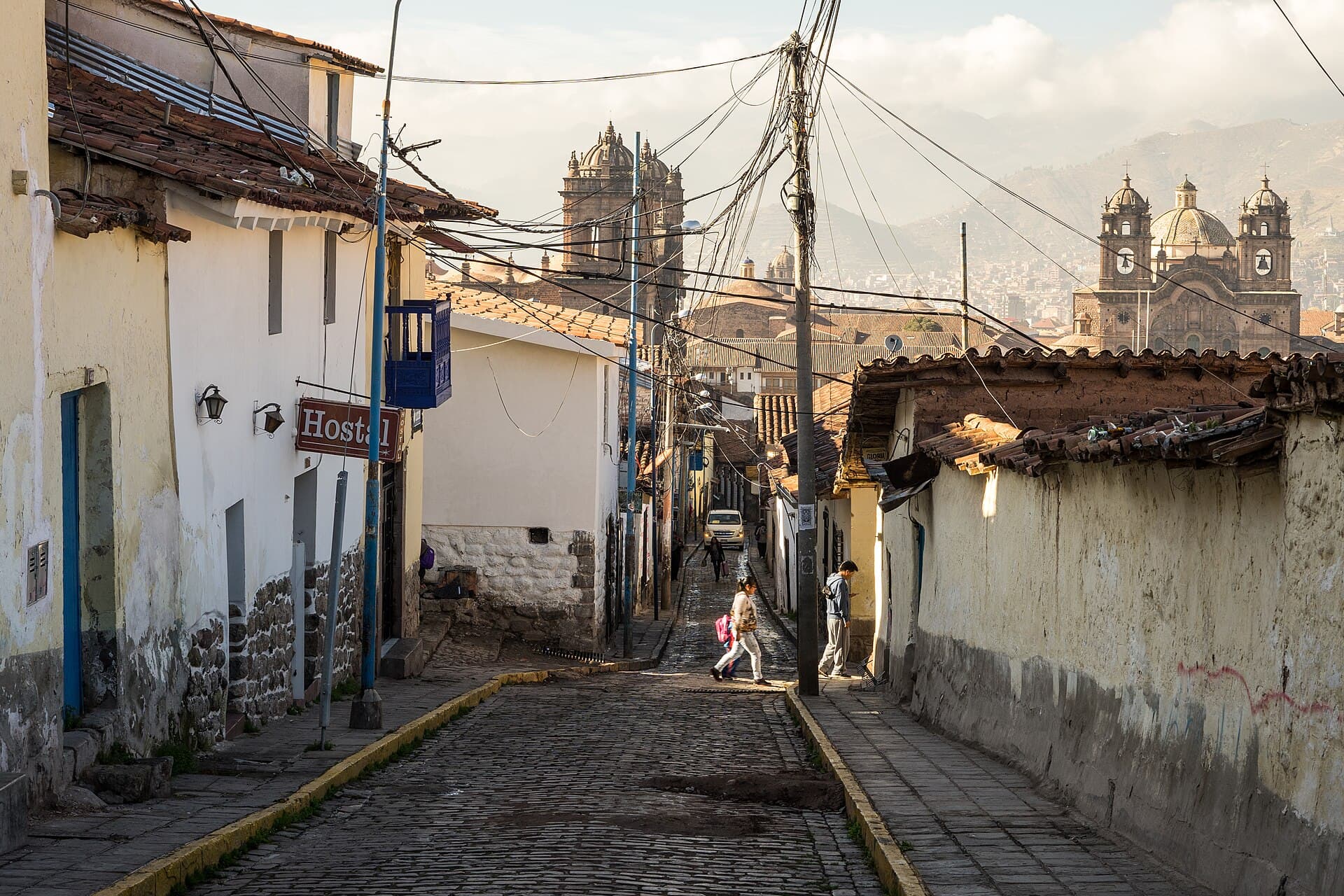 tomscoffin / CC BY 2.0, via Wikimedia Commons
“Where Inca majesty meets Andean mystique.”
Not the postcards. The stories even locals don't know — whispered in your ear, right where they happened.
Beneath the Spanish colonial architecture of the Santo Domingo Convent lies the most sacred site of the Inca Empire, a place once adorned with unimaginable riches.
Walk the ancient pathways of Cusco, and you might notice something peculiar about the names of certain alleys.
Inside the grand Cusco Cathedral, a UNESCO World Heritage site, one particular painting of 'The Last Supper' offers a surprising local twist.
Discover every secret of Cusco
Every address, every reveal in full — in your ear, right where it happened.
You pick your stops. You walk. The voice reveals what the others miss.
No tours available yet. Check back soon — we're preparing them.
Cusco, also spelled Cuzco, is a city in southeastern Peru, situated in the Huatanay valley of the Andes mountain range. It stands as a captivating introduction to Andean culture and serves as the primary gateway to both Machu Picchu and the Sacred Valley. Once the capital of the formidable Inca Empire, Cusco holds a unique appeal, blending exquisite churches, fascinating museums, and narrow pathways in its historic center.
At an elevation of approximately 3,400 meters (11,155 feet) above sea level, Cusco requires visitors to take time for acclimatization upon arrival. The city is a lively convergence of Spanish-indigenous heritage, evident in its architecture and cultural festivals throughout the year. Recognized as a UNESCO World Heritage Site in 1983 and designated the Historical Capital of Peru by the country's constitution, Cusco attracts over two million visitors annually.
Cusco's history stretches back over 3,000 years, making it one of the oldest continuously inhabited cities in the Western Hemisphere. The region was first inhabited by the Killke culture in the 10th century, responsible for constructing the core of the Sacsayhuamán fortress in the 11th century. However, it was the Inca civilization, beginning around 1200 A.D. with Manco Cápac, that truly established Cusco's prominence. The Incas considered Cusco the "navel of the world" (Qosqo in Quechua), the spiritual and political center from which their vast empire, Tawantinsuyu, radiated. Many believe the city was deliberately planned in the shape of a puma, a sacred animal, with Sacsayhuamán forming its head.
The arrival of the Spanish in 1533 marked a dramatic turning point. Francisco Pizarro's forces occupied and sacked Cusco, then re-founded the city on March 23, 1534, under Spanish rule. The Spanish colonists largely built their new city atop the existing Inca foundations, replacing indigenous temples with Catholic churches and Inca palaces with mansions. This architectural layering is still visible today, where immense Inca stone foundations support colonial structures. Cusco became a prosperous center for Spanish colonization and the spread of Christianity in the Andes, thriving on agriculture, cattle raising, mining, and trade with Spain. The city saw the construction of numerous churches, convents, a cathedral, a university, and an archdiocese.
Despite the Spanish conquest and the relocation of Peru's capital to Lima, Cusco remained an important city. A significant revolt against the Spanish, led by Tupac Amaru II, occurred in Cusco in 1780, laying the groundwork for Peru's eventual independence in 1821. By the early 20th century, Cusco's historical and architectural significance was widely recognized. Today, it stands as a testament to the resilience of Andean culture and a living museum where Inca and Spanish influences intertwine.
Begin your exploration in the Plaza de Armas, the historic heart of Cusco, surrounded by colonial arcades and home to the impressive Cusco Cathedral. The Cusco Cathedral, a UNESCO World Heritage site, houses a significant collection of colonial art. A short walk from the main square leads to Qorikancha, also known as the Temple of the Sun. This was the most important temple of the Inca Empire, and its precise Inca stonework now forms the foundation of the Santo Domingo Convent.
Above the city are the massive Inca ruins of Sacsayhuamán, a ceremonial complex with huge, perfectly fitted stone walls that defy imagination. Other nearby Inca sites often visited in conjunction with Sacsayhuamán include Qenqo, Tambomachay, and Puka Pukara.
For a taste of local life, visit the San Pedro Market, where you will find an abundance of fruits, vegetables, and local crafts. Wander through the artistic San Blas neighborhood, known for its artisan workshops, art galleries, and cafes. Consider a day trip to the Sacred Valley, home to sites like the Pisac ruins and the Ollantaytambo fortress. For outdoor enthusiasts, Rainbow Mountain (Vinicunca) and Humantay Lake offer incredible natural landscapes.
Cusco experiences two main seasons: a dry season and a rainy season. The dry season, from April to October, offers sunny days and minimal rain, making it ideal for trekking and exploring archaeological sites. However, this is also peak tourist season, especially from June to August, so expect larger crowds and book accommodations and tours well in advance. The rainy season, from November to March, brings warmer temperatures and frequent, though often brief, rain showers. Landscapes are lush during this time, and there are fewer tourists, except during Semana Santa (Easter Week). The shoulder months of April, May, September, and October offer a good balance of temperate weather and fewer crowds.
Cusco sits at a high altitude of around 3,400 meters (11,155 feet), so acclimatization is crucial to avoid altitude sickness. Upon arrival, rest, stay hydrated, avoid heavy meals and alcohol, and consider drinking coca tea. The local currency is the Peruvian Sol (PEN), and ATMs are widely available, though it is advisable to carry small bills for markets and smaller establishments. Tap water is not safe to drink; opt for bottled, filtered, or boiled water. While taxis and ride-sharing apps like Uber and Cabify are available, walking is an excellent way to explore the historic center. Consider purchasing a Boleto Turístico, a pass that grants access to multiple ruins and museums in the Cusco region.