Palacio de Cortés
This formidable stone edifice, a monument to Spanish conquest, cradles an unexpected artistic marvel within its walls.
Full story unlocks in the tour
 self. / CC BY-SA 4.0, via Wikimedia Commons
“Where history blossoms under an endless spring sky.”
Not the postcards. The stories even locals don't know — whispered in your ear, right where they happened.
This formidable stone edifice, a monument to Spanish conquest, cradles an unexpected artistic marvel within its walls.
The cathedral's stark 16th-century facade conceals a profound narrative of global connection.
Once a private Eden for a silver magnate and later an emperor, these gardens quietly echo their opulent past.
Discover every secret of Cuernavaca
Every address, every reveal in full — in your ear, right where it happened.
You pick your stops. You walk. The voice reveals what the others miss.
No tours available yet. Check back soon — we're preparing them.
Cuernavaca, the capital of Morelos, is known as the "City of Eternal Spring" due to its consistently mild and agreeable climate, a designation bestowed by Alexander von Humboldt in the 19th century. Situated approximately 85 kilometers south of Mexico City, at an elevation of about 1,500 meters, it has long served as a favored respite from the capital's activity, drawing Aztec emperors, Spanish conquistadors, and contemporary residents alike.
The city's original Nahuatl name, Cuauhnāhuac, meaning "surrounded by or close to trees," was adapted by the Spanish into its current form. This deep historical grounding, combined with its verdant plant life and year-round pleasant temperatures, renders Cuernavaca a distinctive destination.
## From Ancient Roots to Colonial Grandeur Cuernavaca's history extends back centuries before the arrival of Europeans. The Tlahuica people, an Aztec tribe, established the settlement of Cuauhnāhuac around the 12th century, drawn by its fertile lands and favorable climate. The region was known for its cotton production, a valuable commodity across Mesoamerica. By approximately 1380, the Aztecs conquered the city, integrating it as a tributary to their empire.
In 1521, Hernán Cortés captured Cuernavaca, and it swiftly became a significant colonial administrative hub. Cortés himself recognized the city's allure, constructing a palace for his wife, completed in 1535 and standing today as one of the oldest European-style buildings in the Americas. Soon after, in 1529, Franciscan monks founded a monastery, which would later become the city's cathedral, playing a pivotal role in the evangelization of the indigenous population.
Throughout the colonial era, Cuernavaca remained a favored escape for the affluent, a custom that persisted with Emperor Maximilian I, who used the Jardín Borda as his summer residence in 1865. The city also played a part in Mexico's struggle for independence; José María Morelos, a key figure in the independence movement, was imprisoned in the Palacio de Cortés in 1815. Cuernavaca was granted city status in 1834, and in 1869, it was declared the capital of the newly formed state of Morelos. The 20th century saw Cuernavaca evolve into a popular vacation spot, even attracting celebrities during the Prohibition era. Today, the city continues to interweave its enduring past with a lively present, drawing visitors with its historical sites and agreeable atmosphere.
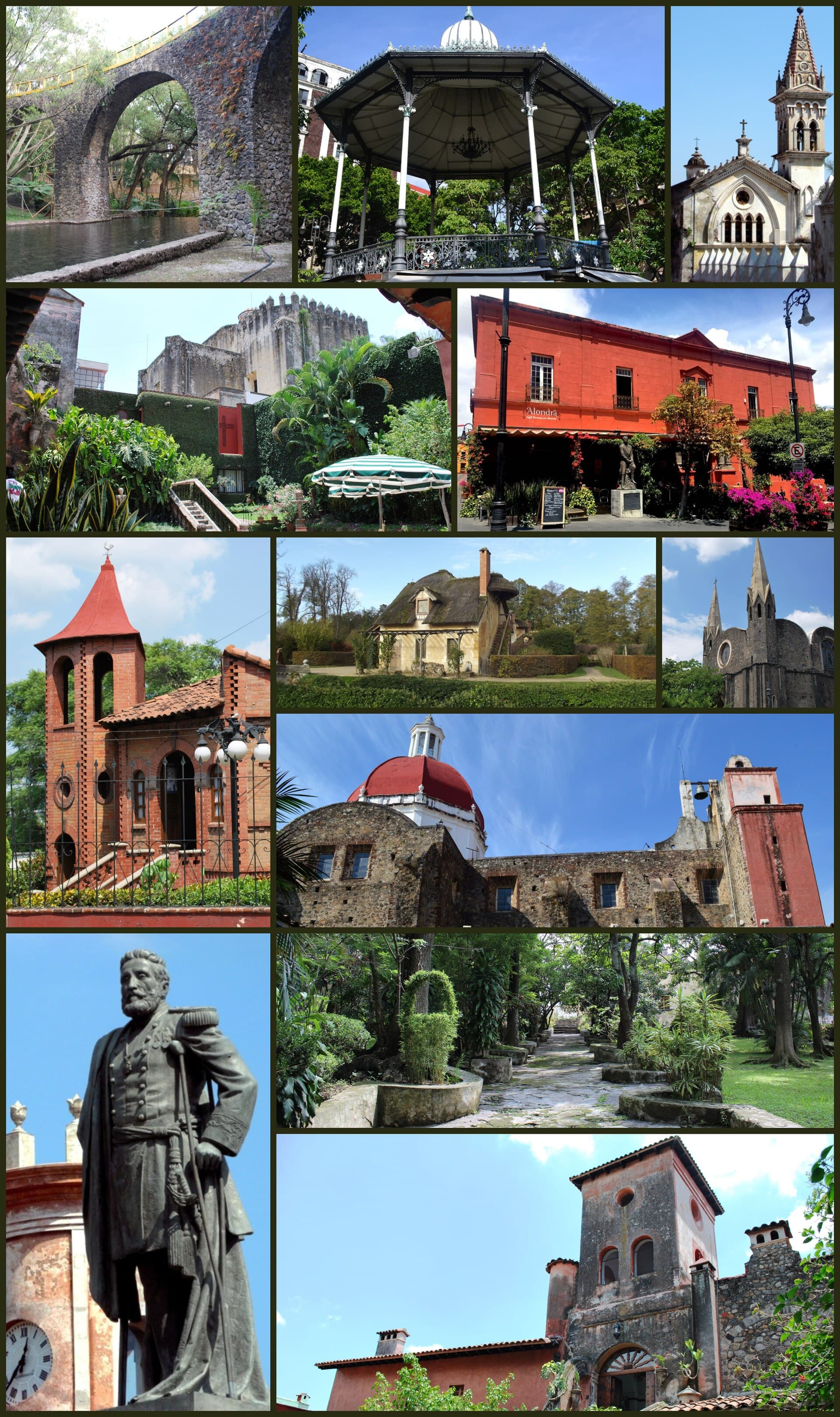
Begin your exploration in the historic city center, where the Palacio de Cortés stands as a prominent landmark. This 16th-century fortress-like palace, constructed by Hernán Cortés, now houses the Museo Regional Cuauhnahuac, displaying the region's history, including murals by Diego Rivera. A short walk away is the Cuernavaca Cathedral, originally a Franciscan monastery established in 1525. Part of a UNESCO World Heritage site, its complex includes an open chapel and compelling 17th-century paintings.
Across from the cathedral, discover the Jardín Borda, an 18th-century garden with fountains, a lake, and abundant plant life that once served as Emperor Maximilian I's summer retreat. For art enthusiasts, the Robert Brady Museum, set in a former monastery, exhibits an eclectic array of art from around the world alongside Mexican pieces, including works by Frida Kahlo and Rufino Tamayo. Do not overlook the Teopanzolco Archaeological Zone, an ancient Tlahuica-Mexica settlement with impressive pyramid structures, offering a glimpse into the pre-Hispanic past. The main square, Plaza de Armas (Zócalo), provides a lively space for observing daily life, encircled by cafes and the Government Palace.
Cuernavaca lives up to its "City of Eternal Spring" designation with a warm, stable climate throughout the year, making it a desirable destination at almost any time. Average daytime temperatures typically range from 22-28°C (72-82°F), with cooler evenings. The dry season, from November to April, offers ample sunshine and minimal rainfall, with March to May being particularly enjoyable for outdoor activities. The rainy season, from May to October, brings afternoon showers, often brief and intense, after which the sun frequently reappears, keeping the city's greenery vivid.
Cuernavaca is readily accessible, located about a 90-minute drive south of Mexico City via Federal Highway 95D. First-class bus services operate frequently from Mexico City's southern terminals. Once in Cuernavaca, the historic center's primary attractions are largely walkable. For exploring beyond the center, taxis and ride-shares are available. While the city offers a pleasant experience, it is wise to be aware of your surroundings and avoid walking alone at night in less populated areas. Light clothing made of breathable fabrics is suitable year-round, but a light sweater or jacket is suggested for cooler evenings, especially during the winter months. Remember sunscreen, a hat, and sunglasses for daytime excursions.