The Old Cathedral of Cuenca
A plaque on its venerable wall asserts a renown even grander than ancient wonders.
Full story unlocks in the tour
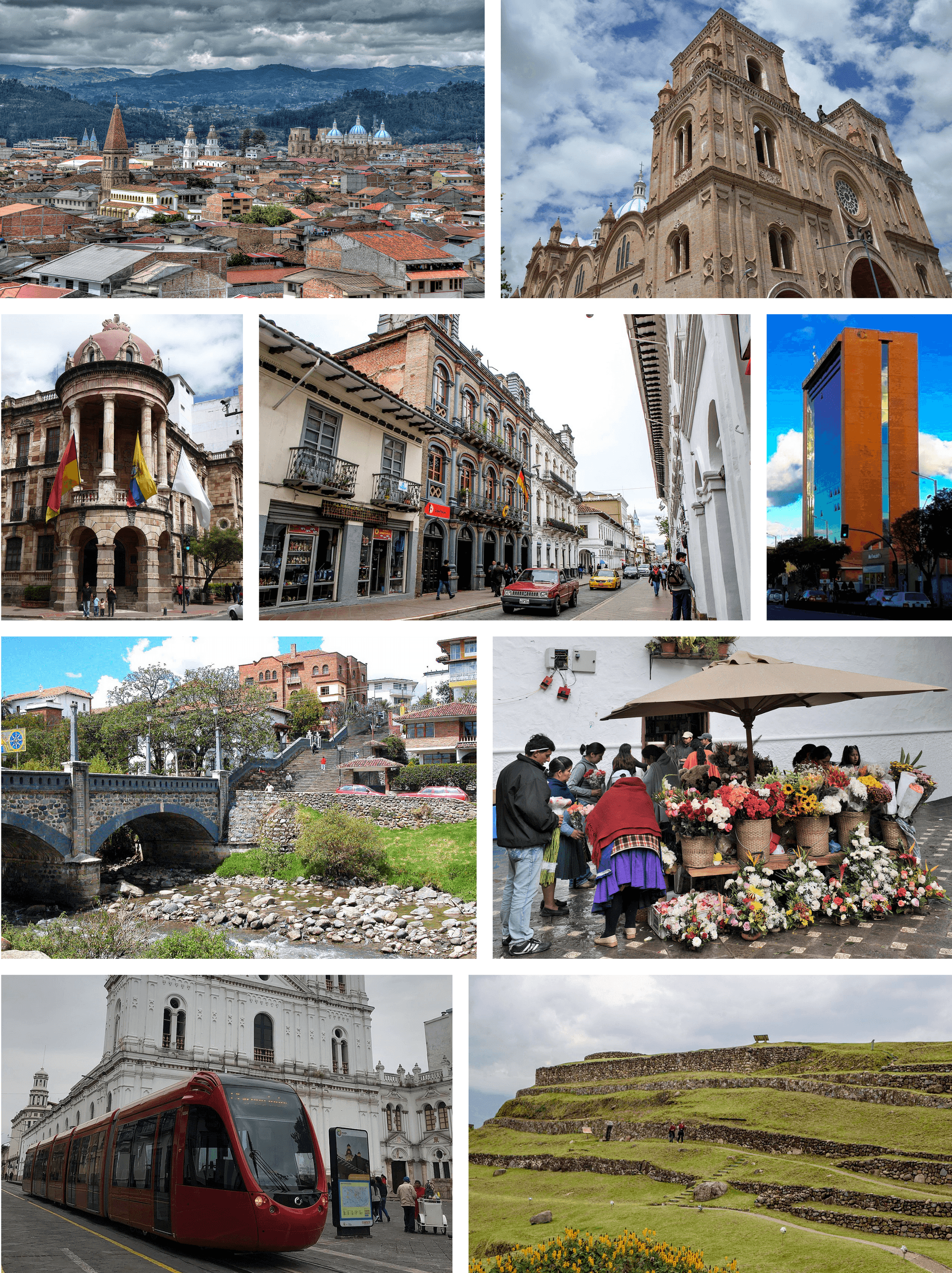 David C. S. / CC BY-SA 4.0, via Wikimedia Commons
“Where Andean elegance meets colonial grandeur.”
Not the postcards. The stories even locals don't know — whispered in your ear, right where they happened.
A plaque on its venerable wall asserts a renown even grander than ancient wonders.
The renowned 'Panama hat' possesses an unexpected origin story that does not involve Panama at all.
Cuenca commemorates its independence on a specific date, yet its complete liberation from Spanish rule arrived almost two years later.
Discover every secret of Cuenca
Every address, every reveal in full — in your ear, right where it happened.
You pick your stops. You walk. The voice reveals what the others miss.
No tours available yet. Check back soon — we're preparing them.
Cuenca, officially Santa Ana de los Ríos de Cuenca, is a city in the south-central inter-Andean region of Ecuador. It rests at an altitude of approximately 2,538 meters (8,327 feet) above sea level, serving as the capital of the Azuay Province and the third most populous city in the country. Four rivers—the Tomebamba, Tarqui, Yanuncay, and Machángara—traverse the city, contributing to its distinctive geography and name, as "Cuenca" refers to a basin formed by a confluence of rivers.
Known as the "Athens of Ecuador" for its architecture, cultural breadth, and contributions to arts, sciences, and literature, Cuenca's historic center earned a UNESCO World Heritage Site designation in 1999. This recognition underscores its well-preserved colonial architecture and urban planning, which dates back to its Spanish founding in 1557. The city offers a mild, spring-like climate throughout the year, with average daily temperatures around 14.7 °C (58.5 °F), making it an inviting place for exploration.
## Ancient Roots and Inca Influence Cuenca's history stretches back to approximately 8060 BC, with evidence of early inhabitants, nomadic hunters, discovered in the Chopsi Cave. By 500 BC, the Cañari people had established a significant settlement called Guapondelig, meaning "plain as big as the sky." Less than a century before the Spanish arrival, the Inca Empire conquered the Cañari, constructing the grand city of Tomebamba upon the remnants of Guapondelig. Chroniclers described Tomebamba as one of the most important Inca cities in the north.
## Spanish Colonial Foundation The Spanish settlement of Cuenca was founded on April 12, 1557, by Gil Ramírez Dávalos, under orders from the Viceroy of Peru, Andrés Hurtado de Mendoza. The city was named Santa Ana de los Ríos de Cuenca, in honor of the Viceroy's hometown in Spain and the four rivers that flow through the area. This founding occurred decades after other major Spanish settlements in the region, such as Quito (1534) and Guayaquil (1538). Cuenca's orthogonal town plan, established according to the rigorous guidelines issued by King Charles V, has been preserved for over 400 years.
## Independence and Modern Growth Cuenca's population and importance steadily grew during the colonial era. The city declared its independence from Spain on November 3, 1820, though its full liberation, along with the rest of Ecuador, arrived after the Battle of Pichincha in May 1822. In the 19th century, Cuenca prospered as a major exporter of quinine and straw hats. The city continued to expand in the 20th century, fostering education and culture, earning it the moniker "Athens of Ecuador." In 1999, its historic center was designated a UNESCO World Heritage Site, acknowledging its blend of indigenous and colonial influences. Today, Cuenca stands as a significant administrative, economic, and cultural center in Ecuador.
Begin your exploration in Cuenca's Historic Center, a UNESCO World Heritage site, where streets paved with stone lead to impressive colonial architecture. The iconic New Cathedral, or Catedral de la Inmaculada Concepción, with its massive sky-blue domes, stands as a prominent landmark; you can ascend its towers for expansive city views. Just across from it, the Old Cathedral offers a self-paced audio tour detailing its history and tombs. Wander through the lively Plaza de las Flores, a bustling flower market adjacent to the New Cathedral.
Take a walk along the Tomebamba River, where the grassy banks, known as El Barranco, provide a pleasant stroll and views of colorful houses. For a deeper understanding of Ecuador's past, visit the Pumapungo Archaeological Park and Museum, which features indigenous artifacts, ancestral ruins of the Inca city of Tomebamba, and an ethnobotanical garden. Discover the origins of the celebrated Panama hat at the Homero Ortega Panama Hat Museum, where these toquilla straw hats are crafted. For a change of scenery, journey to El Cajas National Park, a mountainous reserve about 45 minutes from Cuenca, known for its over 200 glacial lakes and hiking paths.
Cuenca experiences a mild, spring-like climate throughout the year, making it a pleasant destination at any time. The dry season, from June to September, is often considered ideal for outdoor activities like hiking in El Cajas National Park, with clearer skies and cooler nights. During this period, temperatures average around 14-20°C (57-68°F) during the day and drop to 8-10°C (46-50°F) at night. The rainy season, from January to May, is characterized by sunny mornings and afternoon showers, with the heaviest rains in March, April, and May. Despite the rain, this period hosts lively cultural festivals, such as Carnaval in February and the city's foundation anniversary in April. December brings the colorful Pase del Niño Viajero parade, a significant Christmas procession.
Cuenca's Mariscal Lamar International Airport (CUE) offers domestic flights, primarily connecting to Quito and Guayaquil, with some international connections to destinations like Panama City and Bogotá. The city rests at an elevation of approximately 2,560 meters (8,400 feet), and visitors arriving from lower altitudes may experience mild to moderate altitude sickness. Symptoms can include headaches, fatigue, dizziness, and shortness of breath, typically diminishing within a few days. Staying hydrated, avoiding alcohol and caffeine, and gradually acclimating are recommended.
Cuenca is considered one of the safest cities in South America, with a low crime rate, particularly in its historic center. However, like any urban area, petty theft can occur in crowded places, so exercising general awareness is advisable. The historic center is highly walkable, and local buses cost around $0.30. Taxis are also readily available and affordable, with most rides costing between $2 and $5. While Uber and similar ride-sharing apps are not prevalent, taxis often include security cameras and panic buttons.