Barracuda Lake
Beneath the surface of Barracuda Lake, divers encounter a phenomenon that challenges the very notion of a single body of water.
Full story unlocks in the tour
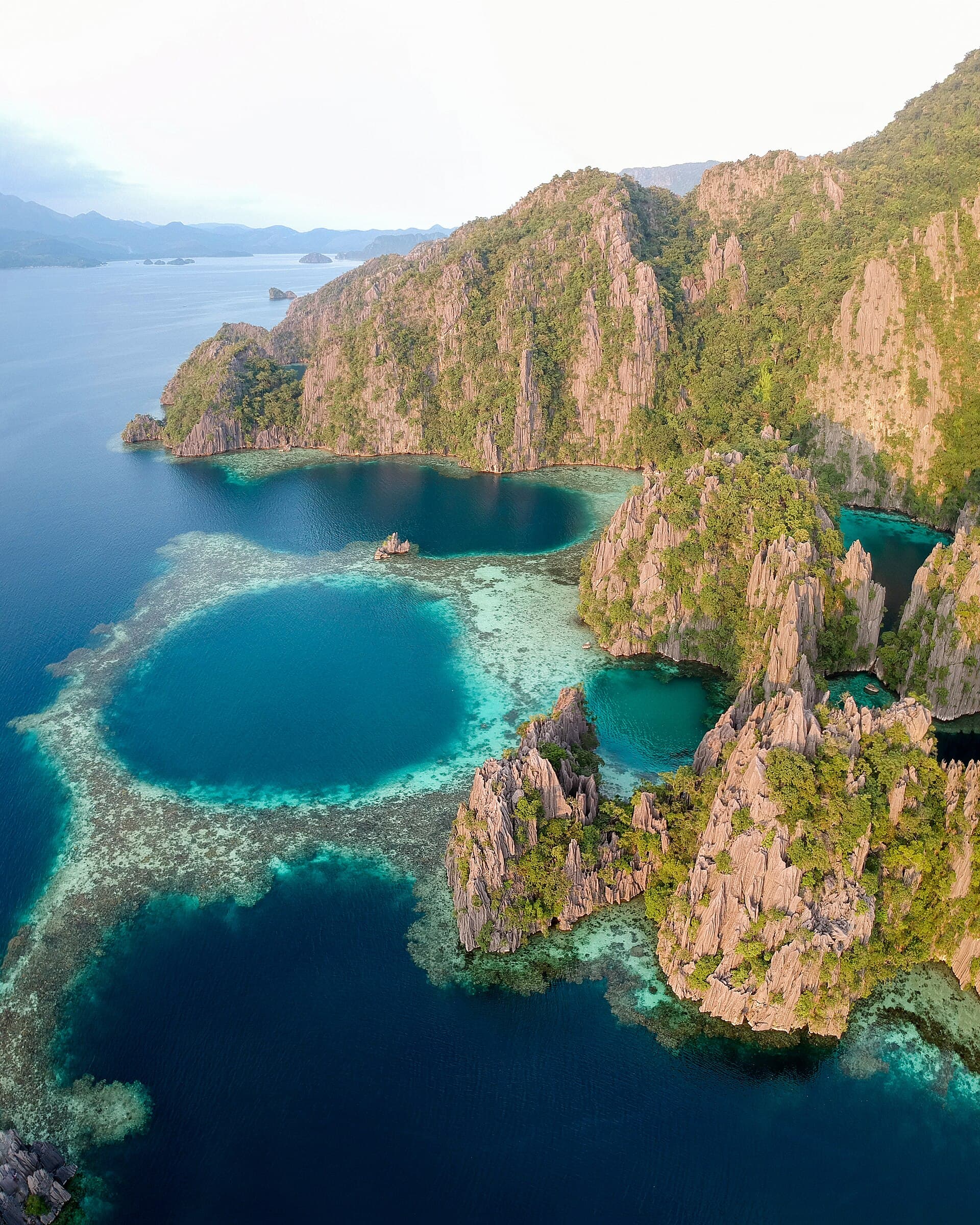 Nicko Melendres / CC BY-SA 4.0, via Wikimedia Commons
“Where limestone giants guard sunken histories and crystal waters.”
Not the postcards. The stories even locals don't know — whispered in your ear, right where they happened.
Beneath the surface of Barracuda Lake, divers encounter a phenomenon that challenges the very notion of a single body of water.
The serene waters of Coron Bay conceal a dramatic moment from World War II, a silent underwater museum.
While many visit Coron Island for its iconic lakes and lagoons, few realize the deeper, ancestral significance of these natural wonders.
Discover every secret of Coron
Every address, every reveal in full — in your ear, right where it happened.
You pick your stops. You walk. The voice reveals what the others miss.
No tours available yet. Check back soon — we're preparing them.
Coron, a municipality in the province of Palawan, Philippines, offers a landscape where towering limestone formations meet clear turquoise waters. The region encompasses Coron Island, Busuanga Island (where Coron town is located), and several smaller islets. It's a destination celebrated for its dramatic geological features, abundant marine biodiversity, and a poignant historical narrative. Travelers are drawn to Coron for its world-class wreck diving, pristine lakes, and secluded beaches, making it a prominent highlight of the Philippine archipelago.
The area's natural beauty is complemented by a rich cultural heritage, primarily shaped by the indigenous Tagbanua people, who are the ancestral guardians of Coron Island. Their deep connection to the land and sea has played a vital role in preserving the region's ecological splendor. Whether exploring sunken ships or swimming in freshwater lakes, Coron provides a blend of adventure and tranquility.
The history of Coron is deeply intertwined with the indigenous Tagbanua people, one of the oldest ethnic groups in the Philippines. They settled the Calamian Archipelago thousands of years ago, long before the arrival of European explorers, establishing a unique cultural environment. The Tagbanua are believed to be descendants of the Tabon Man, whose remains in Palawan date back over 16,000 years. Their traditional way of life revolved around fishing, hunting, and farming, guided by animistic beliefs that honor the spirits of the land, sea, and sky. Even today, the Tagbanua maintain many of their customs and traditions, and their ancestral domain includes Coron Island and its surrounding waters, which they actively protect.
The arrival of the Spanish in the 16th century marked a significant shift, introducing Christianity and establishing settlements. Coron, then known as Bancuang, was later named Peñon de Coron by the Spanish, derived from the Tagbanua word 'Corong,' meaning a type of pot. The area became a visita of Culion, the first permanent Spanish settlement in the Calamianes. Forts and churches were built as defenses against raids, and Mexican soldier-colonists were brought in during the 1670s.
One of Coron's most notable historical chapters unfolded during World War II. In September 1944, Coron Bay became the site of a dramatic naval engagement. A U.S. Navy airstrike targeted a Japanese supply fleet, resulting in the sinking of several warships. These sunken vessels now form a world-renowned underwater museum, attracting divers and serving as a poignant reminder of the island's wartime past.
Coron officially became an independent municipality in 1902. The mid-20th century saw periods of mining and fishing booms, attracting migrants and contributing to the town's growth. In recent decades, Coron has transformed into a premier tourist destination, celebrated for its clear waters and diving sites. This tourism boom has brought economic opportunities, but also a heightened awareness of environmental conservation. Local authorities and communities, particularly the Tagbanua people, have implemented measures to protect Coron's natural wonders and ensure their preservation for future generations.
Coron offers a diverse range of experiences, primarily centered around its dramatic natural landscapes and underwater attractions. Island hopping tours are a popular way to explore the area, often including stops at iconic sites.
Kayangan Lake, often called the 'cleanest lake in Asia,' is a freshwater lake with crystal-clear waters surrounded by towering limestone cliffs. A short hike leads to a viewpoint offering panoramic vistas before descending to the lake itself. Nearby, Twin Lagoon presents a unique swimming experience where visitors can navigate through a narrow opening, often requiring a short swim or kayak at low tide, to reach a secluded inner lagoon. Barracuda Lake is another distinctive spot, known for its thermoclines and the unique blend of fresh and saltwater.
For those seeking underwater exploration, Coron is renowned for its World War II shipwrecks, which have become lively artificial reefs. Sites like the Okikawa Maru and Irako Maru offer diverse diving opportunities for various skill levels. Snorkeling is also excellent, with numerous coral gardens like Siete Pecados Marine Park showcasing abundant marine life.
On Busuanga Island, a climb up Mount Tapyas provides a panoramic view of Coron town and the surrounding islands, particularly striking at sunset. For relaxation, Maquinit Hot Spring offers natural saltwater hot springs, a soothing contrast to the cool ocean waters.
The best time to visit Coron is during the dry season, which runs from November to early May. During these months, the weather is generally sunny with calm seas, ideal for island hopping, snorkeling, and diving, offering the best underwater visibility. December to March is considered the 'sweet spot' with comfortable temperatures and fewer crowds than the peak of Holy Week in April. While temperatures remain warm year-round, the wet season, from June to October, brings higher humidity, more rainfall, and potentially rougher seas, which can sometimes lead to tour cancellations.
Access to Coron is typically via Busuanga Airport (USU) on Busuanga Island. From there, tricycles are the primary mode of transport to Coron town. Ferries also connect Coron to El Nido and Manila. While credit cards may be accepted at larger establishments, it's advisable to carry Philippine Pesos (PHP) in cash, as many local shops and restaurants may not accept cards. ATMs are available in Coron town.
Internet access in Coron can be limited and slow, though many accommodations offer Wi-Fi. Purchasing a local SIM card (Globe generally has better coverage) is recommended for connectivity. For island hopping, tours are readily available from operators in Coron town, offering various itineraries that cover popular lakes, lagoons, and shipwreck sites. Private boat rentals are also an option for more flexible scheduling. For exploring Busuanga Island, tricycles are common, and motorbikes can be rented.