Shandon Bells & Tower
The distinctive 'Four-Faced Liar' clock tower of St. Anne's Church possesses a peculiar habit.
Full story unlocks in the tour
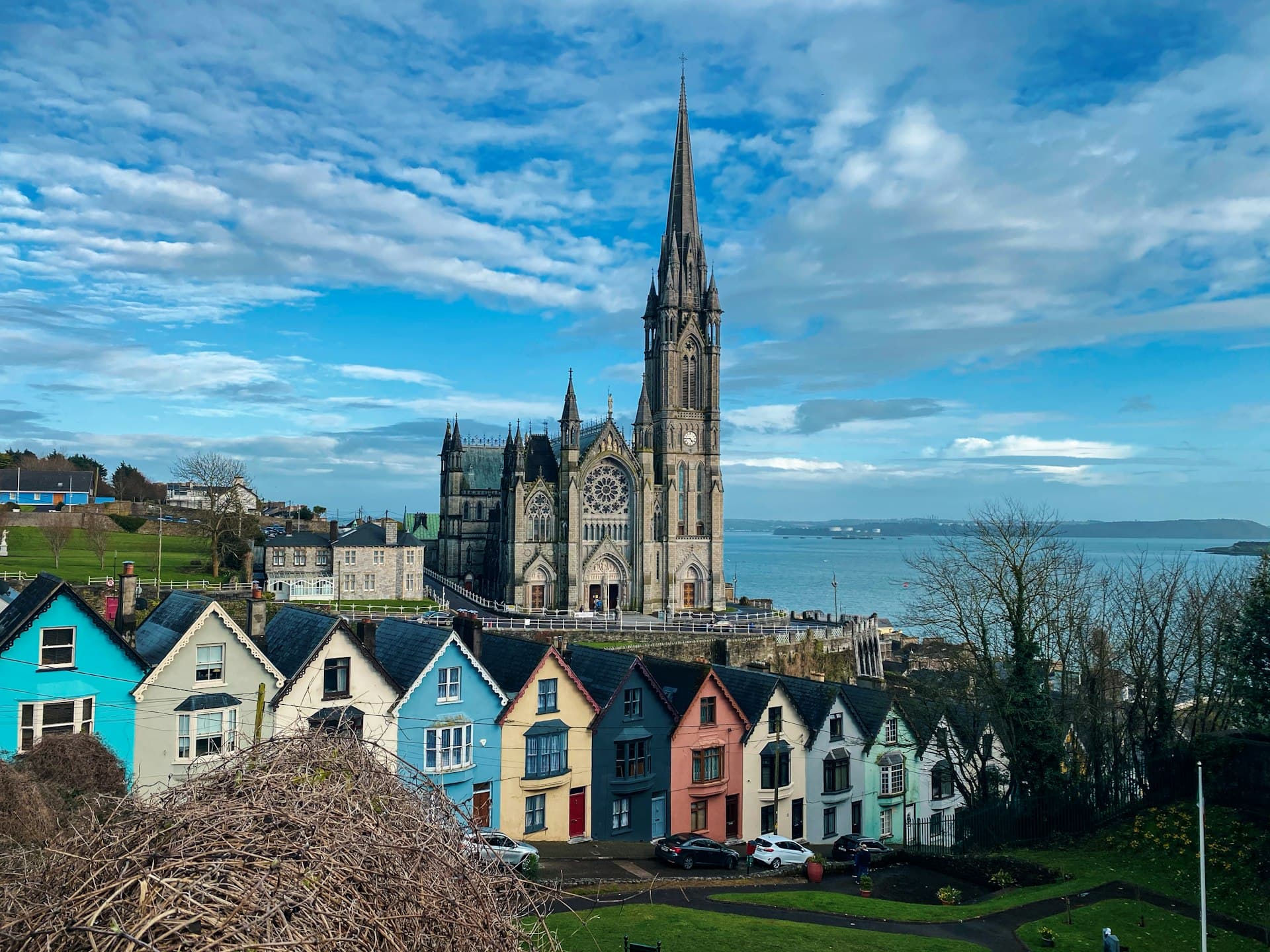 Photo: Jason Murphy / Unsplash
“An island city, shaped by its river and an unyielding spirit.”
Not the postcards. The stories even locals don't know — whispered in your ear, right where they happened.
The distinctive 'Four-Faced Liar' clock tower of St. Anne's Church possesses a peculiar habit.
This lively market, a Cork institution, once held a surprising global distinction.
A medieval bridge in County Cork holds two European distinctions.
Discover every secret of Cork
Every address, every reveal in full — in your ear, right where it happened.
You pick your stops. You walk. The voice reveals what the others miss.
No tours available yet. Check back soon — we're preparing them.
Cork, Ireland's second-largest city, earns its moniker, 'The Rebel County,' with a distinctive character and a proud, independent spirit. The city center itself forms an island, created by two channels of the River Lee, which eventually converge and flow into one of the world's largest natural harbors. This unique topography has shaped Cork's identity, imbuing it with a maritime heritage and a relaxed pace that distinguishes it from other Irish cities.
Those who journey to Cork will discover a city that melds a compelling historical narrative with a modern, cosmopolitan energy. It is a place where ancient stories echo in narrow streets and passageways, while a flourishing food scene and lively cultural offerings thrive. From its bustling markets to its enduring landmarks, Cork offers a profound experience that feels both traditional and refreshingly contemporary.
Cork's narrative commences in the 6th century as a monastic settlement, reputedly established by Saint Finbar. The name 'Cork' itself derives from the Irish word 'Corcaigh,' meaning 'marsh,' a nod to the city's original landscape of marshy islands. Between 915 and 922, Viking invaders established a trading port, transforming the monastic center into a more urbanized settlement and a significant hub in the Scandinavian trade network.
The city received its charter from Prince John in 1185. For much of the Middle Ages, Cork served as an outpost of Old English culture, often isolated and relying on its own defenses against surrounding Gaelic communities. The city was once fully walled, and fragments of these medieval fortifications can still be found today. In the 18th century, Cork maintained substantial trade with Continental Europe, recognized for exporting wool, yarn, tallow, and hides. It also became the world's largest exporter of butter, with the Cork Butter Market playing a central role.
The 19th century witnessed Cork's population expand due to rural migration, though this also brought challenges of poverty and overcrowding. The city served as a major port for Irish emigrants, particularly during and after the Great Famine. Cork's affectionate title, 'The Rebel County,' originates from its history of independence, from Viking incursions to its crucial role in the Irish War of Independence, where it was a scene of considerable conflict. This independent spirit is a deep-seated part of Cork's identity, reflecting a long-standing tradition of challenging established norms.
Begin your exploration at the English Market, a covered market dating to 1788, celebrated for its artisan products, fresh seafood, and local delicacies. Ascend the Shandon Bells & Tower at the Church of St. Anne for expansive views of the city and the unique opportunity to ring the church bells. Delve into Cork's past at St. Fin Barre's Cathedral, an impressive example of Gothic Revival architecture. For a deeper understanding of the city's history, visit Cork City Gaol, a fortress-like prison that offers a window into 19th-century life.
Beyond the city center, Blarney Castle is a popular destination, inviting visitors to kiss the legendary Blarney Stone for the 'gift of gab.' Explore the appealing harbor town of Cobh, the Titanic's final port of call, and visit the Titanic Experience. Consider a day trip to Kinsale, known for its colorful houses, enduring stories, and excellent places to dine.
The most favorable time to visit Cork is during the shoulder seasons of late spring (May) and early autumn (September-October). These months offer agreeable weather, fewer crowds, and often more reasonable accommodation prices. May, in particular, is recognized for improving weather, longer daylight hours, and blooming gardens. While summer (June-August) brings the warmest temperatures and numerous festivals, it is also the peak tourist season, meaning higher prices and larger gatherings. Winter (November-February) is quieter with cooler temperatures and shorter daylight hours, but can be enjoyable for city breaks with a cozy atmosphere.
Cork City is compact and easily traversed on foot, making it simple to explore many attractions. While public transport options like buses, trains, and ferries are available, local buses can be inconsistent. Taxis offer a more reliable alternative if within your budget. For exploring the broader County Cork, particularly rural areas and scenic coastal routes, renting a car is highly recommended due to limited public transport outside the city. Cork is well-connected by road and rail to other major Irish cities and airports. Accommodation ranges from guesthouses to luxury hotels, with an emphasis on Irish hospitality.