Madikeri Fort
Madikeri Fort, a significant landmark, carries an unexpected origin story involving a king, a hunt, and a courageous hare.
Full story unlocks in the tour
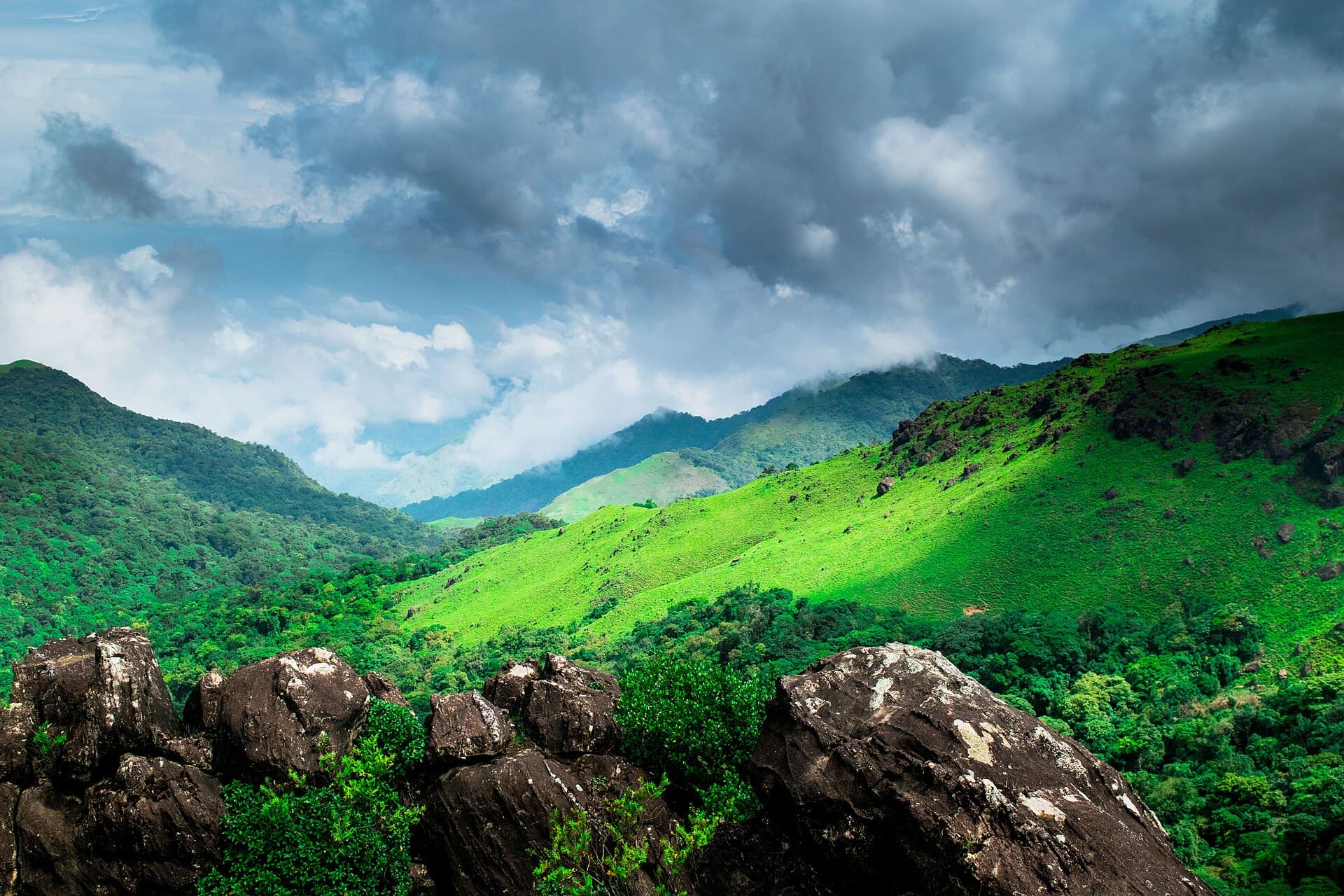 Jyotirmoy / CC BY-SA 4.0, via Wikimedia Commons
“Coorg: Where the mist meets the coffee, and ancient warrior spirits linger.”
Not the postcards. The stories even locals don't know — whispered in your ear, right where they happened.
Madikeri Fort, a significant landmark, carries an unexpected origin story involving a king, a hunt, and a courageous hare.
In Coorg, the announcement of a new birth or a death unfolds in a manner that might surprise those unfamiliar with local customs.
While Coorg is celebrated for its coffee, the most exclusive variety possesses a rather unconventional origin.
Discover every secret of Coorg
Every address, every reveal in full — in your ear, right where it happened.
You pick your stops. You walk. The voice reveals what the others miss.
No tours available yet. Check back soon — we're preparing them.
Coorg, officially known as Kodagu, is a mountainous district in Karnataka, India, frequently called the 'Scotland of India' for its verdant hills and misty vistas. This region is recognized for its expansive coffee and spice plantations, which contribute substantially to India's coffee production. Beyond its natural splendor, Coorg is home to the Kodava people, an ethnic minority known for their distinct culture, warm hospitality, and a proud martial heritage that has shaped the region's identity across centuries.
The district's singular topography, with gentle, sloping hills and dense forests, cultivates a refreshing environment that draws travelers seeking both serenity and adventure. From descending waterfalls to ancient temples and lively Tibetan settlements, Coorg presents a diverse array of experiences. The fragrance of coffee and spices permeates the air, inviting visitors to delve into its agricultural traditions and immerse themselves in a culture deeply connected to its land and past.
## Early Dynasties and the Emergence of Kodagu Coorg's recorded past extends back to the 9th and 10th centuries, when it was under the dominion of various South Indian kingdoms. Initially, the region was governed by the Gangas of Talakad, with the Changalvas and Kongalvas dynasties holding sway over parts of the east and north. These dynasties, originally Jain in faith, became tributaries to the Cholas after the overthrow of the Ganga power in the 11th century. The Hoysala dynasty also influenced the region, fostering trade and agriculture and disseminating the Hindu religion.
The Haleri dynasty marked a significant era in Coorg's history, providing over 200 years of stable, unified governance from approximately 1580 to 1834. Mudduraja I, a revered ruler from 1633 to 1687, relocated the capital from Haleri to what is now Madikeri, naming it Muddu Raja Keri. Under the Haleri kings, Kodagu attained the status of an independent kingdom.
## Mysore Invasions and British Involvement Coorg endured several invasions, notably from Hyder Ali of Mysore in the late 17th and 18th centuries. Despite periods of occupation, the Kodavas, recognized for their martial skill, fiercely resisted these invasions, often employing guerrilla tactics within the rugged landscape. In 1788, with British intervention, the Raja of Coorg reclaimed his kingdom and entered into a protectorate agreement with the British East India Company.
## British Annexation and Post-Independence In 1834, a rebellion by the then Raja of Coorg against British authority led to the Coorg War, a brief but intense conflict that resulted in the British annexing the kingdom. Coorg then became a province of British India, remaining under direct British administration until India's independence in 1947. After independence, Coorg was designated a 'Part C' state and possessed its own elected government. In November 1956, during the reorganization of states, Coorg was merged with the former state of Mysore, which is now Karnataka. Today, Kodagu is a district within Karnataka, yet its unique history and the distinct identity of the Kodava people remain prominent.
Coorg presents a spectrum of sights, from natural wonders to cultural landmarks. Abbey Falls, a significant waterfall, appears particularly impressive after the rains. For expansive views, Raja's Seat offers sweeping panoramas of the Coorg hills, especially captivating at sunrise or sunset. Madikeri Fort, a 17th-century edifice, contains colonial buildings, a museum, and provides views of the town. Omkareshwara Temple distinguishes itself with its fusion of Islamic and Gothic architecture.
Visiting a coffee plantation is a quintessential Coorg experience, offering insights into cultivation and opportunities to sample fresh brews. Dubare Elephant Camp permits interaction with elephants, including feeding and bathing them. For a spiritual and cultural immersion, Namdroling Monastery, also known as the Golden Temple, in Bylakuppe, is a large Tibetan settlement featuring magnificent golden Buddha statues. Nature enthusiasts can explore trekking paths like Tadiandamol and Kumaraparvata, or witness the dramatic Iruppu and Mallalli Falls. For those seeking adventure, river rafting on the Barapole River is an option, particularly during the monsoon.
Coorg generally enjoys a pleasant climate throughout the year, making it a destination for all seasons. However, the most favorable time to visit for outdoor pursuits like trekking and sightseeing is from October to March. During these cooler months, the weather is agreeably mild, with temperatures ranging from 10°C to 25°C, and the air is crisp. The period following the monsoon, particularly October and November, reveals lush green landscapes and roaring waterfalls. While summer (March to May) is also favored due to comfortable temperatures, the monsoon season (June to September) brings substantial rainfall, which can limit some outdoor activities, though it transforms the region into a verdant, flourishing paradise.
Coorg is accessible by road, with the nearest airports being Mangalore (approximately 160 km), Kannur (90 km), and Bangalore (270 km). The closest major railway station is Mysore, about 120 km away. Within Coorg, auto-rickshaws are a common and economical mode of transport for short distances, though taxis are also available. For longer excursions or exploring specific areas, hiring a cab is advisable. It's prudent to reserve accommodations and other facilities in advance, especially during peak season, as Coorg is a sought-after destination. Mobile signals can be weak or absent in some parts of the district, so offline maps are beneficial. Carry light woolens, even outside of winter, as evenings can be cool, and an umbrella is always a sensible item due to unpredictable showers. Remember to leave extra room in your bags for local coffee, spices, and honey.