Constanța Casino
This iconic Art Nouveau structure, a symbol of Constanța, holds a somber secret within its ornate details.
Full story unlocks in the tour
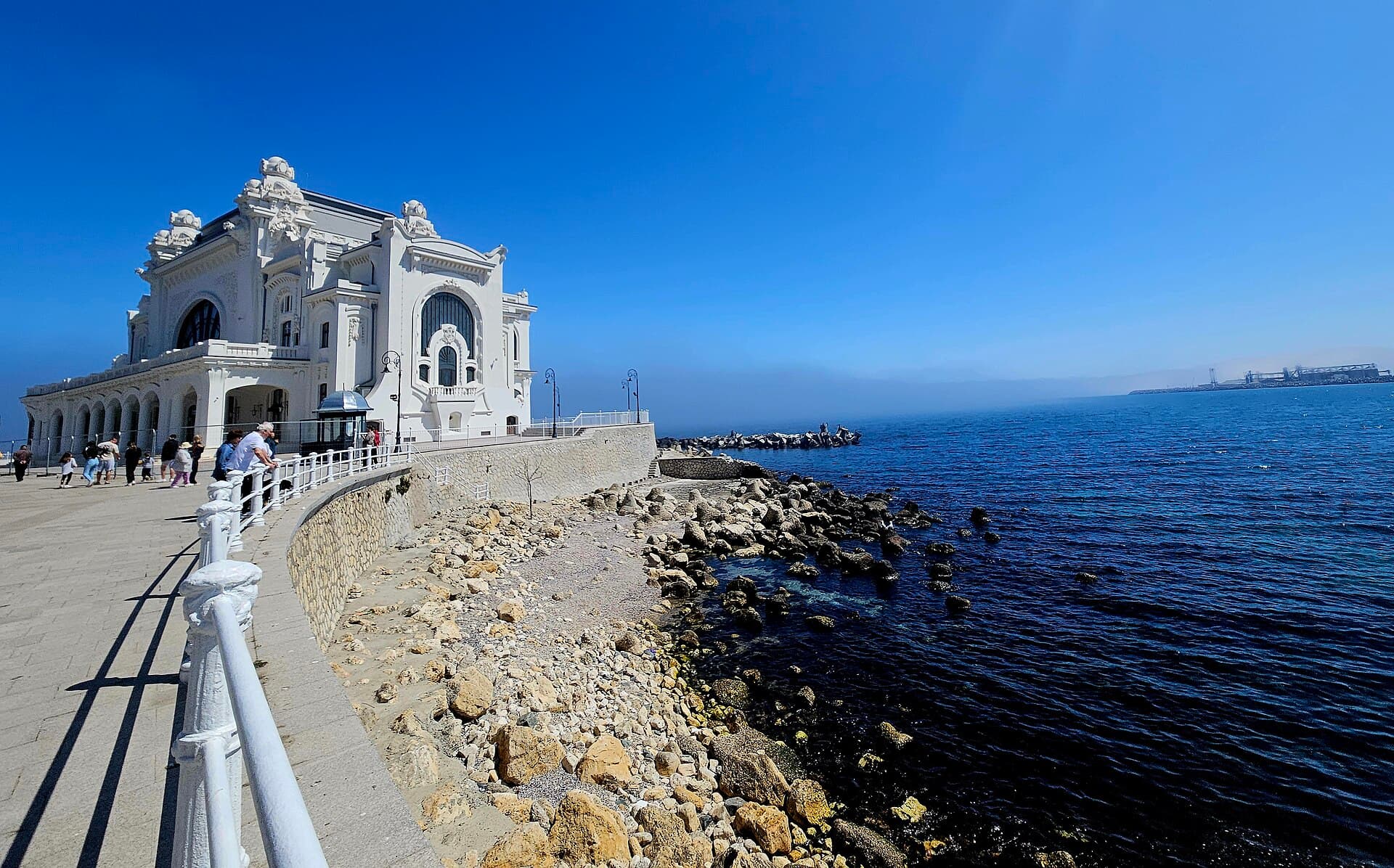 Andymxm / CC BY 4.0, via Wikimedia Commons
“Where ancient echoes meet the Black Sea breeze.”
Not the postcards. The stories even locals don't know — whispered in your ear, right where they happened.
This iconic Art Nouveau structure, a symbol of Constanța, holds a somber secret within its ornate details.
The statue of the Roman poet Ovid, exiled to ancient Tomis, stands prominently in the city center, but few know the full story of its creation.
Beneath the city's historic buildings, particularly the famous Casino, lies a unique architectural quirk that speaks to a turbulent past.
Discover every secret of Constanța
Every address, every reveal in full — in your ear, right where it happened.
You pick your stops. You walk. The voice reveals what the others miss.
No tours available yet. Check back soon — we're preparing them.
Constanța, Romania's oldest continuously inhabited city, offers a captivating blend of ancient history and seaside allure on the Black Sea coast. With roots tracing back 2,500 years to the Greek colony of Tomis, the city has witnessed a succession of cultures, from Roman and Byzantine to Bulgarian and Ottoman influences. Today, it stands as a significant cultural and economic hub, inviting visitors to explore its archaeological treasures and the architectural grandeur of its Old Town.
Beyond its historical significance, Constanța is also a bustling port city and a popular gateway to the Romanian Riviera. The city's proximity to sandy beaches and lively resorts like Mamaia makes it a focal point for Black Sea tourism. Whether you're drawn to ancient ruins, elegant 19th-century architecture, or the appeal of the coast, Constanța provides a unique and multifaceted travel experience.
While many travelers to Romania gravitate towards Bucharest or Transylvania, Constanța presents an equally compelling destination. It's a place where Roman history unfolds amidst balconies and terracotta roofs, complemented by crescent-shaped beaches. The city's blend of old-world charm and modern amenities, including open-air restaurants and nightclubs, promises an unforgettable journey.
Constanța's story begins around the 6th century BC, when Greek colonists from Miletus established the settlement of Tomis. Legend even suggests that Jason and the Argonauts visited this site after their quest for the Golden Fleece. The city flourished as a Greek trading post before falling under Roman control in 71 BC. It was later renamed Constantiana by Roman Emperor Constantine the Great, in honor of his half-sister.
Under Roman rule, Constanța grew into a sprawling commercial center, with a complex linking the upper town to the harbor, parts of which, including impressive mosaics, can still be seen today. However, its prominence waned with the decline of the Roman Empire, and it passed through various hands, including the First and Second Bulgarian Empires, before coming under Ottoman rule around 1411. During the Ottoman era, its name was shortened to Constanța, and it largely became a fishing village.
The city's fortunes reversed dramatically in 1878, following the Romanian War of Independence, when Constanța and the region of Northern Dobruja were ceded to Romania. King Carol I initiated a revival, transforming Constanța into Romania's main seaport and a burgeoning seaside resort. This period saw the construction of elegant mansions and hotels, including the original Constanța Casino, with its cornerstone laid in 1880.
The 20th century brought both growth and hardship. Constanța became a vital commercial hub, handling over half of Romania's national exports by the 1930s. However, its strategic importance also made it a target during both World Wars. It was occupied by Central Powers in World War I and suffered significant damage to its port from Allied bombing during World War II, only recovering in the early 1950s. Despite these challenges, Constanța has endured, evolving into a major European port and a city rich in archaeological heritage and modern appeal.
Begin your exploration in Ovid Square, where a monumental bronze statue of the Roman poet Ovid stands, a tribute to his exile in ancient Tomis. Adjacent to the square is the National History and Archaeology Museum, housing a vast collection of artifacts that tell Constanța's 2,500-year story, including the intriguing marble sculpture of Glykon, an ancient serpent god.
A short walk leads to the Constanța Casino, an iconic Art Nouveau masterpiece overlooking the Black Sea. Though currently undergoing restoration, its exterior remains a striking example of early 20th-century architecture and a powerful symbol of the city. Nearby, the Genoese Lighthouse, rebuilt in 1860, commemorates the Genoese merchants who established a thriving sea trade here in the 13th century.
For a glimpse into religious architecture, visit the Cathedral of Saints Peter and Paul, a Greco-Roman style church with neo-Byzantine and Romanian interior elements, and the Great Mahmudiye Mosque, built in 1910, where you can climb the minaret for sweeping city views. The Roman Edifice, with its impressive mosaic, offers a window into the city's ancient commercial past. The Archaeological Park, a tranquil space, showcases fragments of 3rd and 4th-century buildings and a 6th-century tower.
The best time to visit Constanța for warm, sunny weather and beach activities is during the summer season, from June through September. July and August offer the warmest temperatures, with the Black Sea reaching 24-26°C, comparable to the Mediterranean. However, these months are also the most crowded, particularly with Romanian domestic tourists and festivals like Neversea.
For a balance of pleasant weather and fewer crowds, June and September are ideal. The water is still warm enough for swimming (20-22°C), and accommodation can be 20-30% cheaper. While winters are cold and much of the tourist infrastructure in Mamaia closes, the city of Constanța itself continues to function, and the archaeology museum remains open year-round.
The official currency in Romania is the Romanian Leu (RON), often seen as 'lei' for plural. While credit cards are widely accepted, carrying some cash for smaller purchases is advisable.
Constanța is generally considered a safe city, even for solo travelers. However, like any major city, it's wise to be vigilant, particularly in crowded areas and on public transportation, where pickpocketing can occur. Avoiding dimly lit areas at night and using ride-sharing services like Uber or Bolt, or reputable taxis, is recommended.
Public transportation in Constanța consists of buses, trams, and trolleybuses, with tickets interchangeable across all three. Route maps are available at yellow ticket kiosks, and tickets can be purchased from kiosks displaying the CT Bus logo. The city center and Old Town are very walkable. Free Wi-Fi is widely available in the city center, tourist areas, cafes, restaurants, and public spaces, often through the EU's WiFi4EU initiative. Using a VPN on public Wi-Fi and avoiding sensitive transactions is a good safety practice.