Tempio Voltiano (Volta Temple)
One of the most fundamental units of electricity bears the name of a local son of Como. Do you know who?
Full story unlocks in the tour
 Pxhere / CC0, via Wikimedia Commons
“Where ancient stones reflect in still waters, and every alley holds a quiet story.”
Not the postcards. The stories even locals don't know — whispered in your ear, right where they happened.
One of the most fundamental units of electricity bears the name of a local son of Como. Do you know who?
This grand neoclassical villa by the lake once welcomed an emperor and a celebrated general.
Examine the exterior of Como's magnificent cathedral, and you might notice some unexpected figures carved into its facade.
Discover every secret of Como
Every address, every reveal in full — in your ear, right where it happened.
You pick your stops. You walk. The voice reveals what the others miss.
No tours available yet. Check back soon — we're preparing them.
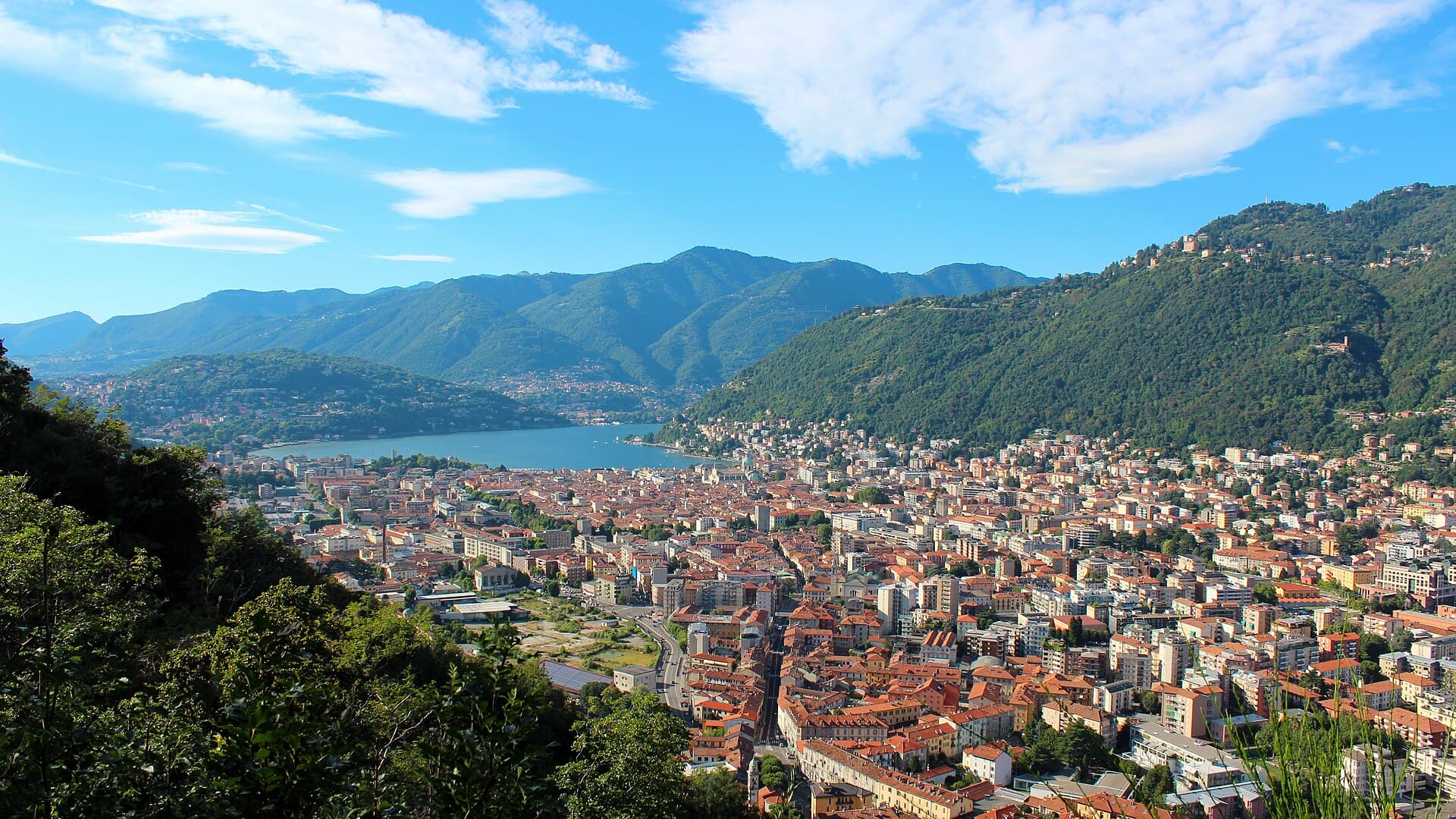
Como, a city in the Lombardy region of northern Italy, rests at the southwestern edge of Lake Como, a glacial expanse of water known for its dramatic contours. The city itself is an engaging blend of historical depth and lakeside allure, offering a different perspective than the more celebrated resort towns further along the lake. Its compact historic center, framed by medieval walls, invites unhurried exploration on foot, revealing Romanesque churches, elegant piazzas, and a lively local rhythm.
The city's position at the base of green hills and by the deep blue lake creates a scenic tableau. Beyond its visual appeal, Como is a place where layers of history are visible, from ancient Roman influences to medieval fortifications and Renaissance artistry. It serves as an excellent starting point for exploring the wider lake region, with frequent ferry connections to other towns, but also stands on its own as a destination rich in culture and local character.
Como's origins trace back to a Roman settlement, Comum, established in 196 BC by Julius Caesar. The Romans understood the strategic importance of the area, controlling trade routes through the Alps. Evidence of this Roman past can still be discerned in the city's grid-like street plan in the historic center.
During the Middle Ages, Como became a free commune, frequently engaging in conflicts with its powerful neighbor, Milan. The city's defensive walls, portions of which endure today, were constructed during this period to safeguard its autonomy. The Broletto, the former municipal palace adjacent to the Duomo, stands as a testament to Como's medieval civic authority.
The Renaissance brought a period of artistic and architectural flourishing, most notably with the construction of the Como Cathedral, a project that spanned centuries and displays a mix of Gothic and Renaissance styles. The city also developed a strong tradition in silk production, a craft that would define its economic identity for centuries.
In the 18th century, Como, like much of Lombardy, fell under Austrian rule. The city experienced significant urban development during this time, with the construction of elegant villas along the lakefront, such as Villa Olmo. The 19th century saw Como become part of the newly unified Kingdom of Italy. The city continued to prosper, particularly in its silk industry, earning it the moniker 'City of Silk'. Even today, Como remains a significant center for silk manufacturing and design.
The 20th century brought further modernization and a growing reputation as a tourist destination, drawing visitors to its beautiful lake and historic character. Despite these changes, Como has managed to retain its authentic identity, a balance between its industrial heritage and its natural beauty.
Begin your exploration at the Como Cathedral (Duomo di Como), a remarkable example of Gothic and Renaissance architecture, notable for its intricate facade and impressive dome. Adjacent to it, the Broletto, the medieval town hall, offers a glimpse into Como's civic past.
Walk along the Lungo Lario, the lakefront promenade, offering views of the lake and the surrounding mountains. From here, you can board a ferry to explore other lakeside towns. Take the Como-Brunate Funicular for expansive vistas of the city and the first basin of Lake Como. At the summit, explore the quaint village of Brunate.
Visit the Tempio Voltiano, a neoclassical temple honoring Alessandro Volta, which houses instruments and documents related to his scientific work. For a touch of grand lakeside living, explore the grounds of Villa Olmo, an elegant 18th-century villa often hosting art exhibitions and cultural events.
Delve into Como's silk heritage at the Museo Didattico della Seta (Educational Silk Museum), showcasing the city's long-standing tradition in silk production. Wander through the narrow streets of the historic center, discovering charming squares like Piazza Cavour and Piazza San Fedele, home to the Romanesque Basilica di San Fedele.
The most pleasant times to visit Como are during the spring (April to June) and early autumn (September to October). During these months, the weather is agreeably mild, ideal for walking and boat trips, and the crowds are generally lighter than in peak summer. The gardens of the villas are in full bloom in spring, adding to the scenic beauty. Summer (July and August) is popular but can be hot and crowded. Winters are cooler and quieter, with a different, more subdued appeal.
Como is readily accessible by train from Milan, with services to both Como San Giovanni and Como Nord Lago stations. The latter is closer to the lake and city center. Once in Como, the historic center is easy to navigate on foot. Public transportation includes local buses for longer distances and the funicular to Brunate. Ferries and hydrofoils are essential for exploring Lake Como, connecting Como with Bellagio, Varenna, and other towns. Consider purchasing a day pass for the ferries if you plan extensive lake travel. Taxis are available but can be expensive.