Galle Face Green
This expansive oceanfront promenade, now a lively public space, once served a surprisingly somber purpose.
Full story unlocks in the tour
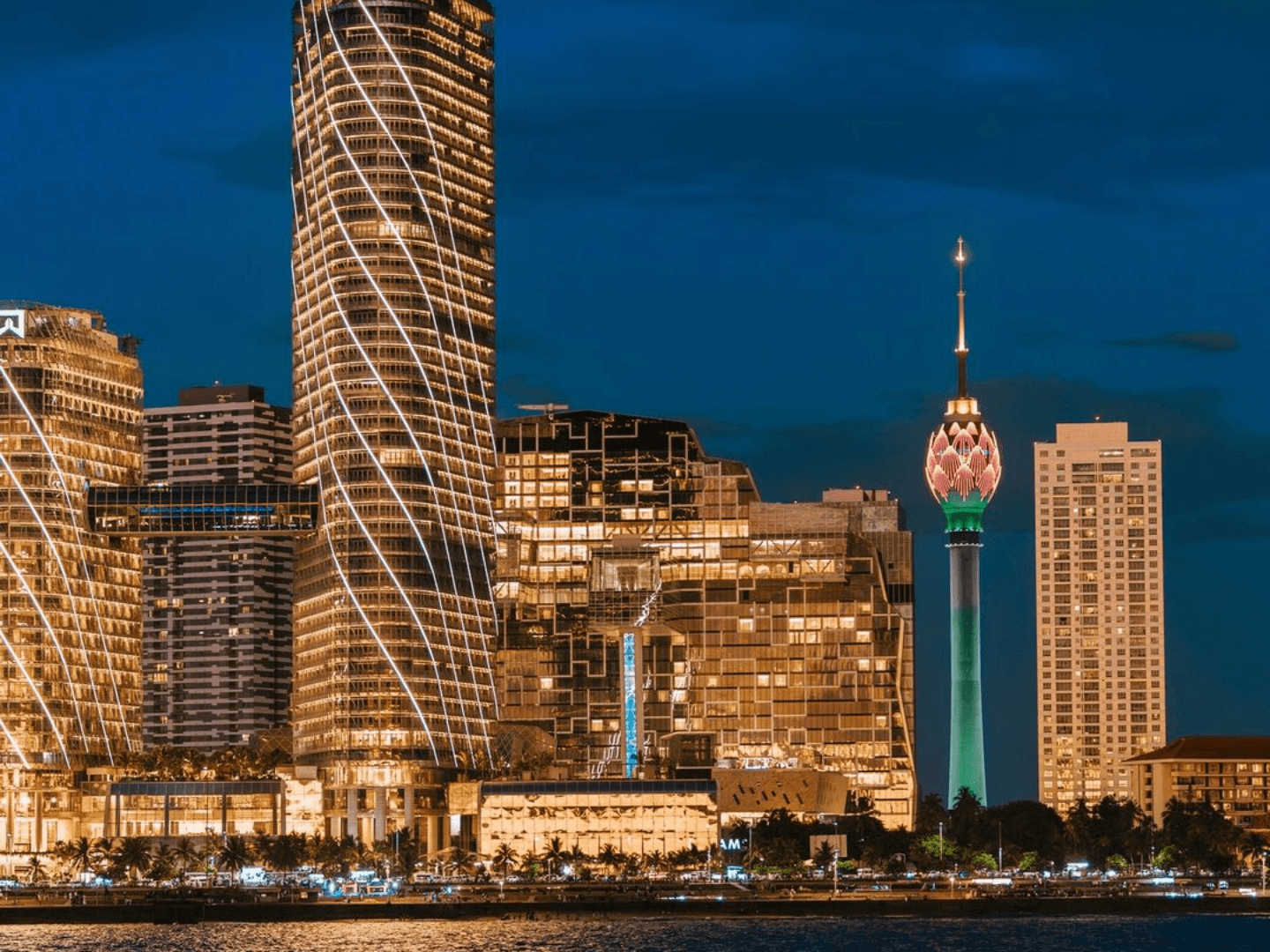 Gihanud2001 / CC0, via Wikimedia Commons
“Where the whispers of colonial eras meet the quick pulse of the present.”
Not the postcards. The stories even locals don't know — whispered in your ear, right where they happened.
This expansive oceanfront promenade, now a lively public space, once served a surprisingly somber purpose.
One of Colombo's most enduring buildings, now a fashionable dining precinct, was designed with an ingenious feature for its original function.
This serene urban oasis, Colombo's oldest and largest park, holds a history that includes a surprising transformation during wartime.
Discover every secret of Colombo
Every address, every reveal in full — in your ear, right where it happened.
You pick your stops. You walk. The voice reveals what the others miss.
No tours available yet. Check back soon — we're preparing them.
Colombo, Sri Lanka's commercial capital, is a dynamic city where centuries of trade and colonial influence have forged a unique identity. Situated on the island's west coast, it serves as a primary port on the Indian Ocean, handling the majority of Sri Lanka's foreign trade. The city's atmosphere is a compelling blend of ancient heritage, diverse cultures, and modern energy, offering a thorough exploration for any traveler.
From its bustling markets and historic colonial architecture to serene temples and contemporary high-rises, Colombo presents a rich array of experiences. It is a city that pulses with life, revealing the heart of the country through its contrasts and unfolding stories. While often seen as a gateway to the rest of Sri Lanka, Colombo itself holds enough intrigue to warrant a dedicated exploration.
Colombo's origins stretch back over 2,000 years, with mentions by Greek, Persian, Roman, Arab, and Chinese traders who were drawn to its strategic location and natural harbor. The Sinhalese people referred to it as 'Kolon thota,' meaning 'port on the river Kelani,' or 'Kola-amba-thota,' a 'harbor with leafy mango trees.' Arab traders settled near the port as early as the 8th century CE, further establishing its importance as a trading hub.
The Portuguese arrived in 1505, marking the beginning of European influence. They established a fort and controlled the coastal areas, leaving a legacy visible in architecture and cuisine. The name 'Colombo' itself is believed to have been introduced by the Portuguese in 1505. In 1593, they made Colombo their center.
In 1638, the Dutch, in alliance with King Rajasingha II of Kandy, defeated the Portuguese, and Colombo became a central hub for the Dutch East India Company until 1796. The city's architecture still reflects this Dutch colonial era, with structures like the Old Dutch Hospital dating back to this period.
The British captured Colombo in 1796, and in 1815, proclaimed it the capital of Ceylon when the Kandyan Kingdom was ceded to them. Unlike their predecessors, the British began constructing civilian structures around the fort, laying the groundwork for the modern city. They also established the Colombo Municipal Council in 1865 to introduce local self-governance. Sri Lanka gained independence from Britain in 1948, and while administrative functions were later moved to Sri Jayawardenepura Kotte in 1978, Colombo remains the island's commercial center.
Colombo offers a diverse range of sights, blending its colonial past with contemporary life. The Lotus Tower, standing at 356 meters, is the tallest structure in South Asia and offers expansive 360-degree views of the city and the Indian Ocean from its observation deck. Its design, inspired by the lotus flower, symbolizes purity, prosperity, and resilience in Sri Lankan culture.
For a glimpse into the city's colonial heritage, explore the Old Dutch Hospital, a beautifully restored 17th-century building now housing a lively dining and shopping precinct. Nearby, Galle Face Green is a 5-hectare oceanfront urban park stretching 500 meters along the coast. It is a popular spot for locals and visitors to enjoy the sea breeze, fly kites, and sample street food, especially in the evenings.
The Gangaramaya Temple is a significant Buddhist temple known for its unique blend of Sri Lankan, Indian, Thai, and Chinese architectural styles. It also houses a museum with a diverse collection of artifacts, including ancient Buddha statues, vintage cars, and gifts from devotees. A short walk from the main temple is the Seema Malaka, a floating meditation space on Beira Lake, designed by the renowned architect Geoffrey Bawa.
Another architectural marvel is the Jami Ul-Alfar Mosque, often called the Red Mosque, with its striking red and white striped facade and pomegranate-shaped domes. For a peaceful escape, Viharamahadevi Park, the city's oldest and largest public park, offers lush greenery, a large Buddha statue, and water fountains.
Colombo experiences a tropical climate, which means it is warm and humid year-round, with average daily temperatures typically ranging from 25°C to 31°C (77°F to 88°F). The best time to visit Colombo is during the dry season, from December to March. During these months, rainfall is low, and the weather is generally sunny with more comfortable temperatures, making it ideal for sightseeing and outdoor activities. Humidity levels are also lower during this period. This is also peak tourist season, so expect higher prices and more crowds.
Getting around Colombo is relatively easy with several transportation options. Tuk-tuks are a popular and affordable way to navigate the city, easily hailed on the street or booked through ride-hailing apps like Uber and PickMe to avoid overcharging. Exploring areas like Galle Face Green and Colombo Fort on foot is also feasible, as many attractions are within walking distance. Buses are an affordable option for longer distances, though they can be crowded.
English is widely spoken in Colombo, alongside the official languages of Sinhala and Tamil. The local currency is the Sri Lankan Rupee (LKR), and banks and ATMs are readily accessible throughout the city. For safety, neighborhoods like Kollupitiya (Colombo 3), Havelock Town (Colombo 5), and Cinnamon Gardens (Colombo 7) are recommended for tourists. It is advisable to dress modestly when visiting religious sites like temples, covering shoulders and knees, and removing shoes before entering.