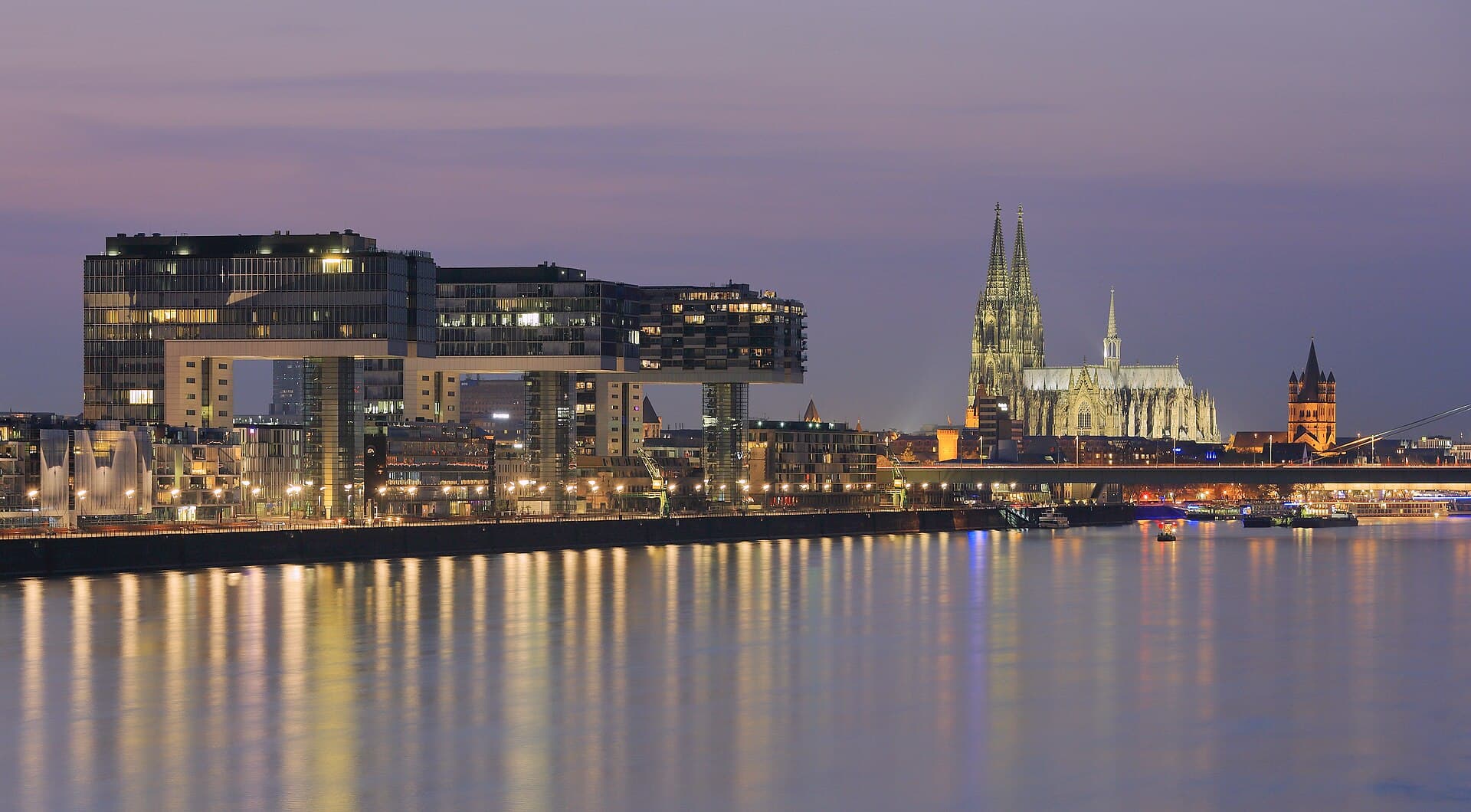
Cologne, GermanyMartin Falbisoner / CC BY-SA 4.0, via Wikimedia Commons
DE

Cologne

Cologne: Where Roman echoes meet Gothic grandeur and a playful spirit flows like the Rhine.

The secrets of Cologne

Cologne, as no one tells it.

Not the postcards. The stories even locals don't know — whispered in your ear, right where they happened.

3 secrets below. Many more wait inside the tour.
Cologne Cathedral

The Cologne Cathedral stands as a testament to enduring vision, its construction spanning over 600 years. Yet, a medieval prophecy once foretold a dramatic consequence upon its completion. What was this dire prediction?

Full story unlocks in the tour
Cologne's Sewer System

Beneath Cologne's bustling streets lies an ancient sewer system, guarding an opulent secret. What regal embellishment was installed deep underground for a visit that never materialized?

Full story unlocks in the tour
Eau de Cologne

The world-renowned fragrance 'Eau de Cologne' originated here, but its initial purpose extended beyond mere scent. What unexpected uses did this refreshing elixir once have?

Full story unlocks in the tour
The full tour

Discover every secret of Cologne

Every address, every reveal in full — in your ear, right where it happened.

Get the key to Cologne

You pick your stops. You walk. The voice reveals what the others miss.

Choose your time

How long do you have in Cologne?

No tours available yet. Check back soon — we're preparing them.

About Cologne

The story of Cologne

Cologne, or Köln as it's known in German, is a city that effortlessly blends over two millennia of history with a lively, contemporary spirit. As the fourth-most populous city in Germany and the largest in North Rhine-Westphalia, it stands as a significant cultural and economic hub on the Rhine River. Its skyline is defined by the awe-inspiring Cologne Cathedral, a UNESCO World Heritage site and a prominent example of Gothic architecture that draws millions of visitors annually.

Beyond its iconic cathedral, Cologne reveals layers of its Roman past, with remnants of ancient walls and an impressive sewer system still visible beneath the modern cityscape. The city is also celebrated for its unique Kölsch beer, its exuberant Carnival celebrations, and as the birthplace of Eau de Cologne. Despite significant destruction during World War II, Cologne has been meticulously rebuilt, preserving its historical essence while embracing modern design, creating a fascinating urban experience for visitors to explore.

History

From Roman Colonia to Medieval Powerhouse

Cologne's story began over 2,000 years ago as a Roman outpost. In 38 BC, the Germanic Ubii tribe settled on the left bank of the Rhine, forming Oppidum Ubiorum. The city truly took shape in AD 50 when the Romans established "Colonia Claudia Ara Agrippinensium," named after Emperor Claudius and his wife, Agrippina the Younger, who was born there. This Roman colony quickly grew in importance, becoming the capital of the province of Germania Inferior and a vital trade and production center north of the Alps. Evidence of its Roman past is still visible today, from sections of its 1st-century sewer system to fragments of its city walls and a 1,900-year-old Roman boat discovered in 2007.

Following the decline of Roman power, Cologne remained continuously inhabited, albeit with a reduced population. By the 8th century, it had become the seat of an archbishopric, and from the 9th century until 1806, the Archbishop of Cologne was one of the seven prince-electors of the Holy Roman Emperor. This ecclesiastical significance, coupled with its strategic location on the Rhine, allowed Cologne to flourish as an influential merchant stronghold in the early Middle Ages. The city's medieval builders embarked on ambitious projects, most notably the Cologne Cathedral.

The Enduring Legacy of the Cathedral and Beyond

The foundation stone for the Cologne Cathedral was laid in 1248, designed in the then-modern Gothic style. Its construction was a monumental undertaking, spanning over 632 years, with significant halts due to lack of funding and changing priorities. When finally completed in 1880, its twin spires reached 157 meters, making it the tallest building in the world for a brief period. Despite being heavily damaged during World War II, the cathedral was meticulously restored and stands today as a symbol of the city's resilience and a globally recognized landmark.

Cologne's post-war reconstruction saw a blend of preserving remaining Gothic and Romanesque structures, such as its twelve Romanesque churches, with modern architectural developments. The city's cultural identity also encompasses its famous Carnival, one of the largest celebrations of its kind, and the unique Kölsch beer, which can only be brewed within the city limits. Today, Cologne continues to be a spirited metropolis, offering a wide array of historical sites, museums, and a dynamic contemporary urban experience.
What to see

Begin your exploration at the magnificent Cologne Cathedral (Kölner Dom), a UNESCO World Heritage site and Germany's most visited landmark. Ascend its southern tower for sweeping views of the city and the Rhine River. Adjacent to the cathedral is the Hohenzollern Bridge, adorned with hundreds of thousands of 'love locks' and offering picturesque views, especially at sunset.

Meander through Cologne's Old Town (Altstadt), with its narrow lanes and colorful buildings, leading to charming squares and the historic Fischmarkt. Discover the city's Roman roots by visiting the Roman-Germanic Museum (currently undergoing renovations, with a temporary exhibit at The Belgian House), which houses a vast collection of Roman artifacts. For a more immersive experience, consider a tour of the ancient Roman sewer system, a remarkable feat of engineering from the 1st century AD.

Art enthusiasts should visit Museum Ludwig, home to Europe's largest collection of Pop Art and an impressive display of Picasso's works. Indulge your sweet tooth at the Chocolate Museum (Schokoladenmuseum), situated along the Rhine. For a tranquil escape, explore the Flora and Botanical Garden, a green sanctuary within the city.

When to visit

Cologne offers a distinct experience in every season. For pleasant weather ideal for outdoor activities and sightseeing, consider visiting in spring (March to May) or autumn (September to November). Temperatures during these months are mild, ranging from 7°C to 20°C (45°F to 68°F) in spring and 9°C to 19°C (49°F to 68°F) in autumn, with fewer crowds than in summer. Spring brings blooming flowers, while autumn showcases vivid foliage along the Rhine.

Summer (June to August) is peak season, with warm temperatures averaging 20°C to 25°C (68°F to 77°F), perfect for river cruises and outdoor festivals. However, be prepared for larger crowds and higher prices. Winter (December to February) is cold and often frosty, with average temperatures around 0°C to 6°C (32°F to 43°F), but it transforms Cologne into a magical destination with its renowned Christmas markets. The famous Cologne Carnival usually takes place in February or March, offering a unique, albeit crowded, cultural experience.

Practical

Cologne's city center is highly walkable, with many major attractions in close proximity. For longer distances, the public transport system, operated by KVB (Kölner Verkehrs-Betriebe), is efficient and integrated, encompassing trams, subways, and buses, all using the same ticketing system. You can purchase tickets at vending machines in stations or on trams. For quick, spontaneous trips, consider the 'eezy.nrw' check-in/check-out system via the KVB or DB app, which charges based on linear distance.

Cologne Bonn Airport (CGN) serves the city, with S-Bahn (Line S19) and regional express trains offering a convenient 14-20 minute transfer to the city center. Taxis are also readily available, identifiable by their beige/cream color and black-and-yellow rooftop sign. While driving is an option, traffic congestion and limited, costly parking in central areas can be challenging. Cycling is another excellent way to explore, with dedicated bike lanes and rental options like KVB-bicycles available throughout the city.

Good to know
What is Kölsch?
Kölsch is a regional beer that can only be brewed within Cologne's city limits under strict regional protection laws. It's a light, refreshing beer, traditionally served in small 0.2-liter glasses to keep it cold.
Is public transport safe at night in Cologne?
Cologne's public transport is considered safe and well-utilized at all hours. Major tram lines run all night on weekends, and on weekdays, 'Night-Buses' take over after 1:00 AM.
What is the Cologne Carnival?
The Cologne Carnival is one of the largest carnival celebrations in the world, taking place annually in February or March. It's known for its lively street parties and attracts people from all over the globe.
What is the significance of the Hohenzollern Bridge?
The Hohenzollern Bridge is an important railway bridge across the Rhine, famous for the hundreds of thousands of 'love locks' attached to its pedestrian railings. Couples attach a padlock with their names and throw the key into the river as a symbol of everlasting love.
Are stores open on Sundays in Cologne?
Generally, most stores in Cologne are closed on Sundays, with the exception of those located at airports and train stations.
What is the 'Halve Hahn'?
In Cologne, ordering a 'Halve Hahn' (literally 'half a rooster') will likely cause confusion for tourists. It's not a poultry dish, but rather a rye bread roll with cheese, butter, and pickles.
Cologne
From€9.00
No booking · activate anytime · 12h to walk it
Get the key to Cologne