Reichsburg Cochem
The castle you see today is not entirely what stood here centuries ago. Much of its current form is a romanticized vision from the 19th century.
Full story unlocks in the tour
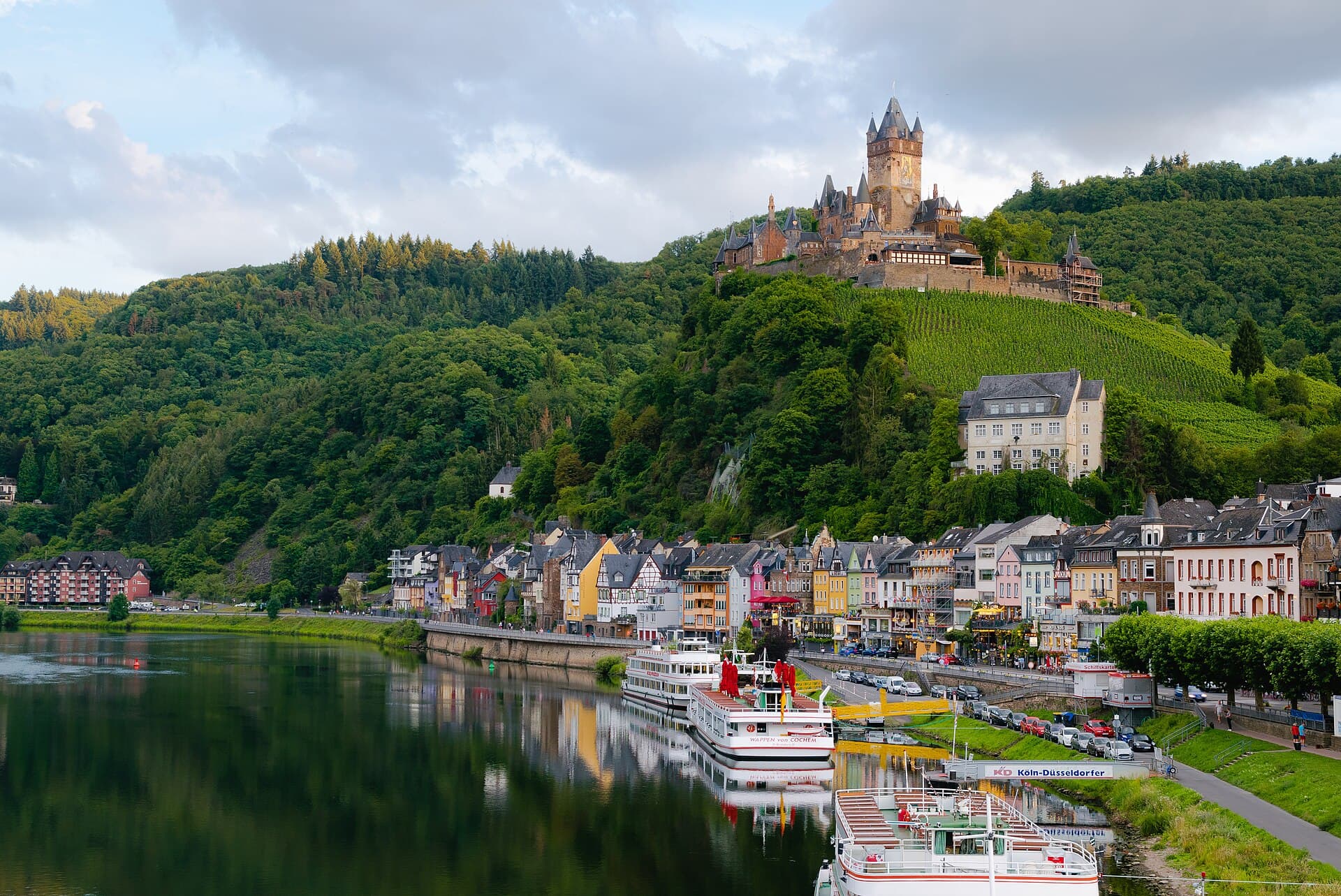 Kai Pilger / CC BY-SA 4.0, via Wikimedia Commons
“Where the Moselle bends, history and Riesling intertwine.”
Not the postcards. The stories even locals don't know — whispered in your ear, right where they happened.
The castle you see today is not entirely what stood here centuries ago. Much of its current form is a romanticized vision from the 19th century.
Beneath a seemingly ordinary apartment building, a secret Cold War bunker once held Germany's economic lifeline.
The heart of Cochem's old town, the Marktplatz, owes its very existence as a market square to a powerful Archbishop.
Discover every secret of Cochem
Every address, every reveal in full — in your ear, right where it happened.
You pick your stops. You walk. The voice reveals what the others miss.
No tours available yet. Check back soon — we're preparing them.
Cochem, a town of approximately 5,000 residents, is situated in the Moselle River valley in western Germany. It is recognized for its riverside location, historic old town, and the prominent Reichsburg Cochem, a castle that watches over the Moselle valley. The town's landscape is characterized by steep vineyards and traditional wine villages, reflecting its position at the heart of a significant wine-growing region, particularly known for Riesling.
Cochem's character arises from its well-preserved medieval architecture, including half-timbered houses and narrow lanes. The Moselle River is central to Cochem's identity, influencing its trade history and current tourism. River cruise ships frequently dock below the castle, bringing visitors eager to explore the historic center. The town offers a blend of history, culture, and viticulture, making it a popular destination for travelers seeking a traditional German experience.
## Early Settlements and Medieval Flourishing Cochem's origins trace back to Celtic and Roman settlements. The town's first documented mention, as 'Villa Cuchuma,' appeared in the 9th century. During the Middle Ages, Cochem grew into an important hub along trade routes, with its castle, built in the 11th century, playing a role in controlling river traffic and commerce. The town prospered as a walled settlement, primarily due to the regional wine trade. Many of the half-timbered houses and churches that define its character today were constructed between the 13th and 15th centuries.
## Shifting Control and Devastation Throughout the 16th and 17th centuries, Cochem experienced multiple shifts between French and German control. This period of instability culminated in significant destruction during the Nine Years' War in 1689, when King Louis XIV's troops burned the Winneburg castle and then conquered and largely destroyed Cochem and its castle. The town's population declined, and much of it fell into disrepair.
## Romantic Reconstruction and Modern Tourism The 19th century marked a turning point for Cochem. Following its assignment to the Kingdom of Prussia in 1815, and later incorporation into the German Empire, the town became an administrative center. The Romantic era, with its nostalgia for the Middle Ages, greatly influenced Cochem's rebuilding efforts. Notably, the Reichsburg Cochem was reconstructed in the late 19th century, contributing to the town's renewed appeal. In the 19th and 20th centuries, Cochem revitalized its economy by focusing on tourism, drawing visitors with its well-preserved medieval architecture and scenic Moselle valley location. Despite suffering considerable damage during World War II, when large parts of the old town were destroyed, Cochem has been carefully rebuilt and continues to thrive as a tourist destination.
Begin your exploration in Cochem's Altstadt, or old town, a compact area of winding streets and small squares that have largely retained their medieval layout. Admire the half-timbered houses, many dating from the 13th to 16th centuries, adorned with ornate carvings. The Marktplatz, the main square, is framed by these historic buildings and cafés.
Dominating the skyline is Reichsburg Cochem, also known as Cochem Imperial Castle. This 11th-century castle, dramatically rebuilt in the 19th century, offers guided tours of its historic rooms and expansive views of the Moselle valley. Another perspective of the town and river can be gained by riding the Cochem chairlift (Cochemer Sesselbahn) to the Pinnerkreuz viewpoint.
For a unique historical experience, visit the Bundesbank-Bunker, a Cold War relic once housing a secret reserve of German banknotes. You can also take a panoramic river cruise on the Moselle, offering views of the castle, vineyards, and surrounding villages. The Historische Senfmühle (Historic Mustard Mill) provides a glimpse into traditional mustard production using 200-year-old mills.
The best time to visit Cochem for warm-weather activities is from late June to late August, when temperatures are comfortable and skies are often clear. This period is ideal for enjoying river cruises, vineyard walks, and the town's many wine festivals. Spring, particularly late April and May, offers blooming landscapes and fewer crowds. Autumn, from early September to late October, is perfect for wine lovers, with the grape harvest in full swing, mild temperatures, and radiant fall foliage. Winter visits offer a quieter experience, with cozy wine bars and the atmospheric Christmas market in December.
Cochem is easily accessible by train, with regional services connecting it to cities like Koblenz, Trier, and Luxembourg City. The Cochem train station is about a kilometer from the old town center. For those arriving by air, Frankfurt Hahn Airport is the closest, though Cologne-Bonn, Luxembourg, and Frankfurt Airports offer more extensive connections. Driving provides scenic routes through the Moselle valley, with Cochem located about 16 kilometers south of the A-48 motorway.
While Cochem's main attractions, like the old town and castle, can be explored in a day, allowing two full days or more provides time for activities such as biking, hiking, and exploring nearby villages like Beilstein. Guided tours of Reichsburg Cochem are typically offered in the summer months, with limited programs in winter. Many local establishments offer wine tastings, and wine festivals are a common occurrence, especially in summer and autumn.