Cincinnati's Abandoned Subway
Beneath the active streets of Cincinnati lies a silent, forgotten world of tunnels and stations.
Full story unlocks in the tour
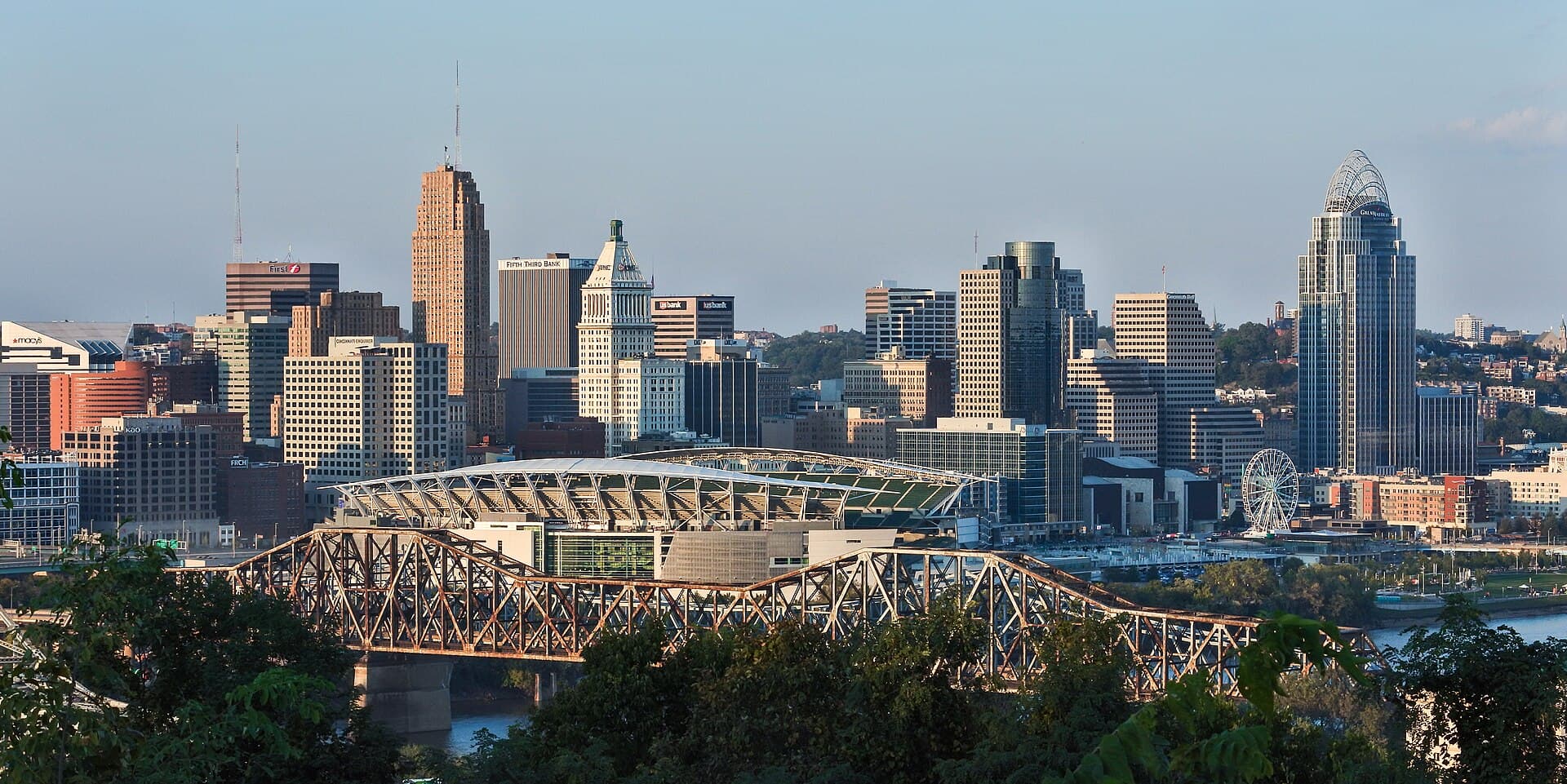 EEJCC / CC BY-SA 4.0, via Wikimedia Commons
“Where ancient hills meet a lively riverfront, a city of unexpected grace.”
Not the postcards. The stories even locals don't know — whispered in your ear, right where they happened.
Beneath the active streets of Cincinnati lies a silent, forgotten world of tunnels and stations.
A colossal bell, the largest ever cast in the United States, rests in a Cincinnati church, yet it has only been fully rung on a single occasion.
Long before 'flying pigs' became a whimsical symbol, actual pigs once moved freely through the city's downtown.
Discover every secret of Cincinnati
Every address, every reveal in full — in your ear, right where it happened.
You pick your stops. You walk. The voice reveals what the others miss.
No tours available yet. Check back soon — we're preparing them.
Cincinnati, a city carved into the Ohio River valley, unfolds with a distinctive character. Its terrain of steep hillsides and a broad waterway shapes a landscape where urbanity meets natural grandeur. The architecture here tells stories, from the intricate brickwork of 19th-century buildings to the sleek lines of contemporary structures, all contributing to a skyline that shifts with the river's bend.
Life in Cincinnati pulses with a grounded energy. There's a tangible connection to its industrial past, evident in the enduring spirit of its neighborhoods, each with its own rhythm and identity. Yet, alongside this foundational strength, a creative current flows, manifesting in its arts scene, culinary innovations, and the lively gatherings that animate its public spaces. This is a place where traditions are honored, and new ideas are given room to bloom, creating an experience that is both familiar and surprising.
## Early Foundations and River Commerce Cincinnati's story begins in 1788, when settlers established Losantiville at the confluence of the Ohio and Licking Rivers. Renamed Cincinnati in 1790, the city quickly grew as a vital port along the Ohio River, a primary artery for westward expansion. Its strategic location fostered a booming trade in agricultural goods and livestock, laying the groundwork for its future as an industrial powerhouse.
## 'Porkopolis' and Industrial Might By the mid-19th century, Cincinnati earned the moniker 'Porkopolis' due to its dominance in pork packing. This industry, alongside brewing, meat processing, and machine manufacturing, fueled rapid growth and attracted waves of immigrants, particularly from Germany. Their influence shaped the city's culture, architecture, and culinary traditions, leaving an indelible mark that can still be observed in neighborhoods like Over-the-Rhine. The Miami and Erie Canal, completed in 1845, further cemented Cincinnati's role as a manufacturing and transportation hub, connecting the city to the Great Lakes.
## Civil War and Post-War Development During the Civil War, Cincinnati was a crucial Union stronghold and a gateway to the South. Though it never fell to Confederate forces, the city played a significant role in supporting the war effort. In the decades following the war, Cincinnati continued to evolve, transitioning from a purely industrial center to one with a growing emphasis on education, arts, and civic institutions. The late 19th and early 20th centuries saw the construction of many of the city's grand public buildings and parks, reflecting a period of prosperity and civic pride.
## 20th Century Challenges and Renewal The 20th century presented Cincinnati with new challenges, including economic shifts and urban decay. Like many American cities, it grappled with deindustrialization and population movements. However, through various urban renewal projects and a renewed focus on its riverfront and historic neighborhoods, Cincinnati has steadily revitalized itself. Efforts to preserve its architectural heritage, coupled with investments in cultural institutions and green spaces, have helped redefine the city's identity, blending its industrial past with a forward-looking vision.
A journey through Cincinnati offers varied experiences. Explore the historic Over-the-Rhine district, where 19th-century Italianate architecture lines the streets, now home to independent shops, eateries, and breweries. The Findlay Market, Ohio's oldest continuously operated public market, provides a lively atmosphere for local produce and artisanal goods. For art enthusiasts, the Cincinnati Art Museum, set within Eden Park, presents a broad collection spanning 6,000 years of art, while the Contemporary Arts Center showcases modern works.
Along the riverfront, Smale Riverfront Park offers expansive green spaces, interactive fountains, and views of the Ohio River and the Roebling Suspension Bridge, a precursor to the Brooklyn Bridge. The National Underground Railroad Freedom Center stands as a powerful testament to the struggle for freedom. Consider a visit to the Cincinnati Zoo & Botanical Garden, a respected institution known for its conservation efforts. Each area provides a distinct perspective on the city's character.
Spring and autumn offer the most pleasant conditions for a visit, with mild temperatures and blooming flora or changing leaves. Summers can be warm and humid, though river activities and outdoor festivals are plentiful. Winters are cold, sometimes with snow, creating a quieter atmosphere for indoor pursuits.
Cincinnati is served by the Cincinnati/Northern Kentucky International Airport (CVG), located just across the river in Kentucky. Public transportation, primarily buses, covers much of the city, and a streetcar system operates in the downtown and Over-the-Rhine areas. Walking is a good way to explore individual neighborhoods. Expect a Midwestern friendliness, and be prepared for hills, especially if venturing beyond the riverfront. Tipping customs are standard for the United States.