Reina Cemetery
This cemetery holds a particular distinction in Cuba, one that reveals a specific approach to honoring the deceased.
Full story unlocks in the tour
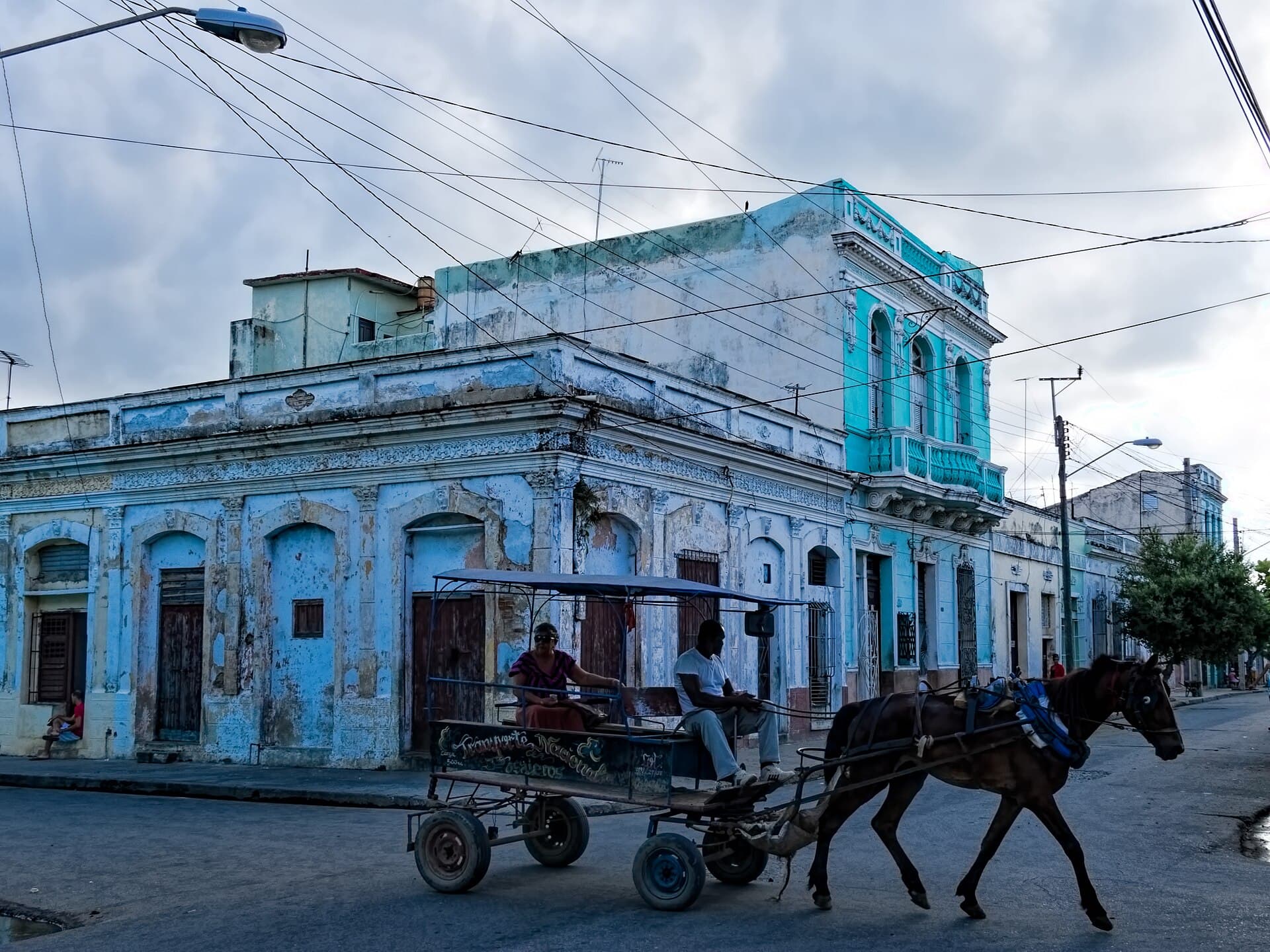 Dan Lundberg / CC BY-SA 2.0, via Wikimedia Commons
“Cienfuegos: Where French Grandeur Meets Caribbean Allure.”
Not the postcards. The stories even locals don't know — whispered in your ear, right where they happened.
This cemetery holds a particular distinction in Cuba, one that reveals a specific approach to honoring the deceased.
The opulent Palacio de Valle, with its intricate details, conceals a playful architectural secret.
The city's name, which translates to 'one hundred fires,' might lead you to believe it has a fiery origin story.
Discover every secret of Cienfuegos
Every address, every reveal in full — in your ear, right where it happened.
You pick your stops. You walk. The voice reveals what the others miss.
No tours available yet. Check back soon — we're preparing them.
Cienfuegos, often called the "Pearl of the South," is a coastal city on Cuba's southern coast, captivating visitors with its distinctive blend of French influence and Caribbean flair. Unlike many Cuban cities with their winding colonial streets, Cienfuegos presents a rational, harmonious urban design with wide boulevards and a strict grid pattern, a testament to 19th-century Enlightenment ideas.
Designated a UNESCO World Heritage Site in 2005, the city's historic center is recognized as an outstanding example of early 19th-century Spanish urban planning, infused with French architectural styles. This particular heritage, combined with its picturesque bay setting, offers a tranquil and elegant atmosphere, a refreshing contrast to the more bustling Cuban destinations.
The area where Cienfuegos now stands was originally known as Cacicazgo de Jagua, inhabited by the indigenous Ciboney (Taino) people. While Christopher Columbus visited the bay in 1494, no permanent settlement was established until 1738. To protect against pirates, the Castillo de Jagua fortress was completed in 1745 at the bay's entrance.
The city itself was formally founded on April 22, 1819, by French immigrants from Bordeaux and Louisiana, led by Don Louis de Clouet. They initially named the settlement Fernandina de Jagua, honoring King Ferdinand VII of Spain and the local chief, Jagua. This French influence is a defining characteristic, making Cienfuegos the only city on the island founded by French settlers under the Spanish crown.
The settlement quickly prospered, becoming a town (villa) in 1829 and renamed Cienfuegos after Captain General José Cienfuegos Jovellanos. By 1880, it had officially become a city. The economic foundation of early Cienfuegos was built on sugar production, tobacco, coffee cultivation, and livestock farming. Its deep-water bay made it a crucial port for exporting agricultural products, contributing to its rapid growth and prosperity.
Between the late 19th and early 20th centuries, many Spanish immigrants, particularly Catalans and Asturians, settled in Cienfuegos, amassing fortunes in various businesses, including the sugar industry. These wealthy residents commissioned many of the city's emblematic buildings that stand today. After the Spanish-American War in 1898, Cienfuegos, like the rest of Cuba, experienced a period of American military occupation, leading to significant infrastructural improvements, including a railroad connecting it to Havana.
Since the late 1960s, Cienfuegos has evolved into a significant industrial center, particularly in the energy and sugar sectors. In 2005, the Urban Historic Centre of Cienfuegos was inscribed on the UNESCO World Heritage List, recognized for its outstanding Neoclassical architecture and as the best example of early 19th-century Spanish Enlightenment influence on urban planning. The historic center includes buildings from the early 19th century through the 20th century, showcasing a blend of architectural styles.
Begin your exploration at Parque José Martí, the city's central square, surrounded by significant landmarks. Here you'll find the Arco de Triunfo, the only one of its kind in Cuba, commemorating the country's independence. Adjacent to the park is the Catedral de la Purísima Concepción, a neoclassical structure with twin bell towers and stained-glass windows. The historic Teatro Tomás Terry, an Italianate and French-influenced theater built in the late 1800s by a wealthy slave trader, still hosts performances.
Stroll along Paseo El Prado, one of Cuba's longest boulevards, known for its wide layout and colorful French-inspired architecture. Observe the statue of Benny Moré, the renowned Cuban musician, located along this promenade. Head towards Punta Gorda, a narrow peninsula extending into the bay, where you'll find eclectic mansions from the early 20th century, including the striking Palacio de Valle. This architectural marvel blends Gothic, Moorish, and Venetian styles. For expansive views, ascend to the rooftop of Palacio del Valle.
Beyond the city center, consider a ferry trip to Castillo de Jagua, an 18th-century fortress guarding the bay entrance. Nature enthusiasts can visit the Jardín Botánico de Cienfuegos, a world-renowned botanical garden with over 2,000 species of tropical plants, established in 1901 with Harvard's support. For a refreshing excursion, the El Nicho waterfalls in the Sierra de Escambray offer natural pools for swimming.
The most pleasant weather in Cienfuegos typically occurs from November through April, offering sunny, mostly dry conditions with less humidity. This period is ideal for exploring the city on foot and enjoying outdoor activities. Temperatures during these months range from approximately 22–28°C (72–82°F). The wet season runs from May to October, bringing higher humidity and more frequent rainfall, with the heaviest rains usually in late July. While hurricanes are possible between August and November, this period also features local celebrations like the Cienfuegos Carnival in August and the Benny Moré Festival in September.
The official currency in Cienfuegos, and throughout Cuba, is the Cuban Peso (CUP). While previously a dual currency system existed, only the CUP has been in circulation since early 2021. You can exchange major currencies like Canadian dollars, British pounds, Mexican pesos, Swiss francs, Euros, Japanese yen, and US dollars at official exchange houses (CADECAS) or banks. It's advisable to exchange money upon arrival at the airport. VISA and Mastercard credit cards are generally accepted, provided they are not issued by U.S. banks. Cash is highly recommended for many transactions.
Cienfuegos is well-connected by road to Havana, Trinidad, and other nearby cities. Transportation options include private cars, tourist buses (Viazul is a main company), and taxis. The Jaime González International Airport (CFG) serves Cienfuegos, located a few kilometers from the city center. Once in the city, the best way to explore its flat, orderly streets is on foot. For longer distances, taxis are readily available.