Grevel House
The oldest house in Chipping Campden introduced a surprising architectural innovation for its era.
Full story unlocks in the tour
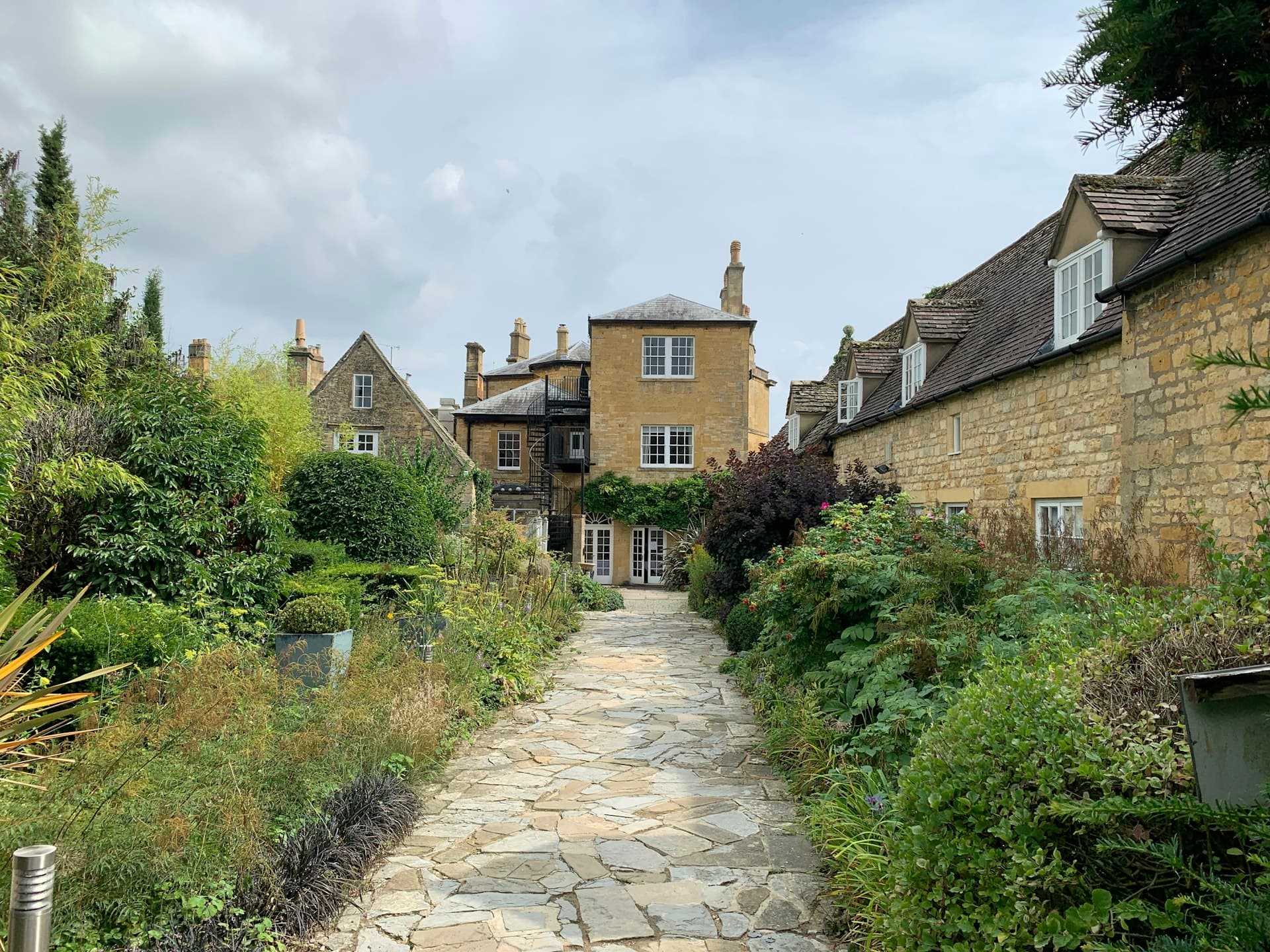 Photo: Becky Fantham / Unsplash
“Where honey-hued stone tells tales of wool, wealth, and whimsical games.”
Not the postcards. The stories even locals don't know — whispered in your ear, right where they happened.
The oldest house in Chipping Campden introduced a surprising architectural innovation for its era.
A grand mansion once standing here met a fiery conclusion, yet its remnants hold a curious mystery.
Observe the path leading to the church entrance, and you might discern a symbolic detail.
Discover every secret of Chipping Campden
Every address, every reveal in full — in your ear, right where it happened.
You pick your stops. You walk. The voice reveals what the others miss.
No tours available yet. Check back soon — we're preparing them.
Chipping Campden, a market town in Gloucestershire, England, is celebrated for its High Street, often considered one of England's most beautiful. This Cotswold community, whose name originates from the Old English 'ceping' (market) and 'Campadene' (a valley with cultivated fields), possesses a heritage reaching back to the 7th century. Its distinctive character is defined by the honey-colored limestone buildings, known as Cotswold stone, that grace its streets, many dating from the 14th to 17th centuries.
Beyond its visual appeal, Chipping Campden offers a tangible sense of history, a legacy of its past as a prosperous medieval wool trading center. The town’s layout, granted a market charter by King Henry II in 1175, still reflects its origins as a thoughtfully planned settlement. Today, it serves as an entry point to the scenic Cotswold National Landscape and is a favored destination for those seeking to experience the quintessential English countryside.
The origins of Chipping Campden trace back to a Saxon settlement in the 7th century, with its name, 'Campadene,' describing a 'valley with cultivated fields.' The addition of 'Chipping,' meaning 'market' in Old English, arrived later, reflecting the town's increasing significance as a trading hub. By the time of the Domesday Book in 1086, the area supported a population of around 300.
A pivotal moment arrived in 1175 when King Henry II granted Campden a market charter, permitting weekly markets and annual fairs. This charter established the framework for the town's High Street, which was designed with regular plots of land for craftsmen and traders. The town truly thrived in the Middle Ages, particularly from the 13th to the 15th centuries, due to the flourishing wool trade. The wool from the local 'Cotswold Lion' sheep was highly valued across Europe, drawing merchants from as far as Florence.
Affluent wool merchants, such as William Grevel, who also served as a financier to King Richard II, contributed substantially to the town's prosperity and its architectural landscape. Many of the iconic honey-colored limestone buildings that define Chipping Campden today were constructed during this period of abundance. The magnificent St. James' Church, a prime example of a Cotswold 'wool church,' was built with funds from the wool trade, incorporating parts of an earlier Norman church from 1180. In 1627, Sir Baptist Hicks, another prominent figure, financed the construction of the Market Hall, providing shelter for traders selling cheese, butter, and poultry. He also funded the almshouses, built in 1612, which continue to offer accommodation for elderly residents.
In the early 20th century, Chipping Campden became a focal point for the Arts and Crafts movement. Charles Robert Ashbee relocated his Guild and School of Handicraft from London to the Old Silk Mill in 1902, advocating for handmade goods against industrialization. Though the Guild later dissolved, many artists and writers remained, and descendants of the original craftsmen continue their work in the town today.
Chipping Campden's High Street is a primary draw, a curving expanse lined with historic limestone buildings housing independent shops, cafes, and traditional inns. The iconic Market Hall, built in 1627, stands as a central landmark, originally used for trading wool, and now showcasing local crafts and produce.
At the northern end of the High Street is St. James' Church, a notable 'wool church' with early altar tapestries and one of England's largest collections of monumental brasses. Nearby, the remnants of Old Campden House, including its impressive gatehouse and two Jacobean banqueting houses, offer a glimpse into the town's grand past. For those interested in local heritage, the Court Barn Museum celebrates the legacy of craft and design in the Cotswolds.
Outdoor enthusiasts can explore Dover's Hill, a historic hilltop that hosts the annual Cotswold Olimpick Games, known for traditional competitions like shin-kicking. Chipping Campden also marks the start of the Cotswold Way National Trail, a 102-mile footpath. For garden lovers, Hidcote Manor Garden, with its 'rooms' of hedges and rare plants, is a short walk away.
Chipping Campden welcomes visitors year-round, with each season offering a distinct experience. Spring and summer bring verdant landscapes and longer days, ideal for walking. The warmest months are July and August, with average highs around 69°F (21°C). Autumn provides a rich palette of colors across the countryside. Winter offers a quieter, more contemplative experience of the town's historic streets. May and June, and September are considered optimal, offering pleasant weather and manageable crowds. The Cotswold Olimpick Games are held annually in late May or early June.
Chipping Campden is situated in the Cotswold district of Gloucestershire, England. The most straightforward way to reach Chipping Campden from London is by train to Moreton-in-Marsh, followed by a 20-minute bus ride. If driving, be aware that parking can be limited in Cotswold towns; free parking is available along the High Street and a small paid car park in the Town Square. During weekends and school holidays, additional parking is often available at Chipping Campden School, a short walk from the High Street. The town offers a range of accommodation, including boutique hotels, traditional inns, and guesthouses. Dining options include cafes, tearooms, and restaurants serving local and seasonal dishes.