Mesta Village
The labyrinthine design of Mesta wasn't just for charm; it was a clever defense mechanism.
Full story unlocks in the tour
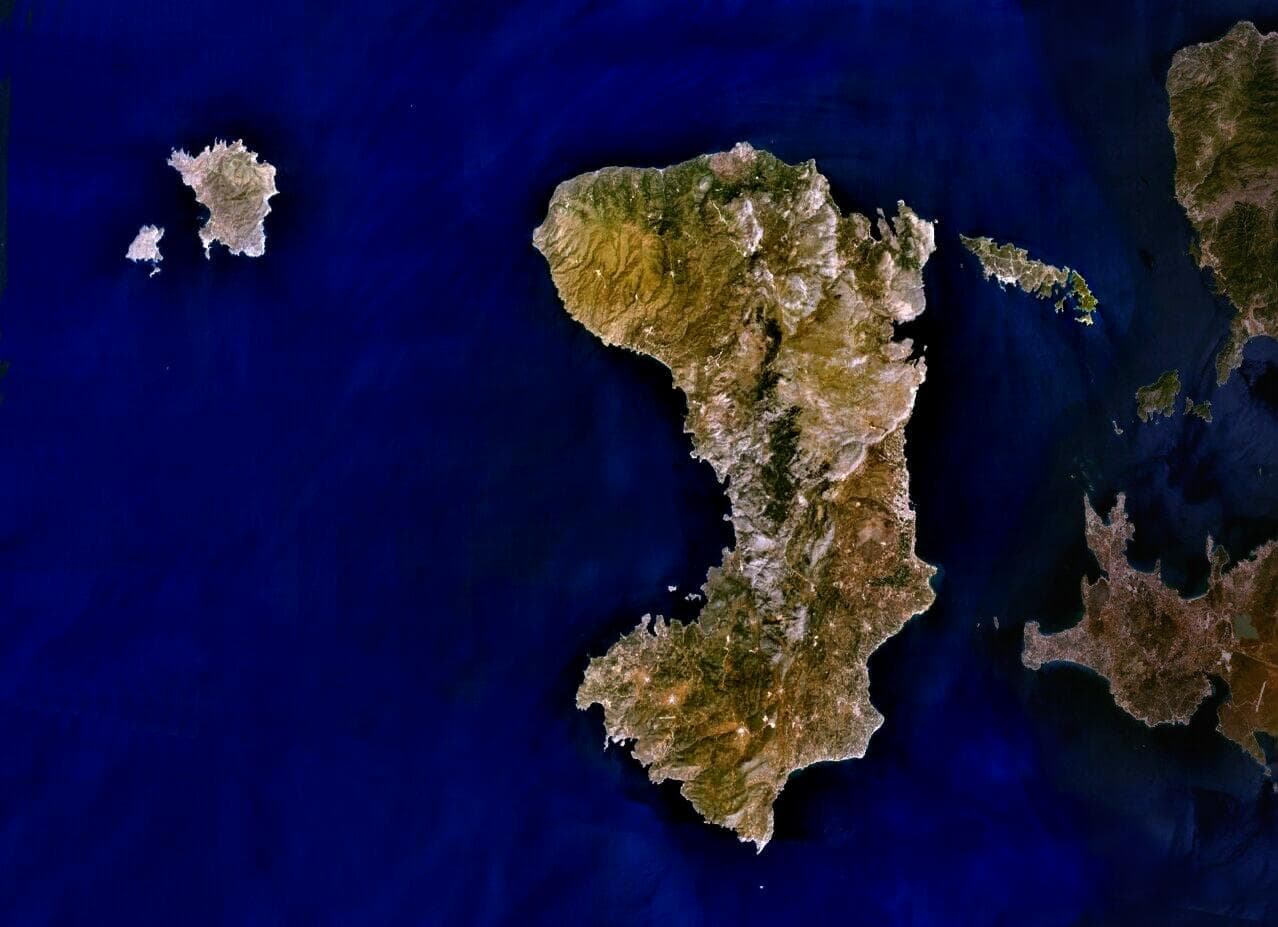 Photograph: NASA / Public domain, via Wikimedia Commons
“Where ancient myths intertwine with fragrant mastic groves and medieval fortresses.”
Not the postcards. The stories even locals don't know — whispered in your ear, right where they happened.
The labyrinthine design of Mesta wasn't just for charm; it was a clever defense mechanism.
Every Easter, the sky above Vrontados erupts in a fiery spectacle, but it's not just fireworks.
The 'tears' of Chios' mastic trees are literally harvested, but not in the way you might imagine.
Discover every secret of Chios
Every address, every reveal in full — in your ear, right where it happened.
You pick your stops. You walk. The voice reveals what the others miss.
No tours available yet. Check back soon — we're preparing them.
Chios, the fifth-largest Greek island, is a captivating destination in the northern Aegean Sea, just 7 kilometers off the Turkish coast. Its identity is deeply intertwined with the cultivation of mastic, a unique resin prized for its culinary and medicinal properties, found nowhere else in the world. This distinctive product has shaped the island's economy and cultural heritage for centuries, lending Chios its moniker, 'the Mastic Island.'
Beyond its fragrant mastic groves, Chios offers a blend of ancient history, medieval charm, and diverse natural beauty. From fortified medieval villages with unique architectural styles to dramatic volcanic beaches and serene coves, the island provides a multifaceted experience for travelers seeking authentic Greek culture and a slower pace of life.
The history of Chios stretches back approximately 8000 years, with evidence of Neolithic and Proto-helladic settlements found at Spilaio and Emboreo. Mythology suggests that Oinopion, grandson of King Minos of Crete, was the first colonist, teaching the inhabitants winemaking. The island's name may derive from his daughter, Chiona, or from the Phoenician word for mastic.
By the 7th century BC, Chios had become a major power, renowned for its sailors, traders, and a flourishing school of sculpture. It is also strongly believed to be the birthplace of the epic poet Homer, with the rock of Daskalopetra in Vrontados traditionally cited as his teaching spot. The island established the 'Great Covenant' (Megali Ritra) around 600 BC, considered the first democracy in the ancient world, influencing Solon's reforms in Athens.
Chios experienced periods under Persian, Athenian, and Macedonian rule, eventually allying with the Romans. During the Byzantine era, the 11th-century Nea Moni Monastery, a UNESCO World Heritage site, was constructed, showcasing significant Byzantine mosaics. The island later fell under Genoese influence, who intensified mastic production and built the distinctive fortified 'Mastic Villages' (Mastichochoria) in the 14th century to protect against pirate raids.
Ottoman rule began in 1566, and Chios enjoyed certain privileges due to the importance of mastic. However, a tragic chapter unfolded during the Greek War of Independence in 1822, when Ottoman forces massacred and enslaved a large portion of the population in retaliation for supporting the rebellion. This event, known as the 'Massacre of Chios,' shocked Europe and was famously depicted by Delacroix. Chios finally reunited with the newly formed Greek state in 1912 after the Balkan Wars.
Begin your exploration in Chios Town, the island's capital, where you can stroll around the port and visit the medieval Castle of Chios, with parts dating back to 2000 BC. The Chios Mastic Museum offers insight into the island's most famous product, detailing its history and cultivation.
A trip to the 'Mastic Villages' (Mastichochoria) in the south is essential. Pyrgi, known as the 'painted village,' features unique black-and-white geometric designs (xysta) adorning nearly every building facade. Mesta is a remarkably preserved medieval fortress-village with narrow, winding alleys and covered passages designed for defense. Nearby, the Cave of Olympi holds impressive stalactites and stalagmites.
For a glimpse into a poignant past, visit Anavatos, an abandoned medieval village on a steep hill, offering expansive views. Do not overlook the 11th-century Nea Moni Monastery, a UNESCO World Heritage site, celebrated for its exquisite Byzantine mosaics.
Chios also offers a variety of beaches. Mavra Volia stands out with its striking black volcanic pebbles and deep blue waters. For quieter spots, consider the secluded Vroulidia Beach, accessible via a winding path, or the picturesque Agios Isidoros near Sykiada.
The best times to visit Chios are during the shoulder seasons: May to early July and late August to mid-October. During these months, the weather is pleasantly warm, the seas are clear, and the crowds are fewer. Spring (April and May) is ideal for exploring historical sites and enjoying the island's blooming wildflowers, including 91 of Europe's 108 orchid types. While July and August are hotter and busier, Chios remains calmer than many other Greek islands, making it suitable for beach activities.
Renting a car is highly recommended for exploring Chios, as attractions and beaches are spread across the island, and public transport is limited. Chios has its own domestic airport, Omiros (JKH), with flights from Athens and Thessaloniki. Ferries from Piraeus (Athens) take approximately 8-9 hours, and daily ferries also connect Chios to Çeşme, Turkey, in about 30 minutes.
Accommodations range from quaint guesthouses in medieval villages to hotels in Chios Town and coastal resorts. Booking in advance is advisable, especially during peak summer months. The local cuisine features dishes flavored with mastic, fresh seafood, local goat cheese, and traditional sweets. Family-run tavernas offer authentic experiences, with meals often being relaxed and unhurried. Chios is generally a safe and calm island, with a welcoming local population.