Sago Lane
This street, once alive with sago factories, held a much more somber, unspoken purpose.
Full story unlocks in the tour
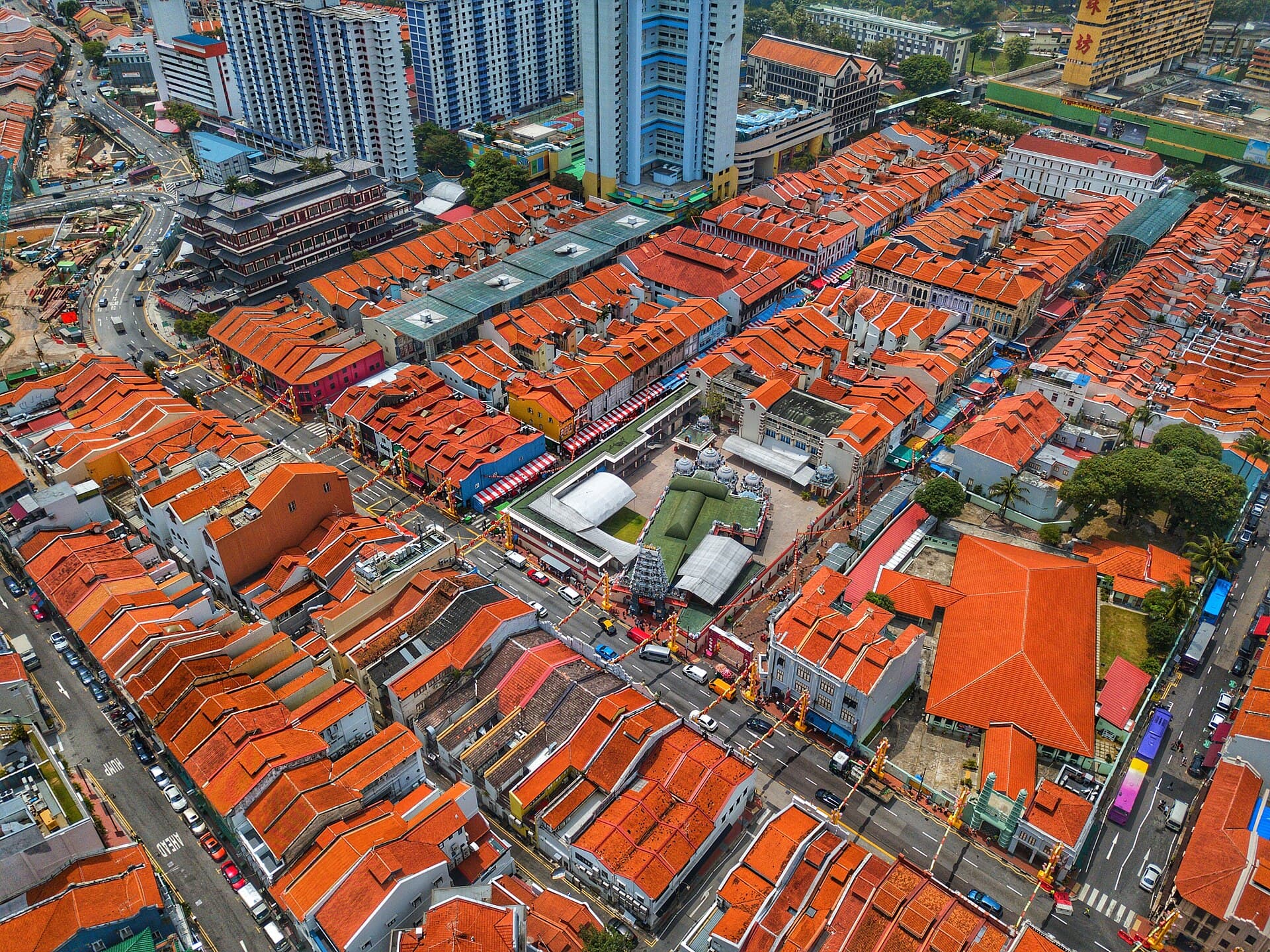 Bob Tan / CC BY-SA 4.0, via Wikimedia Commons
“Where ancient traditions meet modern rhythms, a living story unfolds.”
Not the postcards. The stories even locals don't know — whispered in your ear, right where they happened.
This street, once alive with sago factories, held a much more somber, unspoken purpose.
Today, it is a lively center of souvenirs and street food, but its past reveals a darker, more illicit trade.
This revered temple, dedicated to the Goddess of the Sea, stands as a testament to ancient craftsmanship, constructed without a single nail.
Discover every secret of Chinatown
Every address, every reveal in full — in your ear, right where it happened.
You pick your stops. You walk. The voice reveals what the others miss.
No tours available yet. Check back soon — we're preparing them.
Chinatown, Singapore, is a cultural district where the echoes of its past as a Chinese immigrant settlement blend with the pulse of a modern city. Established under Sir Stamford Raffles' 1822 Town Plan, this area southwest of the Singapore River was designated for Chinese migrants, evolving into a center for commerce, clan associations, and cultural life. Today, it is a nationally conserved precinct, recognized for its distinctive shophouse-lined streets, traditional markets, and diverse religious landmarks.
Beyond its visual appeal, Chinatown offers an authentic immersion into Singapore's multicultural identity. Here, traditional Chinese medicine halls stand alongside contemporary cafes, and the aromas of street food mingle with the scent of incense from ancient temples. It is a place where Buddhist, Taoist, and Hindu temples, and even mosques, coexist just minutes apart, reflecting Singapore's unique blend of cultures.
The origins of Singapore's Chinatown trace back to 1819, even before Sir Stamford Raffles officially established the settlement. Early Chinese traders and settlers were already present, cultivating gambier and pepper plantations. However, it was Raffles' 1822 Master Town Plan that formally allocated the entire area southwest of the Singapore River for Chinese settlement, envisioning that Chinese immigrants would form the largest portion of the community. This area became known as the Chinese Campong (Chinese Settlement).
Early Chinese immigrants, primarily from the southern provinces of Guangdong, Fujian, and Hainan, settled in specific zones based on their dialect groups and provinces of origin. The Hokkiens, for instance, established themselves along Telok Ayer Street, while the Cantonese occupied Temple Street. This internal organization created distinct identities for each street, based on the trades and businesses they housed. For example, Mosque Street is named after the Jamae Mosque, and Pagoda Street takes its name from the Sri Mariamman Temple. Sago Lane and Sago Street were named for the sago factories located there in the 1840s.
Chinatown quickly grew into a bustling center of commerce and culture, known for traditional Chinese trades like goldsmithing, calligraphy, and herbal medicine. Markets and hawker stalls were central to the local economy, selling textiles, spices, and food. However, the area also faced challenges, including overcrowding. In the 1960s, many residents were relocated as part of Singapore's governmental Housing Development Board initiatives. Despite modernization, the government recognized the importance of preserving Chinatown's heritage, undertaking initiatives to conserve its historic buildings and landmarks. Today, Chinatown stands as a living testament to the fusion of tradition and modernity, a cultural enclave that continues to celebrate traditional festivals and practices.
Begin your exploration at Pagoda Street, a pedestrian mall lined with colorful shophouses and souvenir stalls, offering a lively introduction to the area. At its end, you will find the Sri Mariamman Temple, Singapore's oldest Hindu temple, with its striking, intricately sculpted gopuram (towering entrance gate). Just a short walk away is the Buddha Tooth Relic Temple and Museum, a magnificent Tang Dynasty-style temple housing what is believed to be a sacred tooth relic of the Buddha. Do not miss the tranquil rooftop garden with its pagoda and prayer wheel.
For a deeper dive into the lives of early Chinese immigrants, visit the Chinatown Heritage Centre on Pagoda Street, an immersive museum with recreated living quarters and shophouses from the 1950s-1960s. Indulge in authentic local cuisine at the bustling hawker centers like Maxwell Food Centre or Chinatown Complex Market & Food Centre, known for their affordable and diverse food offerings. Explore the Chinatown Street Market on Smith Street, Pagoda Street, and Trengganu Street for everything from silk robes to traditional crafts and unique souvenirs. For a different shopping experience, People's Park Complex and Centre offer textiles, electronics, and local goods. Remember to wander through Telok Ayer Street to discover architectural finds like the Thian Hock Keng Temple, Singapore's oldest Hokkien temple, constructed without a single nail.
Chinatown is a year-round destination, with Singapore experiencing a consistent tropical climate. For a lively atmosphere and cooler weather, evenings (6:00-9:00 PM) are ideal, especially for enjoying the night market and hawker centers. Weekday mornings (8:00-11:00 AM) are best for sightseeing and shopping with fewer crowds, allowing for a more relaxed temple visit. Consider visiting between November and January for slightly cooler weather, or during Chinese New Year for festive decorations and lively street markets, though expect larger crowds.
Chinatown is easily accessible via the Chinatown MRT Station (North-East and Downtown Lines), with Exit A leading directly to Pagoda Street. Telok Ayer MRT station also offers convenient access. When visiting temples, dress modestly, ensuring shoulders and knees are covered, and remove your shoes before entering. Tipping is appreciated in restaurants but not obligatory, as a service charge is usually included. At hawker centers, you might see tissue packets or umbrellas on tables; this is a local practice called 'chope-ing' to reserve a seat. The Chinatown Visitor Centre at 2 Banda Street (behind the Buddha Tooth Relic Temple) can provide information, tickets, and assistance. For emergencies, dial 999 for police and 995 for fire or ambulance.