The Spanish Mosque
This iconic viewpoint offers the finest sunset panoramas, but the mosque itself holds a curious secret about its original intent.
Full story unlocks in the tour
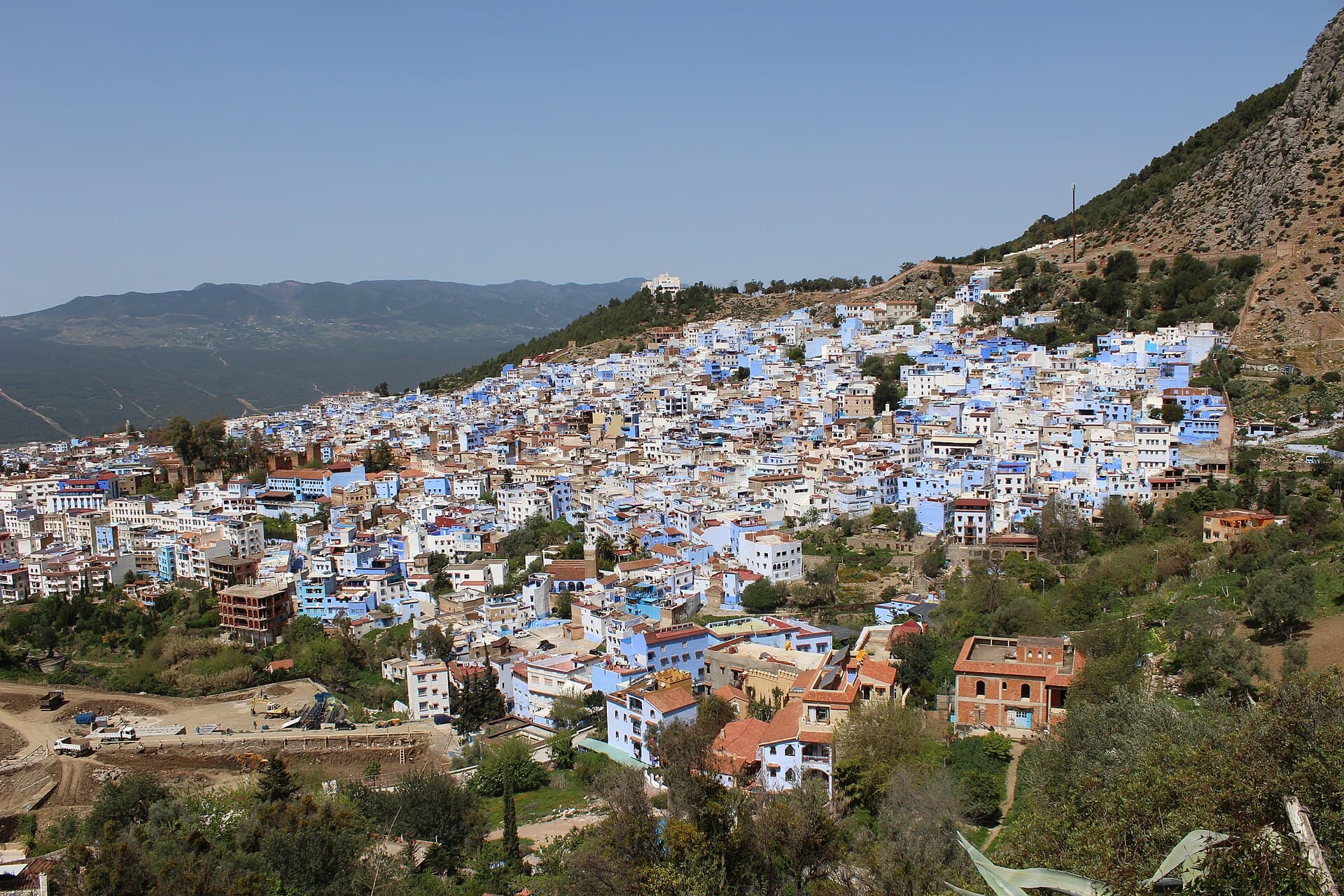 William John Gauthier from Denmark ([1]) / CC BY-SA 2.0, via Wikimedia Commons
“The Blue City: a winding dreamscape painted in a thousand shades of azure.”
Not the postcards. The stories even locals don't know — whispered in your ear, right where they happened.
This iconic viewpoint offers the finest sunset panoramas, but the mosque itself holds a curious secret about its original intent.
Beyond the blue, Chefchaouen's weaving tradition holds a subtle code, particularly in the traditional garments worn by local women.
Chefchaouen's celebrated blue isn't merely for show; it once served a more practical, even spiritual, purpose for a particular community.
Discover every secret of Chefchaouen
Every address, every reveal in full — in your ear, right where it happened.
You pick your stops. You walk. The voice reveals what the others miss.
No tours available yet. Check back soon — we're preparing them.
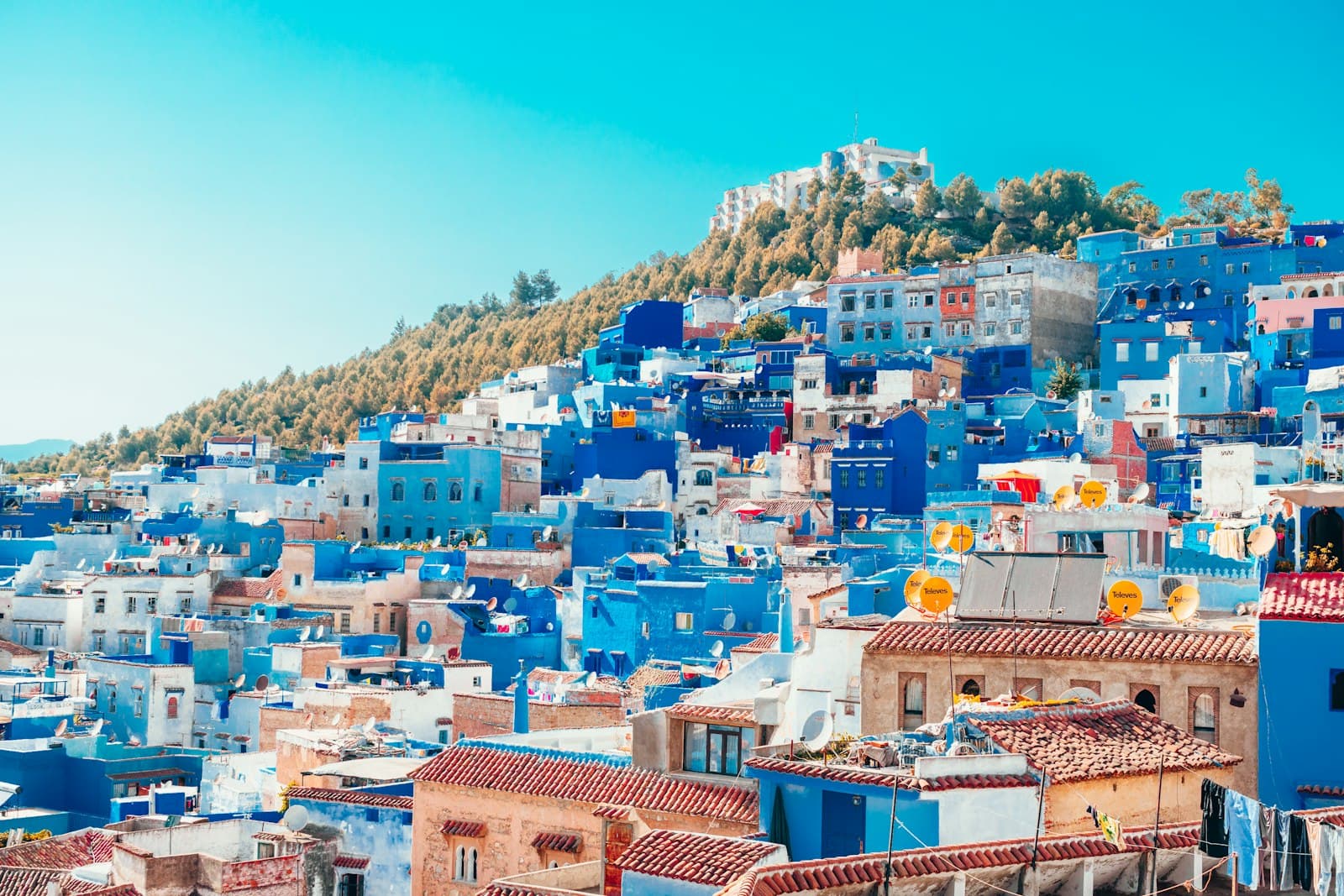
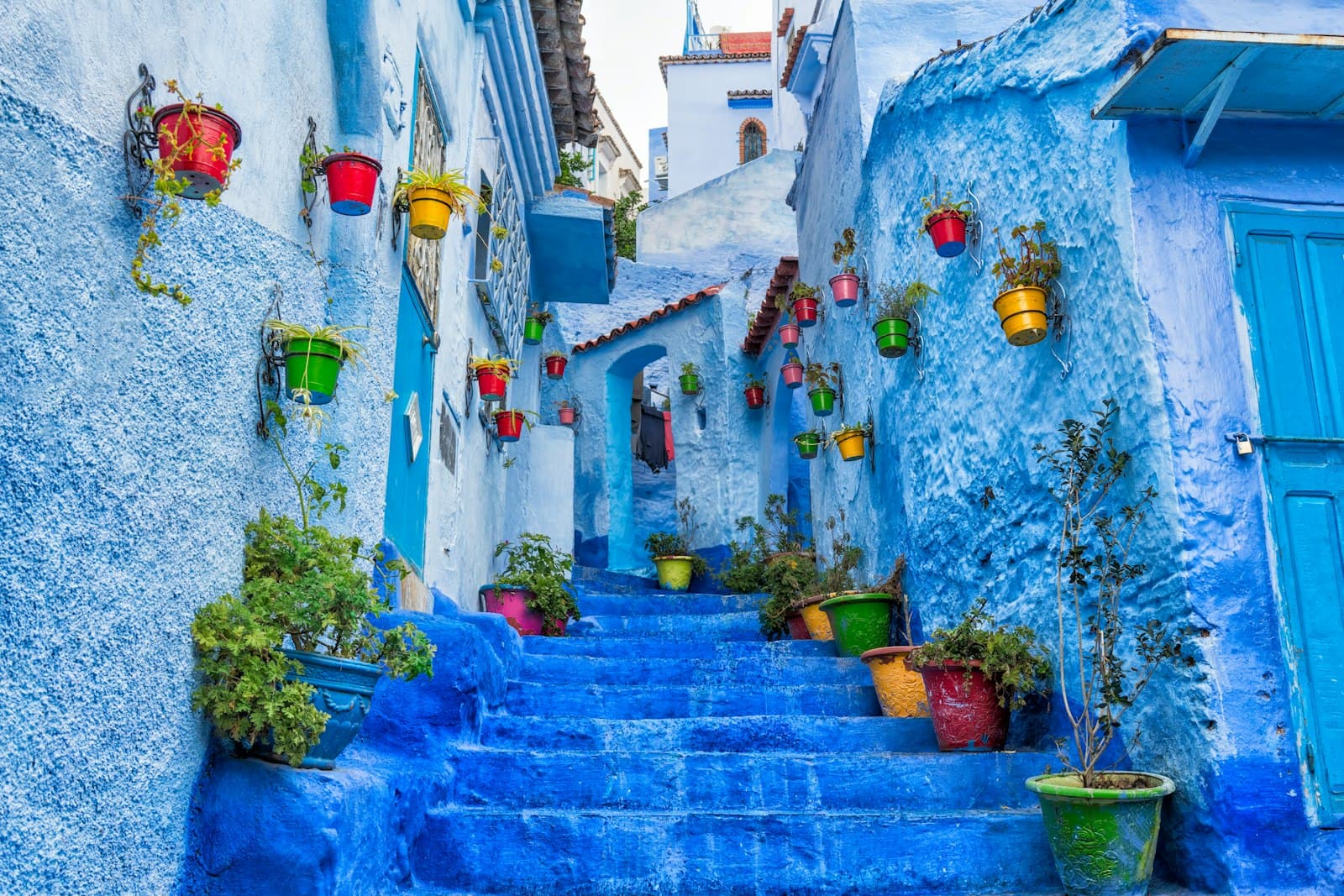
Chefchaouen, often whispered about as the 'Blue Pearl of Morocco,' finds its footing in the Rif Mountains, a city where nearly every structure is washed in varying shades of blue. This distinctive color palette, from the softest sky blue to the deepest indigo, conjures a serene, almost surreal atmosphere that sets it apart from other Moroccan cities.
More than a mere picturesque facade, Chefchaouen's blue lanes meander through a medina that has retained a self-contained quality, offering a gentler rhythm than the clamorous souks of Marrakech or Fes. It's a place where history is etched onto the very walls and local life unfolds against a backdrop of striking beauty.
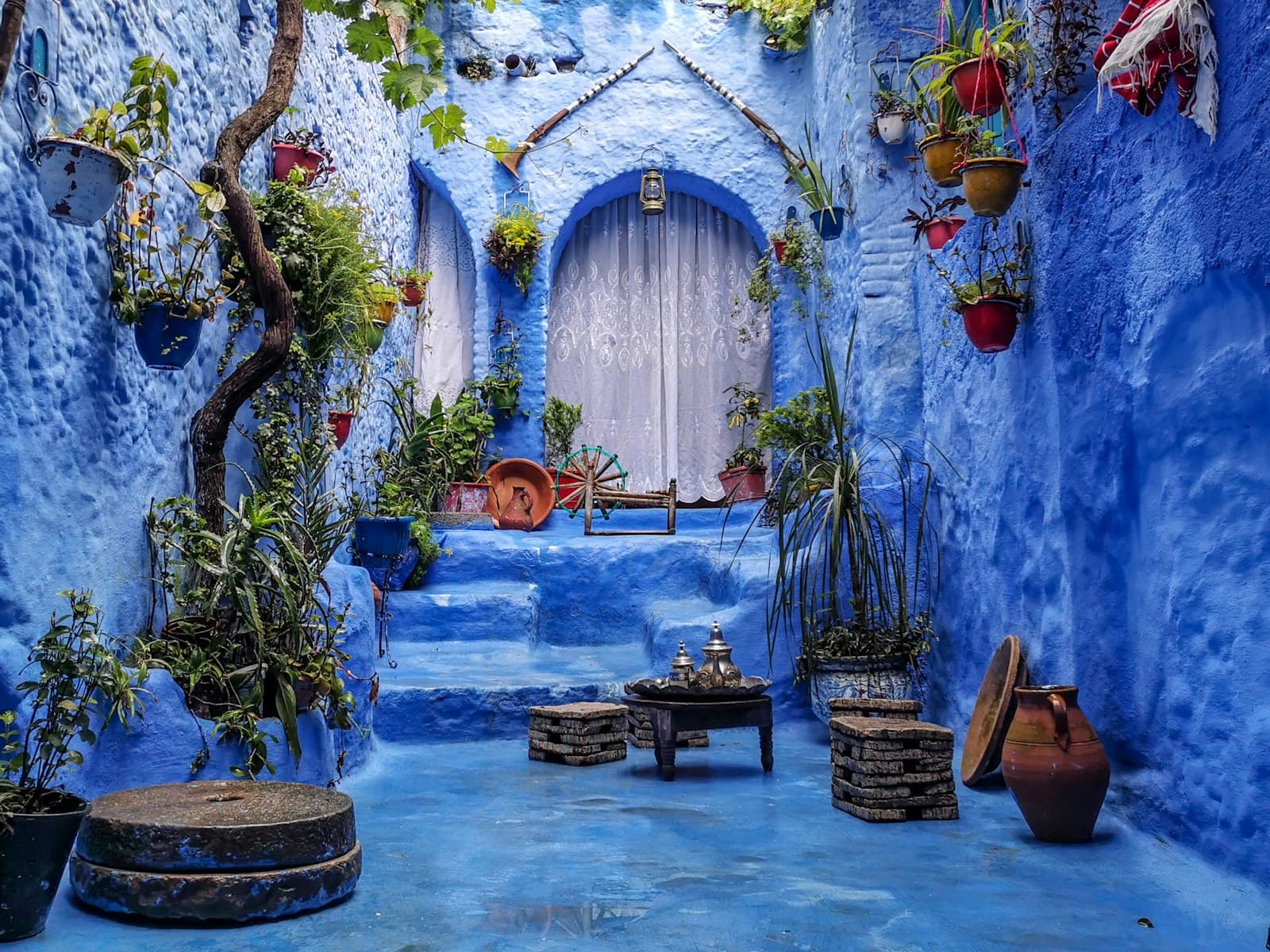
Prepare to wander, to lose yourself without concern; getting delightfully disoriented in its labyrinthine alleys is part of the charm, revealing unexpected courtyards, artisan workshops, and warm encounters.
## From Fortress to Refuge Chefchaouen was established in 1471 by Sherif Moulay Ali Ben Rachid, a descendant of the Prophet Muhammad. Its initial purpose was as a fortress (Kasbah) to stand guard against Portuguese incursions along Morocco's Atlantic coast. The strategic mountainous location provided natural defense, making it a stronghold against foreign forces. This early settlement welcomed Muslim and Jewish refugees fleeing the Spanish Reconquista, particularly after the fall of Granada in 1492, shaping the city's distinct cultural and architectural identity.
## Centuries of Isolation and Andalusian Influence For centuries, Chefchaouen remained largely secluded, known for its spiritual resonance and traditional crafts. It was, for a considerable span, closed to non-Muslims, with most Europeans who attempted entry reportedly turned away or met a grim fate. This isolation helped safeguard its unique character, including a form of 15th-century Castilian Spanish that many residents still spoke when the Spanish occupied the city in 1920. The influx of Andalusian refugees brought with them elements of Spanish design, apparent in the narrow passageways, courtyards, and characteristic blue-washed walls.
## The Blue Transformation The iconic blue hue, now intertwined with Chefchaouen's very identity, was introduced in the 1930s. While the precise reason for the blue is debated, a widely accepted theory credits the Jewish community who settled here, with blue symbolizing the sky and heaven in Jewish tradition. This custom was embraced and continued by the local populace, transforming the city into a living canvas of its layered history. The Spanish Protectorate, established in 1912, incorporated Chefchaouen into its colonial administration in 1920, further cementing its ties to Spanish culture until Morocco gained independence in 1956.
## Modern Day Chefchaouen In the late 20th and 21st centuries, Chefchaouen blossomed into a sought-after destination, drawing visitors with its picturesque medina, singular history, and serene ambiance. Today, it's a smaller, calmer city compared to larger Moroccan hubs, offering a gentle introduction to Moroccan culture.
The beating heart of Chefchaouen is its Medina, a pedestrian-only maze of blue-painted streets and buildings. Allow time to simply wander, letting the winding alleys guide you to unexpected discoveries. The Plaza Uta el-Hammam is the central square, a lively nexus ringed by cafes, eateries, and significant landmarks. Here, you'll find the Kasbah, a 15th-century fortress that now houses a modest ethnographic museum and tranquil gardens. Its towers offer views across the medina. Also in the square stands the Grand Mosquée, recognizable by its distinctive octagonal minaret.
For sweeping views of the blue city and the surrounding Rif Mountains, ascend to the Spanish Mosque. The path begins at Bab El Onsar, the medina's eastern gate, and takes approximately 30-45 minutes. It's particularly rewarding as the sun dips below the horizon. Do not overlook Ras El Maa, a natural spring at the medina's eastern edge where you can observe local women doing laundry and browse small craft stalls. The souks within the medina offer a quieter shopping experience than other Moroccan cities, specializing in locally made wool products, leather goods, and blue-painted ceramics.
The most agreeable times to visit Chefchaouen are spring (March to May) and early fall (September and October). During these months, temperatures are pleasant, ranging from 17-26°C (63-79°F), ideal for exploring the city on foot. Spring unfurls wildflowers on the Rif Mountain slopes and lively geraniums at doorways. In autumn, the light softens, and crowds thin slightly. Summers (June-August) can be quite warm, with temperatures reaching 33-36°C (91-97°F), and tourist numbers peak. Winters (December-February) are cool and rainy, with lows around 3-4°C (37-39°F), but the medina is almost empty of visitors, and snow occasionally dusts the rooftops.
Chefchaouen is best explored on foot. The entire medina is reserved for pedestrians, and its compact size means you'll likely traverse it many times during your visit. Be prepared for a good deal of uphill walking and steps, as the city is built upon a slope. Comfortable walking shoes are essential. While losing your way in the medina is part of its allure, an offline map on your phone can prove useful.
For arrivals, there is no direct train service or nearby international airport. Most travelers fly into Tangier (TNG) or Casablanca (CMN) and then take a bus or grand taxi. CTM and Supratours are reliable bus operators. From the bus station, which lies beyond the medina walls, you'll need a short taxi ride to the main blue area; confirm the fare beforehand. Haggling is customary in the souks, but generally less aggressive than in Marrakech or Fes. Cash (Moroccan Dirhams) is favored by most vendors.